
The power of Earth and beyond.
Energy Daily Editorial Team
Editorial Team

Energy Daily Editorial Team

Editorial Team

The Energy Daily Editorial Team produces Energy Daily's coverage of the global energy industry. We report on oil and gas, power grids and utilities, energy markets and policy, and the renewables and storage reshaping how the world is powered. Articles reflect our team's collective editorial process, source verification, drafting, technical review, and editing, rather than a single writer's work. Energy Daily takes editorial responsibility for content under this byline. For more on how we work, see our editorial policy.

Oil and Gas

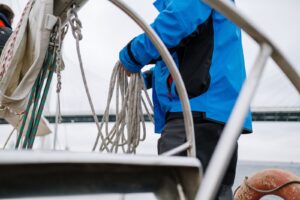
A water-harvesting jacket developed at the University of Texas can collect up to 900 millilitres a day from ambient air, but the captured moisture still has to be heated before it becomes drinkable

Reports of a Swiss materials lab's prototype jacket that harvests close to a litre of drinking water per day from ambient humidity sit on top of a decade of peer-reviewed work on passive sorbent hydrogels — including an MIT panel that produced up to 161.5 millilitres a day in Death Valley with no electricity at all.

Oil and Gas

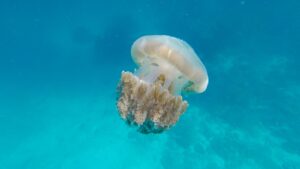
A tiny jellyfish called Turritopsis dohrnii can respond to injury or starvation by reprogramming its adult body back into a polyp, restarting its life cycle with no known limit on how often the reset can happen

A 4.5-millimetre jellyfish called Turritopsis dohrnii responds to injury or starvation by collapsing into a cyst and reorganising itself back into a polyp — the juvenile stage it left behind — through a cellular process called transdifferentiation. Captive colonies have been observed cycling through this reset up to ten times in two years, with no biological ceiling yet identified.

Oil and Gas

A 2024 estimate put a 100-word GPT-4 email at 519 millilitres of water, while training GPT-3 may have directly consumed enough for 350,000 people to drink for a day

The 500-millilitre-per-query figure for ChatGPT comes from a 2024 UC Riverside and Washington Post collaboration, and training a single large model can evaporate 5.4 million gallons — enough drinking water for 300,000 people for a day. The fight over that number is now a projected $58 billion US infrastructure problem.

Oil and Gas

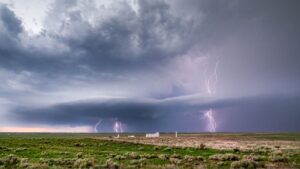
In 1859, a solar storm now called the Carrington Event pushed auroras as far south as Cuba and set telegraph paper on fire in offices from Boston to Paris, with operators reporting they could still send messages after disconnecting the batteries because the wires were carrying the storm’s own current.

On September 1, 1859, a solar flare observed by Richard Carrington hurled a coronal mass ejection that crossed 90 million miles in under 18 hours, lighting auroras from Cuba to Santiago and pushing enough current into telegraph wires that operators could send messages with their batteries disconnected. The physics that shocked 19th-century telegraph clerks now threatens the extra-high-voltage transformers holding up the modern grid.

Oil and Gas

A grid-scale battery ferry roughly 130 metres long is now crossing the Río de la Plata between Argentina and Uruguay carrying about 2,100 passengers on charge alone, making it the largest all-electric passenger vessel ever floated

A 130-metre catamaran built by Incat in Tasmania is now crossing the Río de la Plata between Argentina and Uruguay carrying 2,100 passengers on stored electricity alone, making it the largest fully battery-powered passenger vessel in service anywhere.

Oil and Gas

What happened when engineers built a single dam across the neck of a dying inland sea, and the northern lobe rose roughly four metres while fish returned to villages that had been stranded 100 kilometres from any shore?

The Kokaral Dam, a 13-kilometre earthen barrier completed in 2005 across the neck of the Aral Sea, raised the North Aral by roughly four metres, cut salinity by more than half, and brought commercial fishing back to Kazakh villages stranded a hundred kilometres from any shore.