On the morning of July 22, 1962, an Atlas-Agena rocket carrying America’s first attempted interplanetary probe rose from Cape Canaveral, drifted off its programmed track during the climb, and was blown apart by a Range Safety Officer’s command 293 seconds after liftoff. The postmortem traced the failure to a single missing overbar in a handwritten guidance equation, a horizontal line the width of a hyphen that should have been drawn above a symbol in the smoothing formula for velocity data. The absent mark cost roughly $18.5 million in 1962 dollars, equivalent to somewhere north of $180 million today.
The characterization of Mariner 1 as the most expensive hyphen in history stuck, even though the real culprit was slightly more technical than a hyphen. The story of what actually happened, and what the guidance computer at Cape Canaveral was trying to do when it steered the rocket into the Atlantic, is one of the strangest cautionary tales in the history of spaceflight.
What Mariner 1 was supposed to do
Mariner 1 was the opening move of NASA’s Mariner program, a series of probes intended to fly past the inner planets and return the first close-up data on worlds humans had only ever seen as pinpricks of light. The target was Venus. The plan was a close pass, near enough for the probe’s radiometers and magnetometer to sample the Venusian atmosphere and search for a magnetic field. Mariner 2, its twin, eventually made that pass at about 21,600 miles.
The spacecraft sat atop an Atlas LV-3 booster mated to an Agena B upper stage. The Atlas would push it through the atmosphere. The Agena would ignite twice, once to reach parking orbit, again to fling the probe toward Venus. Every second of the ascent was governed by a ground-based guidance computer at Cape Canaveral that read radar data on the rocket’s position and velocity and radioed steering commands back up to the Atlas.
That radar link is where the trouble began.
The 293 seconds
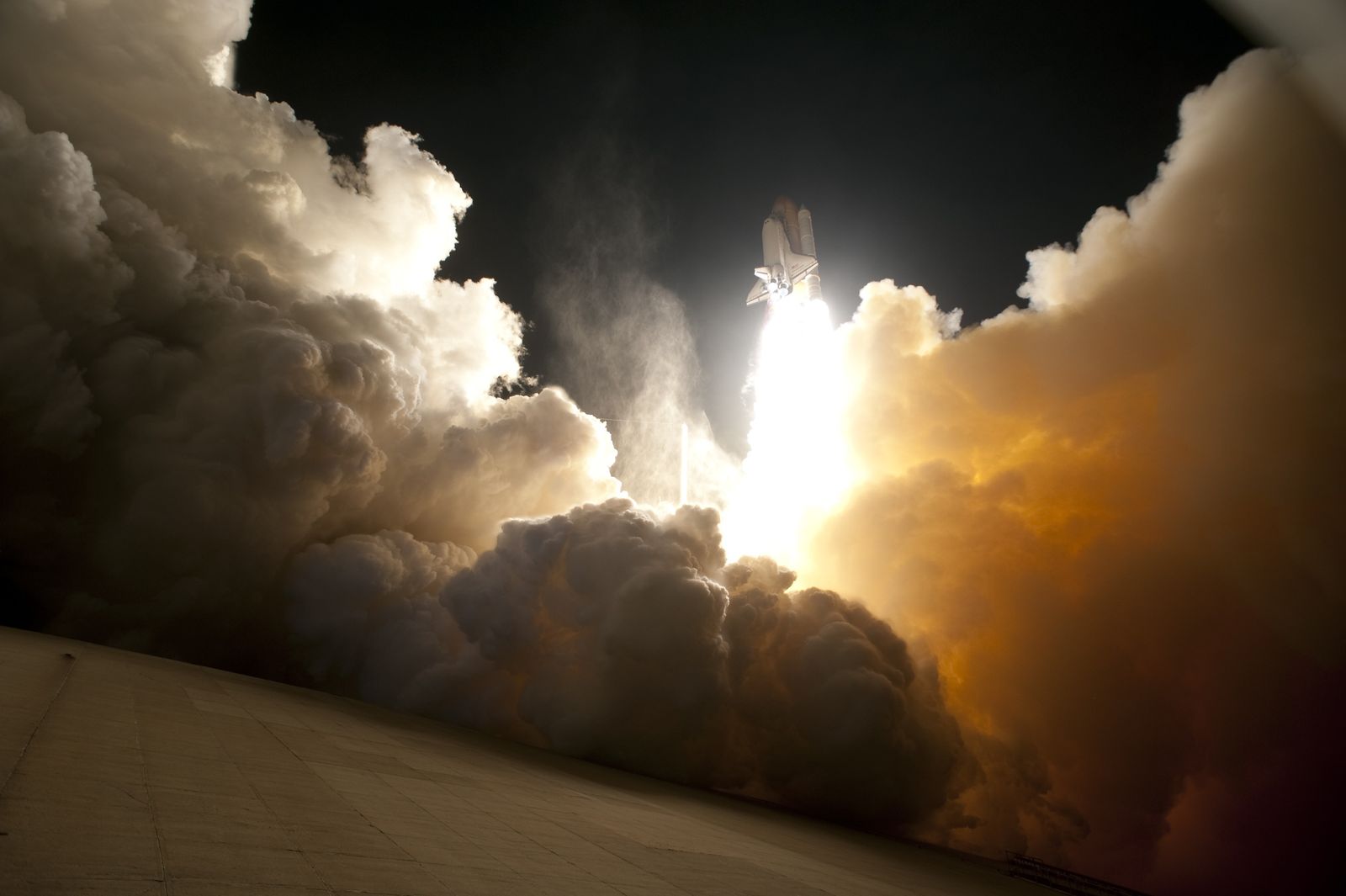
Liftoff came at 09:21:23 UTC. The ascent went to plan through booster separation. Then, during the Atlas sustainer phase, the ground guidance system began issuing improper steering instructions and the rocket started to fishtail. Its trajectory pointed downward and to the left of where it should have been, opening the danger of an impact in the crowded Atlantic shipping lanes.
At 293 seconds into flight, with the vehicle still climbing but off course, the Range Safety Officer sent the destruct command. It went out six seconds before the Agena was scheduled to separate from the Atlas, after which destruction would no longer have been possible. The Atlas broke apart over the ocean. Mariner 1 never reached separation, though telemetry from the probe kept arriving for roughly another minute and a half as the debris fell.
The launch failure timeline is documented in the launch record compiled by Astronomy Magazine’s timeline of space-related disasters and reconstructed in day-by-day accounts including Mental Floss’s retelling of the launch. The vehicle had been in the air for less than five minutes.
Two failures, one mission
The Mariner 1 postmortem, run by engineers at the Jet Propulsion Laboratory over five days of flight analysis, found that the destruct command was correct but the underlying problem had two layers. NASA’s own mission record still lists both: a fault traced to a guidance antenna on the Atlas, and a software error in the guidance equations.
The first layer was the hardware. The Atlas booster carried a rate beacon, a radar transponder that reported the rocket’s velocity back to the ground guidance computer. Somewhere in the ascent, the beacon’s signal became intermittent. Brief dropouts were a known and expected occurrence, and the system was supposed to coast through the gap on smoothed velocity data until the signal returned cleanly.
The second layer was the code. The smoothing routine had been derived from a handwritten equation in which a variable representing the smoothed value of a radar-derived time derivative was supposed to be marked with an overbar, a horizontal line drawn above the symbol to denote that the quantity had already been averaged. When the equation was transcribed into the guidance software, the overbar was omitted. Instead of using the smoothed value, the program used the raw, noisy value.
With the beacon flickering and the smoothing disabled, the guidance computer read the intermittent radar returns as violent, erratic changes in velocity. It responded by hurling correction commands at the rocket. The Atlas obediently swung its engines to chase phantoms. Off course it went.
Hyphen or overbar?
The “missing hyphen” version of the story entered popular culture almost immediately. Newspapers loved it. A hyphen is small, common, and easy for a reader to picture. An overbar is a piece of mathematical notation most people have never used.
The technical documents are clearer, and NASA’s mission record now flags the point explicitly, noting that the omission was not a hyphen as is sometimes reported. The mark was an overbar in the guidance equation, and the transcription error was in the software specification. Modern retellings still lean on the older shorthand: SlashGear’s reconstruction of the programming error describes it as a missing hyphen, which is how the failure was reported at the time. Whatever you call it, the missing mark had the same effect: one character short, one Venus probe lost.
What $18 million bought in 1962
The cost figure most often cited is $18.5 million, covering the spacecraft, the Atlas-Agena launch vehicle, and mission operations. In 1962 dollars that was real money. Adjusted for inflation the number lands somewhere between $180 and $200 million in 2026 dollars, depending on which index you use. Some retellings have inflated it far beyond that; the primary contemporaneous accounting sits at $18.5 million.
Mariner 2 and the save
The remarkable second act is that NASA had a backup ready. Mariner 2 was already built, essentially identical to its lost sibling. Engineers corrected the guidance code, rechecked the beacon hardware, and launched on August 27, just 36 days after Mariner 1 fell into the Atlantic.
Mariner 2 worked. It flew past Venus on December 14, 1962, became the first spacecraft to return data from the vicinity of another planet, and found a surface hot enough to melt lead. That single measurement rewrote what scientists thought they knew about greenhouse effects on rocky worlds and set the template for every planetary flyby that followed.
The culture the failure created
Mariner 1 became the founding story of software verification at NASA. The Smithsonian’s National Air and Space Museum, which treats the loss as a case study in navigation gone wrong, credits the disaster with establishing both the need to debug flight software thoroughly before launch and the principle that programs should be engineered so a small error cannot become a fatal one. In the years after 1962, JPL introduced procedures that would look familiar to any modern software engineer: independent code review, formal specifications double-checked against handwritten source equations, redundant guidance paths.
Every subsequent Mariner mission carried these fingerprints. So did Viking, Voyager, and eventually the entire deep-space program. When the Mars Climate Orbiter was lost in 1999 to a units-conversion error, the mishap underscored the importance of exactly the kind of verification practices that emerged from the Mariner 1 failure.
The habit of ruthless verification did not start in Silicon Valley. It started with a rocket that drifted off its track because a line had gone missing from a piece of paper.
Why the story keeps getting told
Part of the appeal is the ratio. A hyphen-sized mark, a five-minute flight, an eight-figure loss. It is the kind of arithmetic that sticks. The other part is that it captures something true about the era: American space engineering in 1962 was still being run on radar links, ground computers, and equations written by hand and typed by clerks. The margin between success and destruction was thinner than the projects it produced would suggest.
Aerospace failures of that vintage often come down to a single component. The Mariner 1 story is the mirror image: a program that failed because one line of ink had not survived transcription.
The line that wasn’t there
The equation that killed Mariner 1 is still reproduced in software engineering textbooks. When it is printed correctly, the offending variable appears with a small horizontal bar above it, no thicker than a hyphen, no longer than the width of a single character. That bar is the difference between a smoothed value and a raw one. It is the difference between a guidance computer that coasts calmly through a radar dropout and one that decides the rocket is being thrown around by an invisible hurricane.
On July 22, 1962, the bar was not there. For 293 seconds, an Atlas rocket obeyed a computer that was reading noise as truth. Then a Range Safety Officer pressed a button on the Florida coast, and eighteen and a half million dollars fell into the sea.
Thirty-six days later, the same equation with the bar in place carried Mariner 2 to Venus.