The power of Earth and beyond.
Energy Daily Editorial Team
Editorial Team

Energy Daily Editorial Team

Editorial Team

The Energy Daily Editorial Team produces Energy Daily's coverage of the global energy industry. We report on oil and gas, power grids and utilities, energy markets and policy, and the renewables and storage reshaping how the world is powered. Articles reflect our team's collective editorial process, source verification, drafting, technical review, and editing, rather than a single writer's work. Energy Daily takes editorial responsibility for content under this byline. For more on how we work, see our editorial policy.

Space Travel

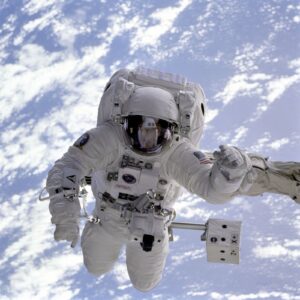
In 1962, NASA’s Mariner 1 probe to Venus veered off course and had to be destroyed 293 seconds after launch, and the postmortem traced the failure to a single missing overbar in the guidance code — one hyphen-sized mark that cost roughly $18 million in 1962 dollars.

On July 22, 1962, NASA's Mariner 1 Venus probe was destroyed 293 seconds after liftoff when a missing overbar in the guidance code caused an Atlas rocket to steer itself off course. The mark that would have prevented the failure was the width of a hyphen — and its absence cost roughly $18.5 million in 1962 dollars.

Oil and Gas

Titan’s atmosphere is roughly four times denser than Earth’s while its gravity is only one-seventh as strong, which means a human standing on Saturn’s largest moon could strap wings to their arms and, in principle, take off under their own muscle power

Titan's air is four times denser than Earth's and its gravity is one-seventh as strong — a combination so generous to flight that NASA is sending a nuclear-powered octocopter to fly across it, and physics says a human in wings could, in principle, do the same.

Oil and Gas

A fossil bed in North Dakota preserves fish with Chicxulub impact glass trapped in their gills, evidence they were alive as asteroid debris fell 3,000 kilometres from the crater during the first hour or two after the strike that ended the age of non-avian dinosaurs

At the Tanis fossil bed in North Dakota, sturgeon and paddlefish have been found with glass spherules from the Chicxulub impact lodged inside their gills — evidence that the animals were breathing in ejecta from an asteroid strike 3,000 kilometres away, within roughly an hour of the moment the dinosaurs' world ended.

Oil and Gas

In 1952, Rosalind Franklin and Raymond Gosling exposed a hydrated DNA fibre to X-rays for 62 hours, producing Photo 51: the pattern that helped Watson and Crick build the correct double-helix model months later

In May 1952, Rosalind Franklin and Raymond Gosling exposed a single hydrated DNA fibre to an X-ray beam for 62 hours in a basement at King's College London. The resulting Photo 51 showed the helix so clearly that its geometry could be read straight off the plate — months before Watson and Crick built their model.

Oil and Gas

A water-harvesting jacket developed at the University of Texas can collect up to 900 millilitres a day from ambient air, but the captured moisture still has to be heated before it becomes drinkable

Reports of a Swiss materials lab's prototype jacket that harvests close to a litre of drinking water per day from ambient humidity sit on top of a decade of peer-reviewed work on passive sorbent hydrogels — including an MIT panel that produced up to 161.5 millilitres a day in Death Valley with no electricity at all.

Oil and Gas

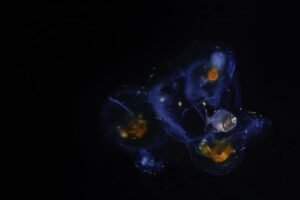
A tiny jellyfish called Turritopsis dohrnii can respond to injury or starvation by reprogramming its adult body back into a polyp, restarting its life cycle with no known limit on how often the reset can happen

A 4.5-millimetre jellyfish called Turritopsis dohrnii responds to injury or starvation by collapsing into a cyst and reorganising itself back into a polyp — the juvenile stage it left behind — through a cellular process called transdifferentiation. Captive colonies have been observed cycling through this reset up to ten times in two years, with no biological ceiling yet identified.