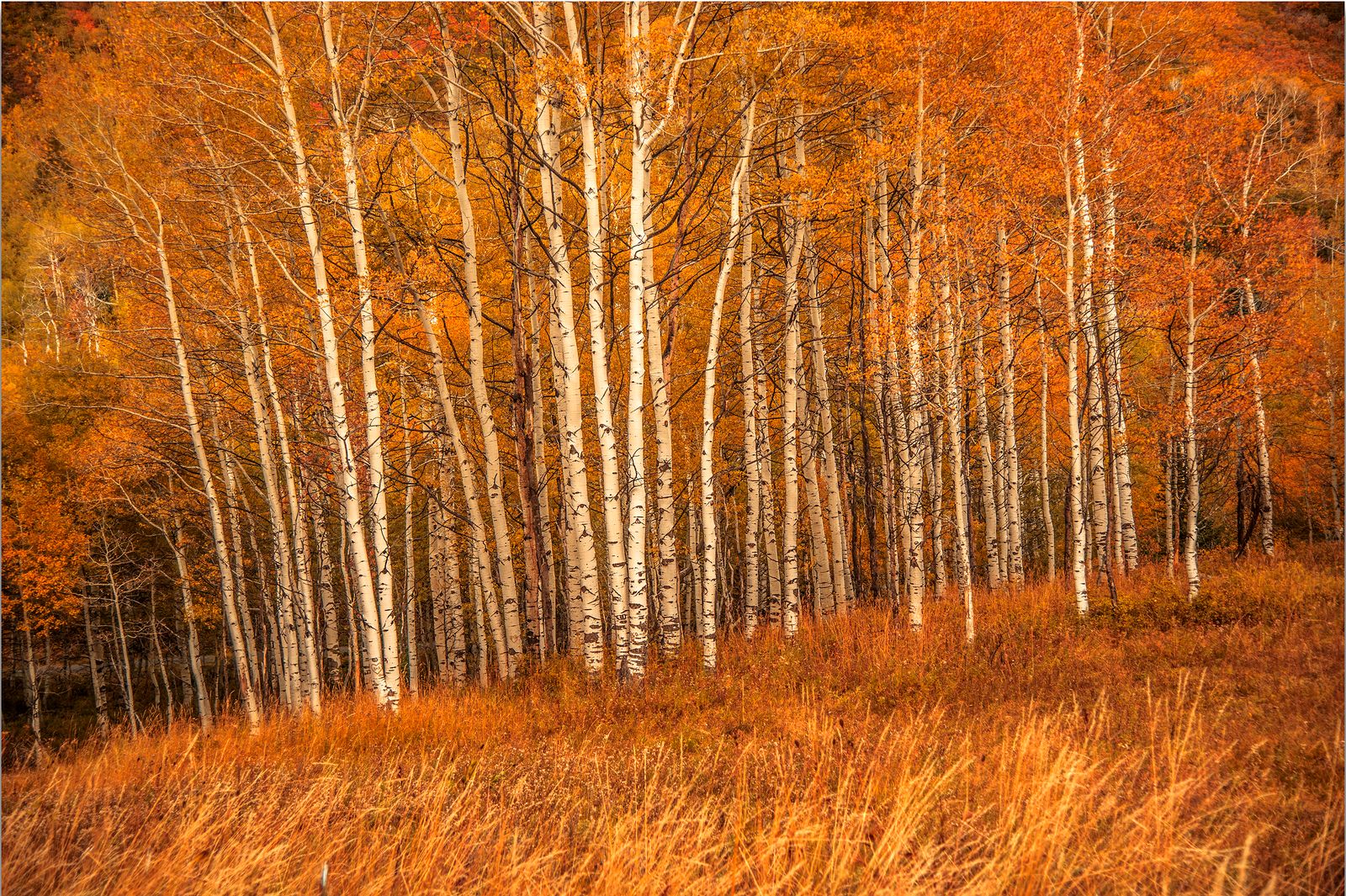
In south-central Utah, on a gentle slope above Fish Lake, roughly 47,000 quaking aspen trunks rise from a single organism. The colony is called Pando — Latin for “I spread” — and it covers about 106 acres, the footprint of about 80 American football fields laid end to end. Every trunk is genetically identical. Every trunk is fed by the same root system. Weighed together, the estimated 6,000 metric tons of living tissue make Pando the heaviest single organism ever measured on Earth.
What looks like a forest is one tree. The trunks — botanists call them ramets — are not separate individuals but stems pushed up from a shared underground network that has been quietly cloning itself for at least 14,000 years. A 2024 genetic analysis of hundreds of samples across the clone suggested a range as wide as 16,000 to 80,000 years, which would rank Pando among the oldest living organisms on Earth. Even the conservative end places its origins near the retreat of the last ice age.
One tree wearing 47,000 masks
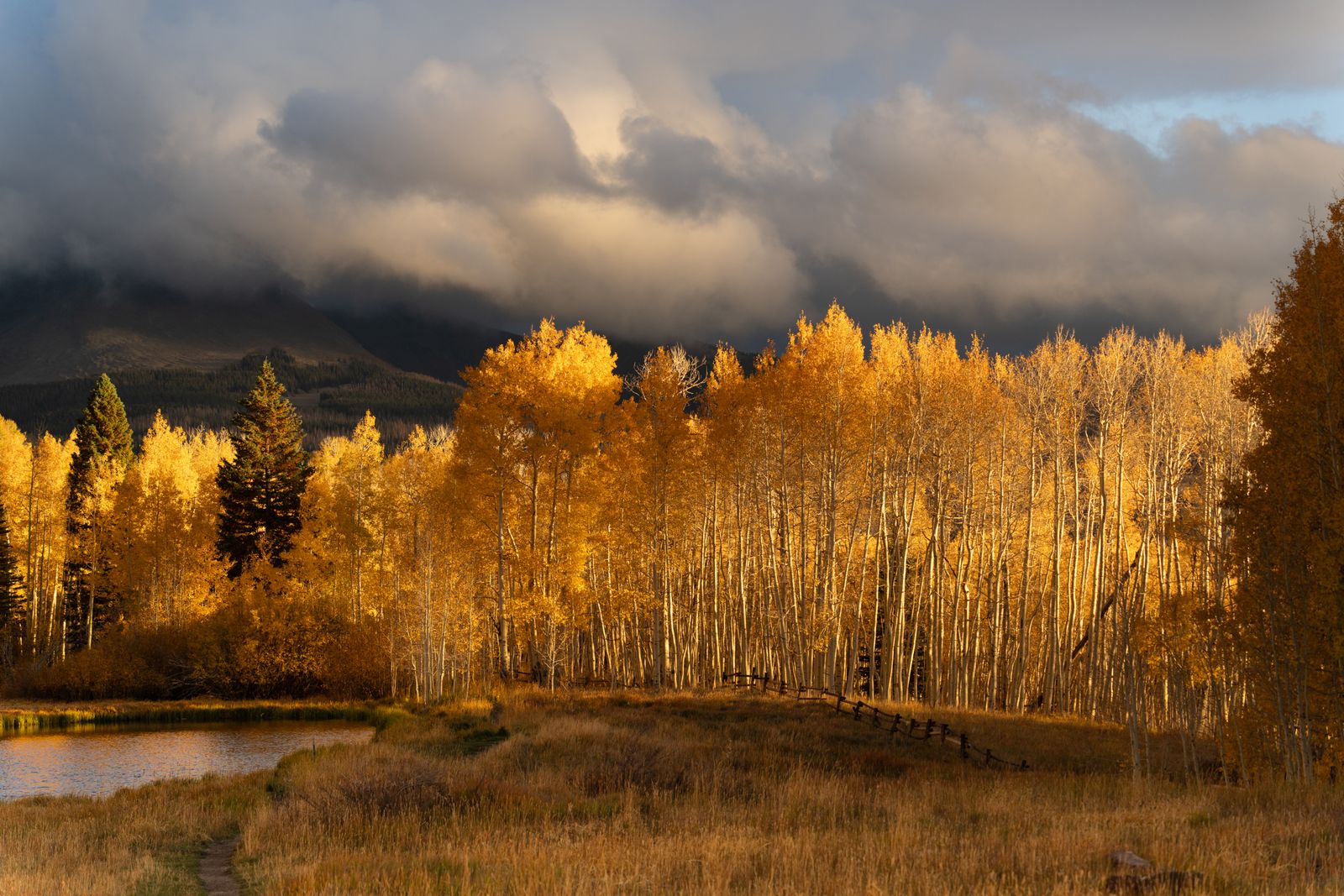
Quaking aspen (Populus tremuloides) is one of the most widespread tree species in North America, and it has a trick most trees do not. It reproduces mainly through its roots. A mature aspen sends out lateral roots just below the soil surface, and those roots push up new shoots — called suckers — that thicken into trunks. Cut one down, and the root system responds by sending up more.
Pando is what happens when that trick runs uninterrupted for millennia on the right slope, with the right soil, in the right fire regime. Researchers identified it as a single organism by genetic testing every trunk they sampled and finding the same genotype across the entire 106-acre stand, as the Utah Statesman explains in its profile of the colony. Each trunk lives roughly 100 to 130 years and then dies. The root network underneath does not.
The individual trees you can walk between are, in the plainest possible sense, temporary. The organism is what is under your boots.
How you weigh a forest that is one thing
The 6,000-ton figure — often cited as the reason Pando outweighs any blue whale, any giant sequoia, any fungal mat — comes from tallying the estimated mass of all 47,000 trunks plus the root system that connects them. A blue whale can weigh up to around 200 tons. A single General Sherman sequoia, the largest tree by trunk volume, weighs an estimated 2,000 tons or more. Pando is roughly three Shermans, distributed sideways instead of up.
The colony sits at about 8,800 feet elevation in Fishlake National Forest. The soil is volcanic. The slope faces gently south. Aspens like disturbance — fire, avalanche, anything that clears competing conifers — and for most of Pando’s life, natural wildfires kept spruce and fir from crowding in.
That balance is what botanists point to when they explain why one clone got so large here and not, say, in the Colorado Rockies or the Canadian Shield. Regular low-intensity fire, a mineral-rich soil, and long stretches without a hard freeze that killed the root crown all let the same genetic individual keep pushing up new stems, decade after decade, century after century.
The sound of a single organism
In 2022, sound artist Jeff Rice lowered a hydrophone into a hollow at the base of one Pando trunk during a summer thunderstorm and recorded a low rumble travelling through the root system. The recording, unveiled in 2023 and described in a ZME Science write-up of the project, captured vibrations from wind-shaken branches transmitting down through the trunks and out through the interconnected roots — audible evidence, Rice argued, that Pando is mechanically coupled underground.
Whether the sound proves anything biologically is still debated. What it does illustrate is how strange the object is. When Rice and his collaborators knocked on one trunk, the hydrophone picked up the thump under another trunk dozens of metres away, even when nothing was audible through the air.
Why the trees all turn gold on the same day
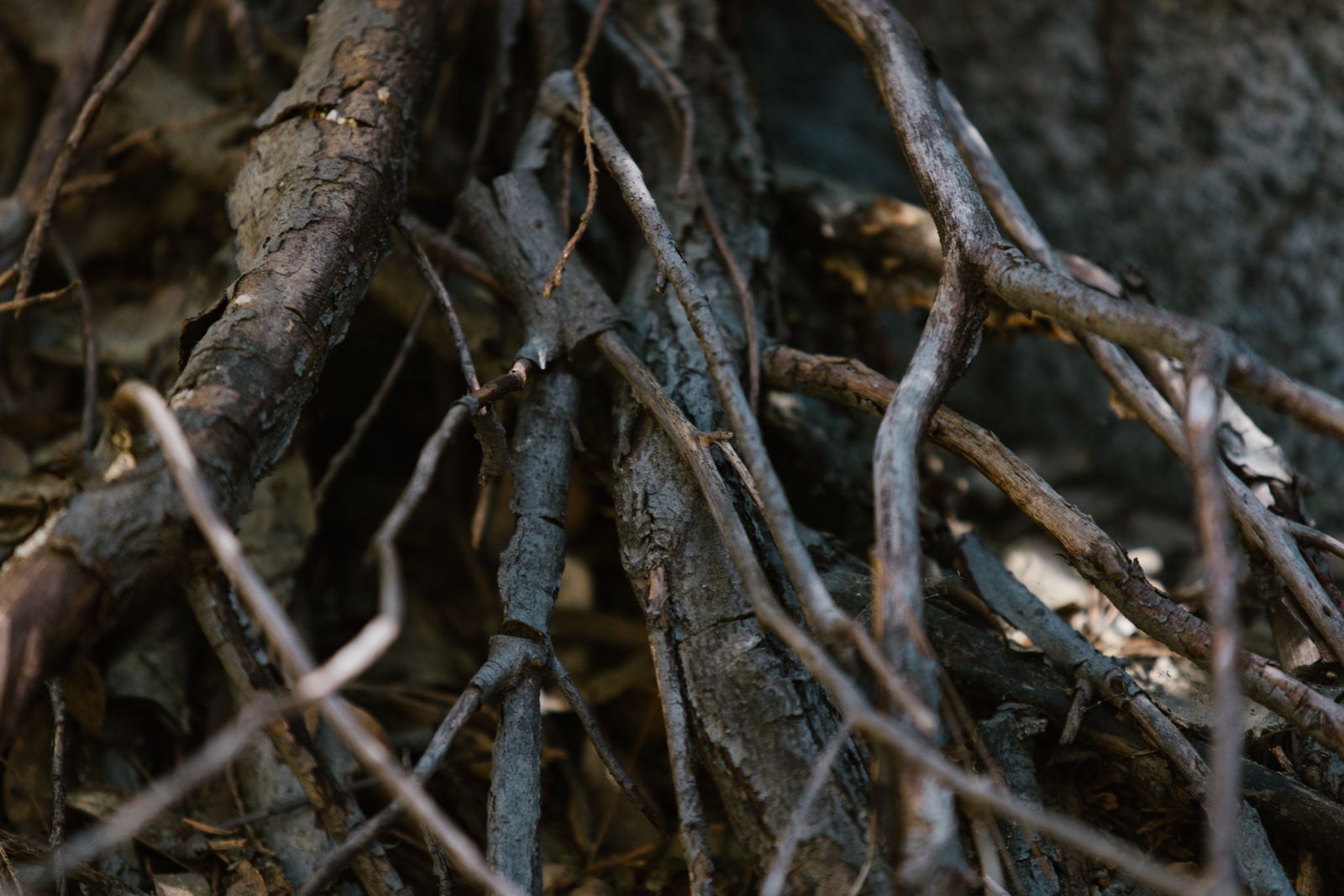
In late September, Pando does something no ordinary forest does. Because every trunk shares the same genome, every trunk runs the same biological clock. When autumn triggers chlorophyll breakdown, all 47,000 stems shift from green to gold within a narrow window — sometimes within the same 48 hours. A neighbouring aspen stand of unrelated clones will turn in a scattered, weeks-long wave. Pando turns as one.
Visitors who happen to be at Fish Lake during that window describe the effect as unsettling. The uniformity is the tell. A wild forest is a collection of individuals making individual decisions about when to drop their leaves. Pando is one decision, repeated 47,000 times.
Being eaten from below
The organism that survived the retreat of the ice sheets is now struggling to survive mule deer. Aspen suckers — the new shoots the root system sends up to replace dying trunks — are extremely palatable. In a healthy aspen stand, wolves, cougars and periodic fire keep browsing herbivores moving and reproducing at levels the trees can absorb. In Pando, the top predators are gone, hunting has been restricted around the grove, and mule deer and cattle have concentrated on the tender young stems.
The result, documented by ecologists at Utah State University and reported by ScienceAlert in its coverage of the ongoing decline, is that most of Pando has almost no successful regeneration. Old trunks are dying at their normal 100-year pace. New trunks are being nibbled to death before they can thicken into anything a deer cannot bite through. The forest looks intact from a distance. Up close, the age structure is collapsing.
Sections of the colony have been fenced. Inside the fences, young aspens have shot up to 15 feet in a few seasons. Outside the fences, the ground stays open and grassy, with knee-high shoots chewed back to stubs. The clearest photographic evidence of what Pando is losing sits on either side of a wire mesh.
A 14,000-year age with an asterisk
The commonly quoted 14,000-year age deserves care. No one has carbon-dated the root system directly — its constant self-replacement makes any single sample young. The figure is inferred from the size of the clone, the estimated rate at which aspen roots can spread laterally, and pollen records showing when aspens first colonised the region after the ice retreated. Estimates of Pando’s age vary widely, with some placing it considerably older and others closer to 9,000 years. What is uncontested is that no other known aspen clone comes close in mass or footprint.
For comparison, the bristlecone pines of the White Mountains in California — the oldest known individual trees — are over 4,800 years old. A honey fungus (Armillaria ostoyae) in Oregon’s Malheur National Forest covers a larger area than Pando, roughly 2,400 acres, but weighs far less because most of its body is thin fungal threads spread through soil and dead wood. By mass, Pando still holds the top of the leaderboard.
Why one organism, and not a forest of cousins
Aspen clones exist all across the American West. What makes Pando singular is the absence of interruption. Most aspen stands get broken up over centuries by fire that kills the root crown in patches, by insect outbreaks, by competing conifers shading out the shoots long enough to starve the roots. Pando’s site seems to have escaped every one of those disruptions for long enough to let a single genotype fill the whole basin.
There is also a sex-and-luck element. Aspens can reproduce sexually, through wind-pollinated flowers and cottony seeds, but seedlings almost never survive in the dry interior West. The climate has been arid for thousands of years, making aspen seed establishment extremely rare. That means any aspen you see between the Sierra Nevada and the Rockies is almost certainly a clone of something older — and the older the clone, the larger it tends to be. Pando is what you get when the odds compound in one direction for a very long time.
Similar accidents of persistence turn up in other Energy Daily explainers on organisms that outlive human timescales, including the piece on Greenland sharks living past 400 years. What Pando and the Greenland shark share is a metabolism slow enough, and a habitat stable enough, that individuals stopped being the relevant unit of time.
What survives depends on what eats the seedlings
The Forest Service has spent years experimenting with different management regimes across the grove: fencing, selective culling of deer, prescribed burns to trigger a fresh flush of suckers. Early results, reported by the Utah State University team studying the clone, suggest that where browsing is excluded, Pando still has the biological capacity to regenerate vigorously. The root system is not senescent. The problem is above ground, not below it.
Which means the largest organism ever weighed on Earth may live or die based on a fence line and a hunting quota. The tree survived the Younger Dryas, the medieval warm period, the little ice age, the arrival of humans in the Great Basin, and the industrial reshaping of the American West. What it may not survive is the removal of the wolves that used to keep the deer moving.
Walk the grove in late September, when every leaf turns at once and the whole 106 acres flashes gold in a single afternoon, and the effect is of one enormous, ancient animal shrugging. The trunks come and go. The thing underneath has been shrugging for 14,000 autumns.