On October 24, 1946, a 35-millimetre DeVry motion-picture camera bolted into the nose of a captured German V-2 rocket clicked once every second and a half as the missile climbed 65 miles above the New Mexico desert, then tumbled back to Earth and shattered on impact — but the steel film cassette, engineered to survive the crash, was recovered intact from the dunes and its frames stitched together into the first photograph ever taken of Earth from above the atmosphere.
The rocket lifted off from White Sands Proving Ground, where a static engine test only months earlier had been so violent it destroyed part of the test stand. The camera was the work of a small team from the Applied Physics Laboratory at Johns Hopkins, led by engineer Clyde Holliday. The film canister was wrapped in steel. The rocket was not.
How a Nazi weapon ended up in a New Mexico blockhouse
The V-2 that carried Holliday’s camera was not built in America. It was assembled from parts hauled out of the Mittelwerk factory in central Germany in the summer of 1945 under Operation Paperclip, the U.S. programme that also brought Wernher von Braun and German rocket engineers to Fort Bliss, Texas, and then across the state line to White Sands. Hundreds of railcars of V-2 components arrived at the proving ground between August 1945 and the following spring, according to the Las Cruces Sun-News’ account of the White Sands programme.
The Army’s initial plan was modest, with plans to reassemble and fire multiple V-2s. In the end, dozens flew from White Sands over the next several years, most of them carrying scientific payloads bolted where a one-tonne warhead used to sit.
The March 1946 static test — the first ignition of a V-2 engine on American soil — burned at exhaust temperatures near 5,000°F and destroyed part of the test stand. The first free launch, in April, reached only a few miles and crashed. The second, in May, reached high altitude and put the United States, for the first time, into what the Army briefing officers called the Space Age.
Why anyone thought to bolt a camera to it
By the summer of 1946, White Sands had become a queue. Universities, the Naval Research Laboratory, the Air Materiel Command and the Applied Physics Laboratory were all competing for space in the nose cones. The rockets were free — they had been paid for by the Wehrmacht — and each flight offered roughly six minutes above 50 miles.
Holliday’s group at APL had been studying the upper atmosphere with balloons and sounding instruments. A camera was almost an afterthought. The DeVry unit was a standard 35mm cine camera, modified to run on a timer and mounted to look sideways through a small quartz window in the rocket’s steel skin. The imaging package was relatively lightweight and inexpensive.
The engineering problem was not taking the picture. It was surviving the return. V-2s did not come back gently. They arced up, ran out of fuel, coasted through apogee, then fell nose-first into the desert at supersonic speed, digging craters wide enough to swallow a jeep. Anything designed to fly again had to be armoured.
APL’s answer was a steel film magazine, roughly the size and shape of a small thermos, welded into a reinforced housing. The camera itself would be destroyed. The film would not. When the rocket crashed north of the launch complex, recovery teams drove into the impact zone, dug through the wreckage, and pulled the cassette out of the debris field intact.
What the frames actually showed
Developed in a darkroom at White Sands, the film contained several dozen exposures taken as the rocket climbed, tumbled at apogee, and fell. Stitched together, the frames revealed a curved horizon, the pale brown wash of the New Mexico desert running into the Gulf of California, and above it all a thin, dark band — the beginning of space. The highest frames were taken at 65 miles, well above the 50-mile boundary the U.S. Air Force would later use to define astronaut status.
Before October 24, 1946, the highest photographs of Earth had been taken from high-altitude balloons in the 1930s. Holliday’s frames pushed that ceiling up dramatically. As Inverse noted on the 75th anniversary of the flight, the images were grainy, tumbled, spliced from a rotating rocket — and yet unmistakable. You could see the shape of the planet.
Holliday published a selection in National Geographic in 1950. One frame, showing a vast expanse of the American Southwest curving away into darkness, became the reference image for a generation of aeronautical engineers who had never seen the sky from above.
The rocket itself
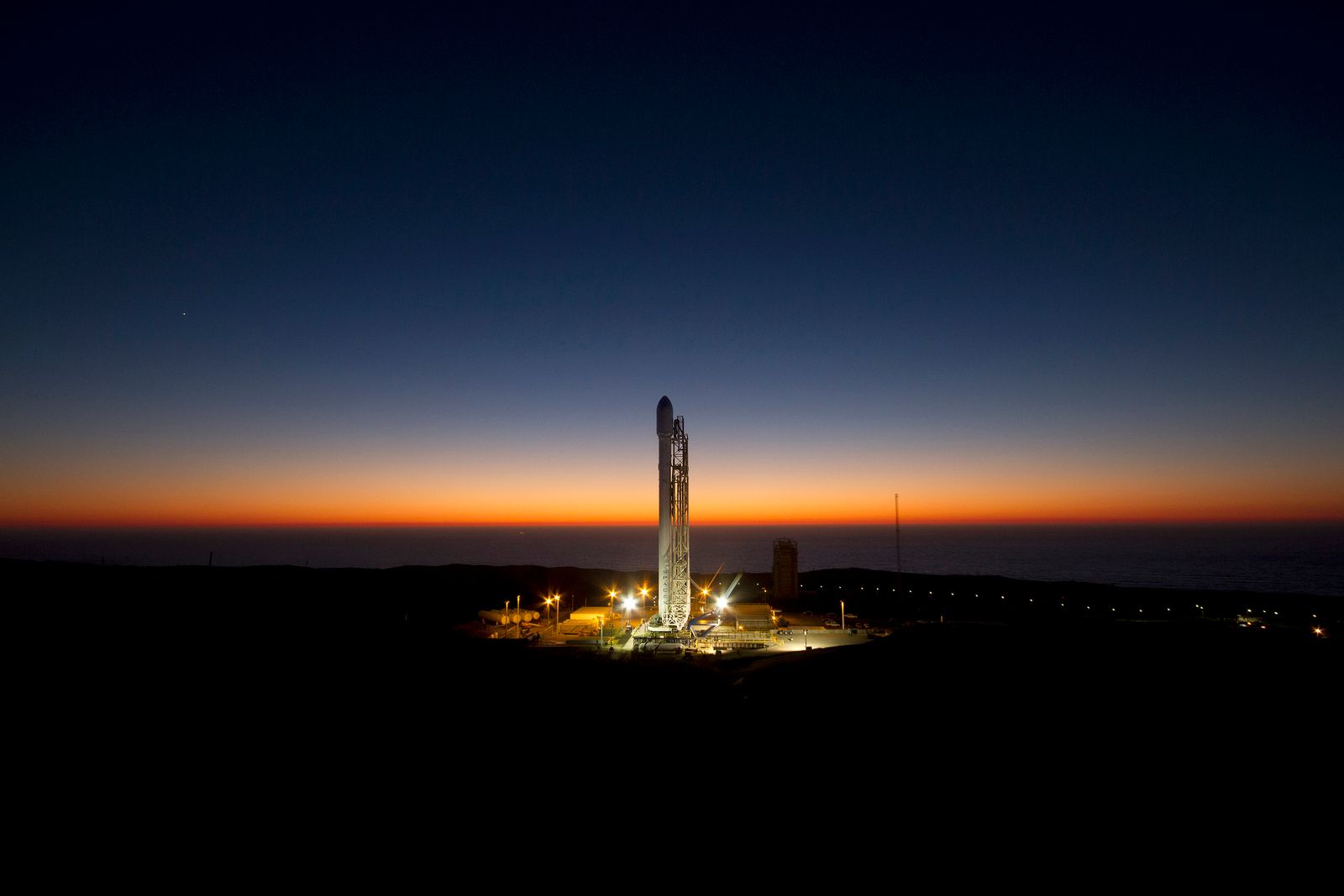
A V-2 was 46 feet tall, weighed over 12 tonnes fuelled, and burned a mixture of liquid oxygen and ethanol. Its single engine produced tens of thousands of pounds of thrust for around a minute. That was enough, at White Sands’ elevation and with the rocket flown ballistically rather than on the flat wartime trajectory used against London and Antwerp, to reach altitudes well above 50 miles depending on payload.
Every launch was a data-gathering exercise. Instruments recorded cosmic ray flux, ultraviolet spectra of the Sun, atmospheric pressure, temperature and density at altitudes no instrument had ever reached. The Smithsonian’s National Air and Space Museum keeps one of the surviving V-2s in its collection, along with fragments from White Sands recoveries. Fruit flies flew on a V-2 in 1947 and were recovered alive — among the first living creatures to return from space.
The British nearly turned the V-2 into something else entirely. A 1946 proposal called Megaroc, developed by the British Interplanetary Society, would have stripped the warhead, extended the fuselage and installed a pressurised capsule capable of putting a single pilot on a suborbital arc. Astronomy Magazine has traced how the project reached detailed engineering studies before being killed by postwar budget cuts. Had it flown, a Briton would have preceded Yuri Gagarin by more than a decade.
Why the 1946 photograph matters more than Sputnik
Ask when the space age started and most people say October 4, 1957 — Sputnik. That answer flattens more than a decade of American work at White Sands, Cape Canaveral’s precursor site, and the Naval Research Laboratory. The History News Network has argued that the space age began substantially earlier, pointing to the White Sands V-2 flights, the 1949 Bumper WAC two-stage rocket that reached extreme altitude, and the biological experiments that put mice and monkeys on suborbital arcs years before the Soviets launched Laika.
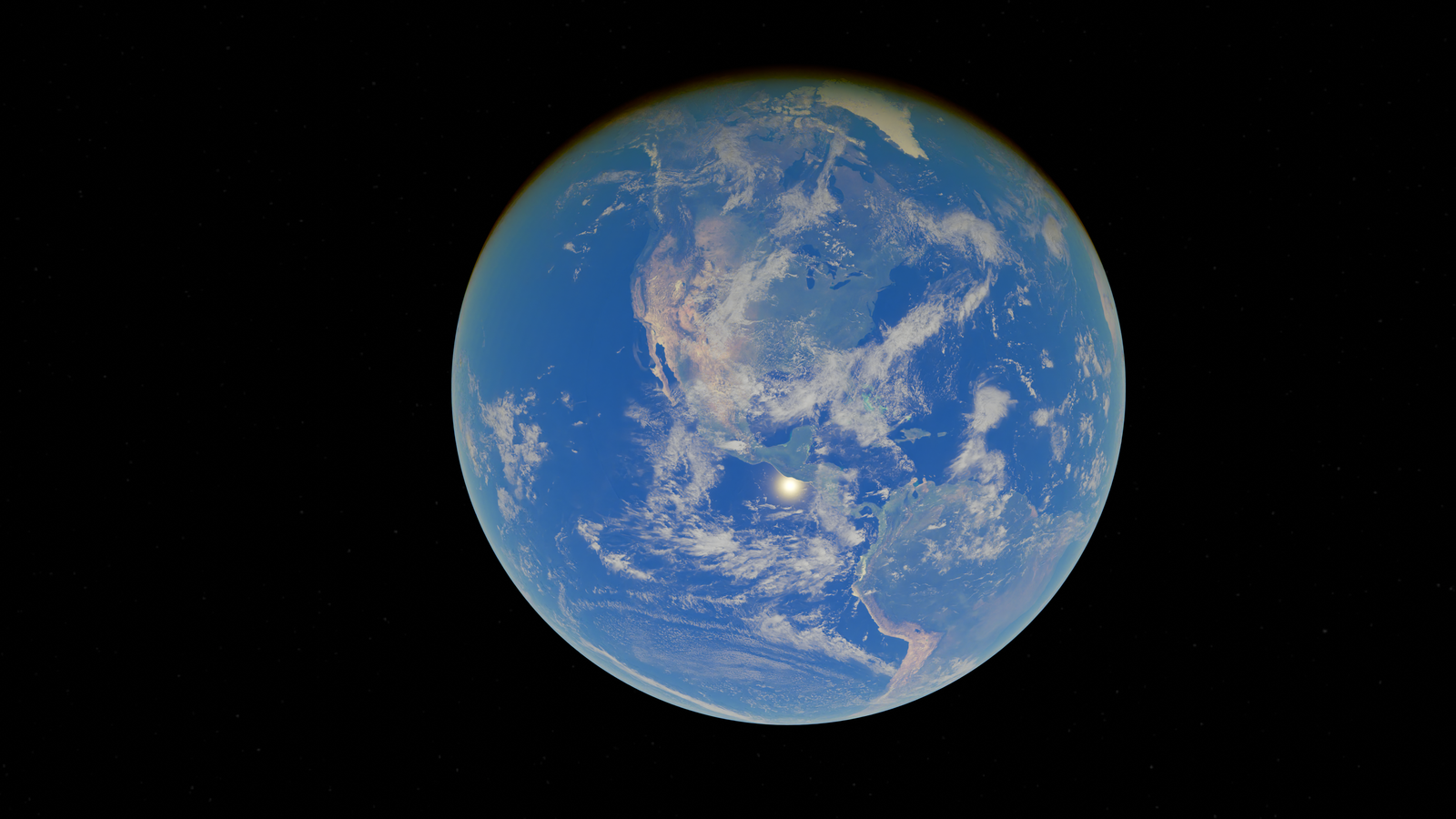
The distinction matters because Sputnik was about orbit — a satellite going around. The V-2 photographs were about perspective — a species looking back. They arrived a decade before anyone in the general public would see the phrase “Earth from space” in a newspaper caption. William Anders’ Earthrise from Apollo 8 in December 1968 gets the credit for reshaping how humans see their planet, but Holliday’s grainy October 1946 stitch was the first draft.
What happened to the programme
The V-2 launches at White Sands ended in the early 1950s, by which time the stockpile of German parts was exhausted and American designs — the WAC Corporal, the Aerobee, and eventually the Redstone — had taken over. Von Braun’s team moved to Huntsville, Alabama, where they would build the Saturn V. The Static Test Stand that nearly destroyed itself in March 1946 still stands in the desert, empty, its concrete channel scorched black.
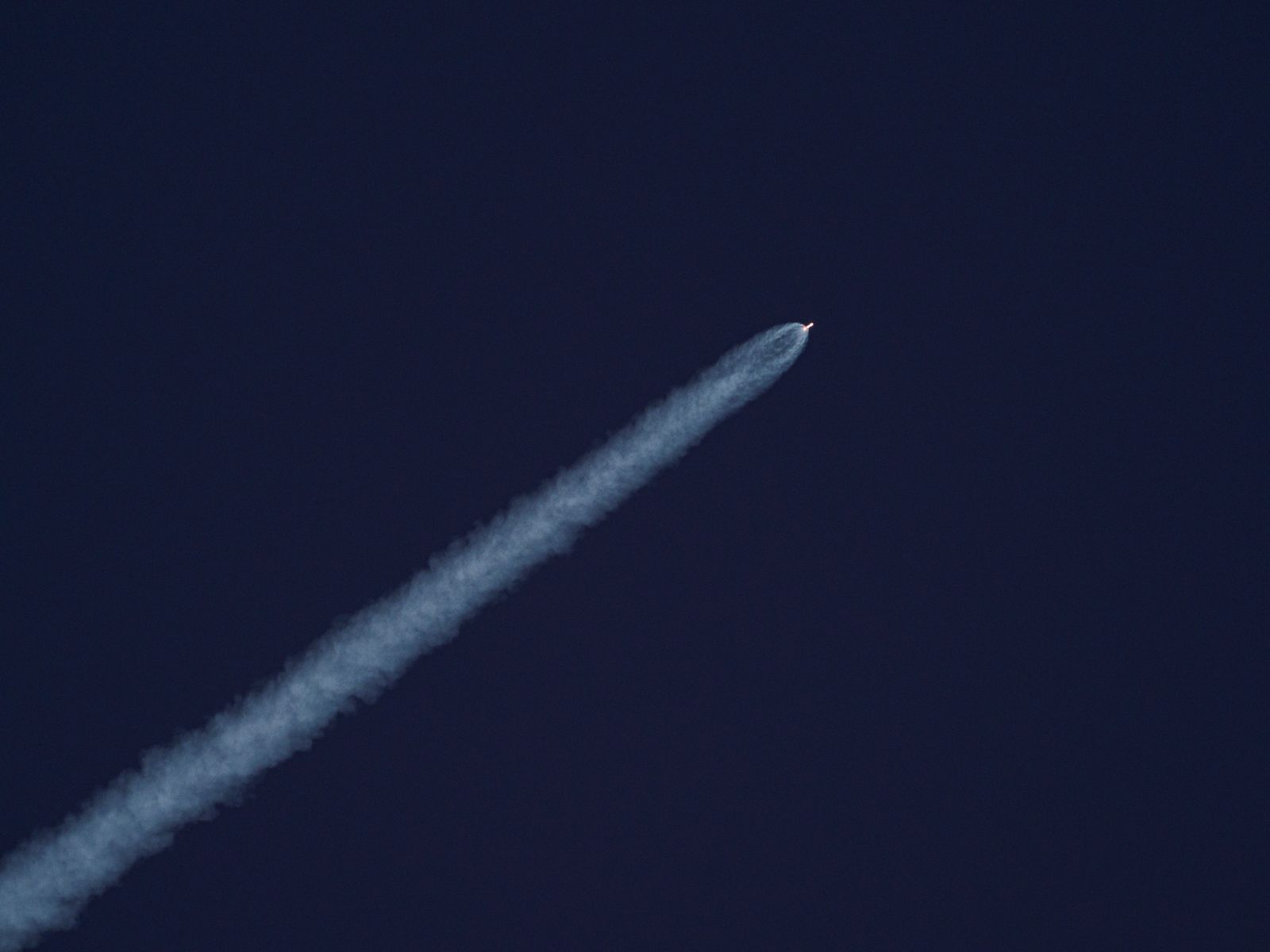
Landing rockets under their own power — the trick that ends every Falcon 9 flight today — took another 69 years to work out. Modern Falcon 9 first stages touch down on landing zones while second stages coast onward to orbit, a choreography that would have been unimaginable to the recovery crews scraping V-2 wreckage out of the White Sands gypsum.
The programme also seeded a lasting anxiety. NPR’s Throughline episode on the dark side of the space race traces how the same engineers who built weapons for Hitler’s Reich became the public faces of American spaceflight within fifteen years — a moral inheritance the field has never quite settled.
The film cassette, and what came after
The original 1946 film survives. Fragments are held at White Sands Missile Range Museum and at the National Air and Space Museum. The individual frames are small — 35mm — and the resolution is what you would expect from mid-1940s cine film shot through a quartz porthole on a spinning rocket. But arranged in sequence, the horizon curves.
The image sits in a lineage of small, decisive photographs. In 1952, Rosalind Franklin and Raymond Gosling produced Photo 51, the X-ray diffraction pattern that revealed the shape of DNA — another case where a piece of film, exposed under difficult physical conditions, changed what humans thought they were looking at. Energy Daily has covered several of these first-of-their-kind measurements — the moments where an instrument reached a place no instrument had reached before, and what came back on the film or the sensor rewrote the reference scale.
Fred Rulli, one of the White Sands soldiers who helped recover Holliday’s cassette from the desert, told an interviewer decades later that when the team spliced the frames together and projected them on the wall of the base lab, the scientists ran around like they had won the Kentucky Derby. He said one of them shouted that they were seeing the Earth as it would look to visitors from another planet.
The rocket that carried the camera came apart on impact somewhere north of the launch complex. Pieces of it are still out there, half-buried in gypsum, eighty years on, miles from the concrete pad where the first V-2 static test nearly destroyed itself.