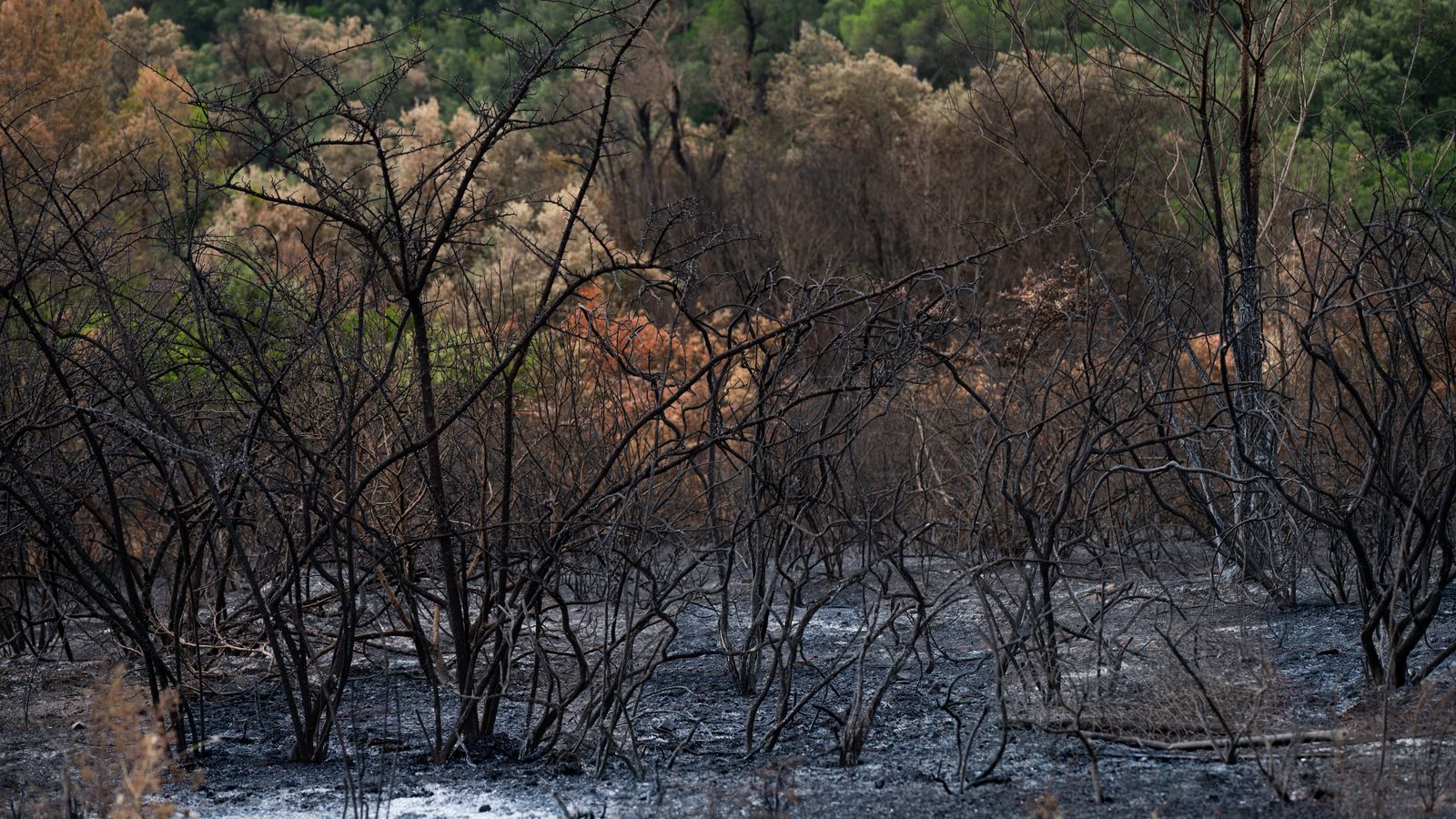
Costa Rica did it by changing both the law and the price of leaving a forest intact. After forest cover fell to an estimated 21 percent in 1987, the country tightened protection of natural forest and, from 1997, began paying landowners for environmental services through a national program administered by FONAFIFO. Together with the collapse of cattle expansion, rural-to-urban migration, protected areas and a tourism economy built around wildlife, those measures helped lift forest cover to about 59 percent by the early 2020s, according to the OECD’s 2023 environmental review.
That is not simply a story of millions of trees being planted in neat rows. Much of the comeback happened when exhausted or unprofitable pasture was abandoned and secondary forest began reclaiming it, first with scrub and fast-growing pioneer trees, then with a taller and more complex canopy. The state did not manufacture every hectare, but it changed the conditions under which natural regeneration could survive.
The recovery also resists a single heroic explanation. Costa Rica used a stick by restricting the conversion of natural forest, a carrot by paying landowners who protected or restored trees, and a new market through tourism and carbon finance that made living ecosystems economically visible. None of those forces would have produced the same result alone.
The incentives that stripped the land
In 1940, forests covered roughly three-quarters of Costa Rica. Over the following decades, roads pushed into previously remote areas while agriculture and cattle ranching expanded across the lowlands. The country became a major example of how quickly tropical forest could disappear when clearing was treated as development.
The incentives were unusually direct. Credit supported cattle production, export markets rewarded beef, and land-tenure rules often made cleared land easier to claim or defend than forest that appeared unused on paper. Research on participation in Costa Rica’s later environmental-payment program traces the earlier forest loss to road expansion, cattle-export credit and land-titling systems that rewarded clearing.
By the 1980s, the green cover visible from above had been reduced to scattered blocks, mountain forests and protected remnants. Costa Rica was losing tens of thousands of hectares in severe years, while pasture spread across land that had once carried dense tropical forest. The damage was not limited to trees, because clearing also fragmented wildlife habitat and exposed watersheds to erosion.
Then the economic current began to turn. International beef conditions weakened, marginal ranches became less attractive, more Costa Ricans moved toward towns and cities, and tourism began creating income around beaches, volcanoes and wildlife. Some pasture was left alone long enough for forest to return, but abandonment by itself could not guarantee that the new growth would remain standing.
The law that changed what land was worth
Costa Rica had already created national parks and other protected areas, preserving some of its richest remaining forests. Yet large areas of woodland stood on private property, beyond the practical reach of a conservation model built only around state reserves. A forest transition required rules that followed the trees across property lines.
The decisive legal framework arrived with Forestry Law No. 7575, enacted in 1996. It made the conservation and management of natural forest a priority of the state, restricted changes in forest land use and established the institutional basis for recognising the services supplied by forests. Clearing was no longer treated as an uncomplicated route to making land productive.
That legal shift mattered because young secondary forest is vulnerable. A pasture may begin turning green within a few rainy seasons, but one renewed round of cutting or burning can reset the process in a day. Restrictions on land conversion gave regrowth time to pass from brush to woodland and, in suitable places, from woodland toward a more mature canopy.
The law also named what a forest produces without being cut. Through FONAFIFO’s Payment for Environmental Services program, the state recognises greenhouse-gas mitigation, water protection, biodiversity and scenic beauty as services with economic value. The idea was simple but radical: a standing forest was not idle land, because it was already doing work.
How paying for a standing forest works
Under the program, eligible owners enter contracts covering activities such as protecting existing forest, reforesting cleared land or maintaining agroforestry systems. Payments are tied to the area or activity under contract, while technical requirements and monitoring are intended to keep the environmental service in place. The arrangement turns conservation from a request into a transaction.
The principal domestic funding source is not a separate green levy added at the pump. FONAFIFO receives 3.5 percent of the revenue collected through Costa Rica’s single fuel tax, alongside smaller or complementary streams such as water-use charges, international finance, donations and carbon-related revenue. Drivers buying petrol therefore help finance forest contracts they may never see.
This mechanism filled a gap left by national parks. Protected areas could secure public land, but they could not automatically compensate a farmer or family that gave up the option of converting private forest to pasture, crops or development. The payment did not have to exceed every possible commercial return to matter, especially where land was marginal and owners already preferred to conserve it.
The program has accumulated thousands of agreements across forest protection, reforestation and agroforestry, with FONAFIFO publishing contract statistics through 2025. Its longevity may be as important as any single annual total. Landowners can make long-term decisions only when they believe the institution will still exist after the next election or budget dispute.
Access has never been perfectly equal. Earlier research found that larger owners were disproportionately represented, partly because formal titles, technical paperwork and transaction costs made participation easier for them. Later reforms and benefit-sharing programs have tried to widen access, but a payment system built around documented land rights will always struggle where ownership is communal, disputed or poorly recorded.
Why one program cannot claim the whole comeback
The forest curve had already begun bending before the payment program started in 1997. Falling pressure from cattle, expanding protected areas and natural regeneration were moving in the same direction. That makes the policy difficult to evaluate, because researchers must estimate what participating landowners would have done without a payment.
A 2010 review of the evidence found that national studies had not demonstrated a clear reduction in overall deforestation, while some regional work showed additional protection. In many early contracts, money went to forest that may not have faced an immediate threat of clearing. The program could still strengthen institutions and landowner commitment without producing a dramatic short-term change visible in national statistics.
Later evidence suggests the effects improved as targeting evolved. A 2021 impact study estimated that contracts signed from 2000 to 2005 prevented deforestation on about 2.5 percent of the enrolled land over a five-year contract period. That sounds modest, but it also shows why placement matters: paying in a low-risk forest preserves trees, while paying at an active clearing frontier may prevent a measurable loss.
Tourism changed the calculation from another direction. Costa Rica recorded 3,139,008 international tourist arrivals in 2019, according to statistics compiled by the Costa Rican Tourism Institute. Forests became part of the national product, supplying the cloud-forest trails, monkeys, sloths, birds and protected landscapes that visitors had crossed oceans to see.
The comeback therefore came from a stack of forces rather than one lever. Parks protected core habitat, law constrained clearing, payments supported private stewardship, weaker cattle economics released land, and tourism increased the value of intact landscapes. Costa Rica’s achievement was not finding one perfect policy, but keeping several imperfect ones pointed in the same direction for decades.
What returned, and what did not
A country can regain forest cover without recreating the forest it lost. Much of Costa Rica’s expansion consists of secondary forest growing on abandoned farmland, not untouched old-growth rainforest restored overnight. A satellite can record both as canopy, even though their age, structure and ecological communities are different.
Secondary forest is still consequential. Its roots hold soil, its leaves shade streams, its wood stores carbon, and its growing canopy reconnects pieces of habitat that had been isolated by pasture. The World Bank’s forest accounting work has also shown that the country’s forests contribute more economic value than conventional measures once captured.
Yet recovery is uneven. Costa Rica’s tropical dry forests have made substantial gains, while humid and cloud forests remain exposed to fragmentation and deterioration in some regions. About half of the country’s forested area has some form of protection, but the other half still exists inside working landscapes where roads, farms, towns and forests press against one another.

The headline percentage also depends on what is being measured. Natural forest, secondary regrowth, tree plantations, mangroves and other wooded land can appear differently across national inventories and satellite products. The honest claim is not that every green pixel is primeval rainforest, but that a country whose forest estate was collapsing now has trees across well over half of its land.
That places Costa Rica among a small set of restoration stories large enough to alter a national map. Energy Daily has also examined the partial recovery of the North Aral Sea after the Kokaral Dam and the restoration initiatives recognised by the United Nations. In each case, recovery is real, incomplete and dependent on institutions lasting longer than the crisis that created them.
The bill comes due again
Regrown forests now face a climate different from the one in which the recovery began. Hotter droughts, stronger fires, storms and shifting pests can kill mature trees or slow the succession of younger stands. Similar pressures are expected to reshape forests across Europe, and tropical forests are no more insulated from disturbance simply because their canopies look dense.
The financing system contains its own contradiction. A program funded largely from fuel-tax revenue becomes harder to sustain as transport electrifies and petrol sales decline. International carbon payments are beginning to fill part of that space: the World Bank reported in March 2025 that Costa Rica had received a second $17.5 million payment for verified emission reductions under an agreement worth up to $60 million.
Where that money lands will shape the next phase. Indigenous territories and remote communities protect large forest areas, yet they have not always had equal access to contracts or public finance. Newer benefit-sharing arrangements are directing more carbon revenue toward local governance and infrastructure, turning forest protection into something communities can see in roads, meeting spaces and livelihoods rather than only in national carbon accounts.
On a wet morning in Costa Rica, secondary forest can make an old cattle field look ancient from the road. Under the canopy, the thinner trunks and open patches still reveal its recent past, while seedlings rise through the shade toward whatever the forest will become next. The country recovered more than a colour on a satellite map, but keeping it there will require another generation to keep paying, enforcing and waiting while the trees grow.