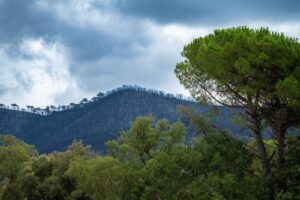
Oil and Gas How did a Central American country smaller than West Virginia go from barely one-fifth forest cover to trees covering more than half its land in a single generation? By Energy Daily Editorial Team · Jul 31, 2026
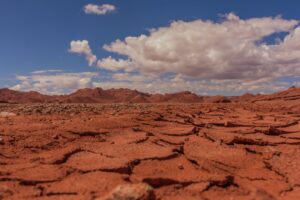
Oil and Gas How did a Soviet lander survive 127 minutes on the surface of a planet where the air pressure crushes submarines and the ambient heat melts lead? By Energy Daily Editorial Team · Jul 31, 2026
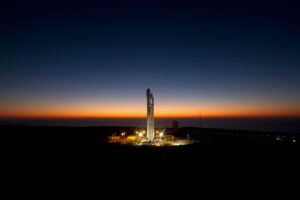
Oil and Gas How did a captured wartime rocket, fired straight up from a New Mexico desert range in 1946, return the first photograph of Earth taken from above the atmosphere? By Energy Daily Editorial Team · Jul 31, 2026
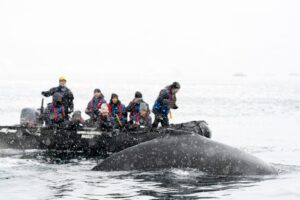
Oil and Gas A bowhead whale killed off Alaska in 2007 had likely carried a brass bomb-lance fragment in its shoulder since around 1890, evidence of a failed whaling strike more than a century earlier By Energy Daily Editorial Team · Jul 31, 2026
Oil and Gas In 1952, Rosalind Franklin and Raymond Gosling exposed a hydrated DNA fibre to X-rays for 62 hours, producing Photo 51: the pattern that helped Watson and Crick build the correct double-helix model months later By Energy Daily Editorial Team · Jul 30, 2026
Oil and Gas A water-harvesting jacket developed at the University of Texas can collect up to 900 millilitres a day from ambient air, but the captured moisture still has to be heated before it becomes drinkable By Energy Daily Editorial Team · Jul 30, 2026
Oil and Gas What happened when pastoral communities across 8,890 square kilometres changed how they lived with predators, and field attacks fell from 516 to 300 while attempted retaliatory killings dropped from 19 to 3? By Energy Daily Editorial Team · Jul 29, 2026
Oil and Gas How does a single tree colony in the American West cover roughly 106 acres and share one root system, making it arguably the heaviest living organism ever measured? By Energy Daily Editorial Team · Jul 29, 2026
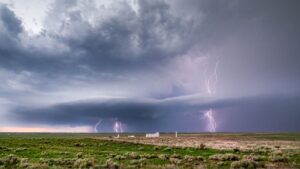
Oil and Gas A single lightning flash in April 2020 stretched 768 kilometres across Texas, Louisiana and Mississippi, once the longest ever measured, before an older storm rewrote the record again By Energy Daily Editorial Team · Jul 29, 2026
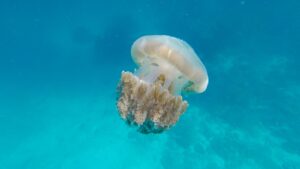
Oil and Gas A tiny jellyfish called Turritopsis dohrnii can respond to injury or starvation by reprogramming its adult body back into a polyp, restarting its life cycle with no known limit on how often the reset can happen By Energy Daily Editorial Team · Jul 29, 2026
Oil and Gas A tiny crustacean called Cymothoa exigua enters a fish through the gills, severs the tongue, and then attaches itself in the tongue's place, functioning as a working replacement organ for the rest of the fish's life By Energy Daily Editorial Team · Jul 29, 2026
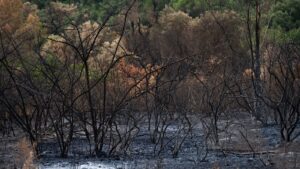
Oil and Gas What happened when a war-flattened Asian peninsula with bare, eroding hills spent four decades planting trees and ended up roughly two-thirds covered in forest? By Energy Daily Editorial Team · Jul 29, 2026
Oil and Gas A 2024 estimate put a 100-word GPT-4 email at 519 millilitres of water, while training GPT-3 may have directly consumed enough for 350,000 people to drink for a day By Energy Daily Editorial Team · Jul 28, 2026
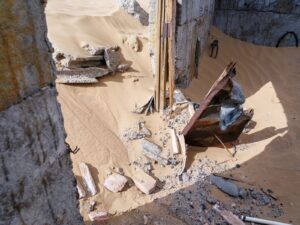
Oil and Gas Saudi Arabia, a country that is roughly 95 percent desert, imports sand from Australia to make concrete, because wind-rounded desert grains are too smooth to bind and only angular river or quarry sand will hold a structure together By Energy Daily Editorial Team · Jul 28, 2026
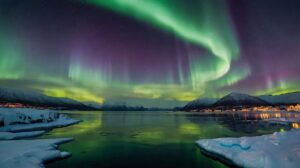
Oil and Gas In 1859, a solar storm now called the Carrington Event pushed auroras as far south as Cuba and set telegraph paper on fire in offices from Boston to Paris, with operators reporting they could still send messages after disconnecting the batteries because the wires were carrying the storm's own current. By Energy Daily Editorial Team · Jul 27, 2026
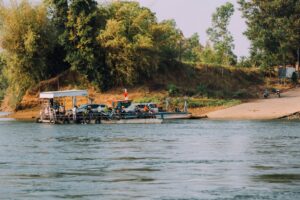
Oil and Gas A grid-scale battery ferry roughly 130 metres long is now crossing the Río de la Plata between Argentina and Uruguay carrying about 2,100 passengers on charge alone, making it the largest all-electric passenger vessel ever floated By Energy Daily Editorial Team · Jul 27, 2026