
The half-litre figure is real, but it is not a universal meter reading for every chatbot prompt. In 2024, a Washington Post collaboration with Shaolei Ren of UC Riverside estimated that producing a 100-word email with GPT-4 at an average US data centre had a total water footprint of 519 millilitres. The calculation included water consumed directly at the data centre and indirectly in generating its electricity.
That distinction matters because newer estimates are considerably lower. Ren now places a comparable GPT-4 prompt closer to 15 millilitres, including about five millilitres of direct cooling water. The argument is therefore no longer about whether every email empties a bottle, but about which model, cooling system, power grid and accounting boundary are being measured.
Where the water actually goes
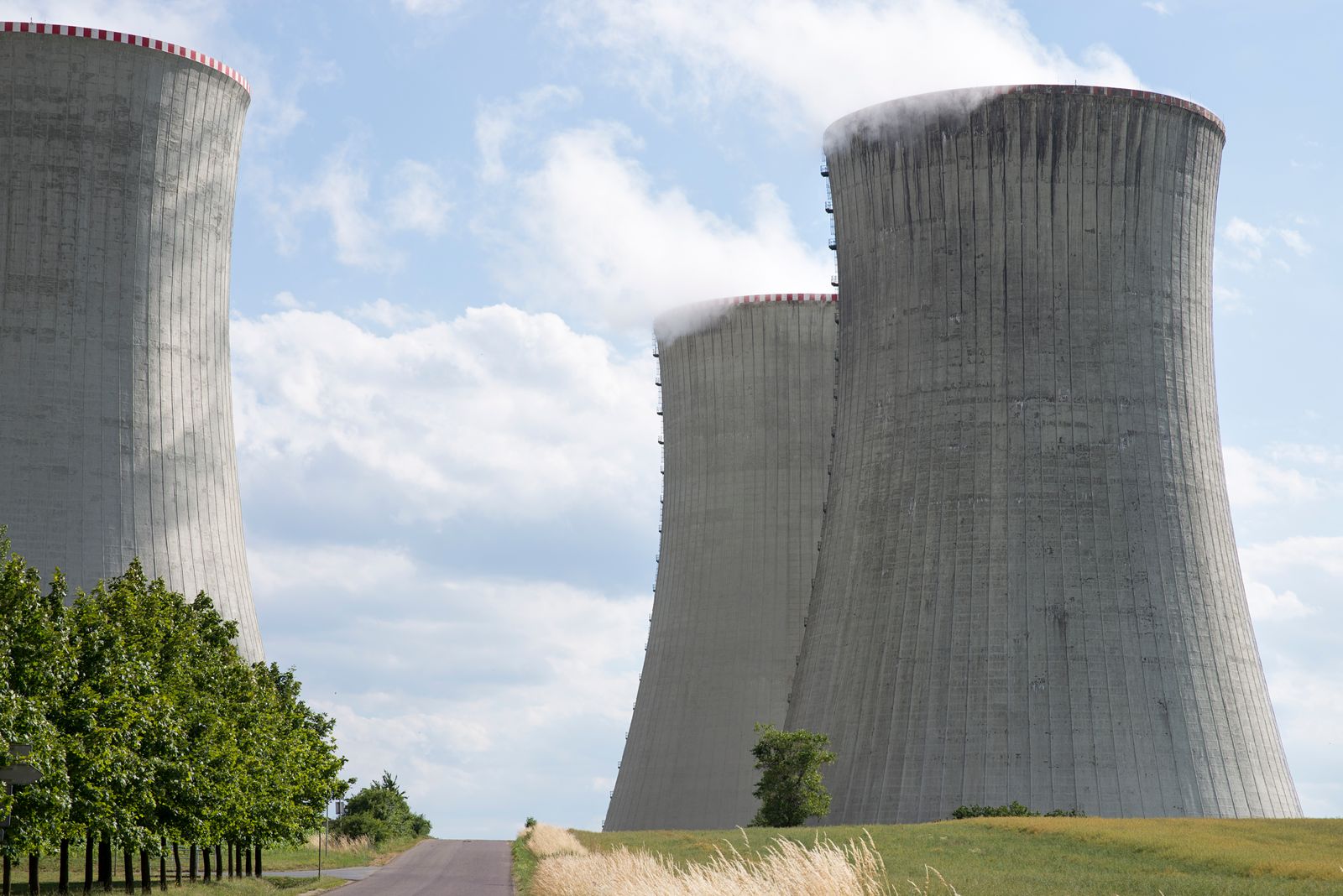
Nearly all the electricity used by processors eventually becomes heat. Data centres must move that heat away from chips and server rooms, using combinations of liquid cooling, chillers, cooling towers, outside air and dry coolers. The equipment selected depends on rack density, climate, electricity prices and the availability of water.
Researchers separate the resulting footprint into two broad categories. Direct water is consumed at the facility, most visibly when cooling towers evaporate water while rejecting heat. Indirect water is consumed elsewhere when power stations generate the electricity used by the servers, pumps, fans and other equipment.
This is why the original 519-millilitre estimate should not be described as water flowing entirely through a ChatGPT cooling loop. A large portion was attributed to electricity generation. It was a lifecycle-style estimate for a specific workload and assumed infrastructure, not a measurement taken from a pipe after one user pressed Enter.
Why nobody agrees on one number
In June 2025, Sam Altman wrote that an average ChatGPT query used 0.34 watt-hours of electricity and 0.000085 gallons of water, or about 0.32 millilitres. He did not provide a methodology, model version, prompt length, location or explanation of whether the figure included water associated with electricity generation.
At an Indian Express event in February 2026, Altman went further. He dismissed widely circulated claims about AI water consumption and said evaporative cooling was no longer being used in the systems he was discussing. His comments challenged the viral figures, but they did not provide the operational data needed to reconcile the competing estimates.
Independent modelling also produces a wide range. A 2025 benchmarking study estimated that its most efficient systems used less than two millilitres per query. The same study estimated that DeepSeek-R1 consumed more than 150 millilitres per query under its infrastructure assumptions.
Those results are not direct readings from every company’s facilities. They combine public performance information with assumptions about hardware, power-usage effectiveness, cooling efficiency and regional electricity systems. They nevertheless show why a short request to an efficient model cannot be treated as equivalent to a long reasoning task on different hardware in a different climate.
The training bill
Training is a separate workload from answering user prompts. In their paper “Making AI Less Thirsty,” Pengfei Li, Jianyi Yang, Mohammad A. Islam and Shaolei Ren estimated that training GPT-3 in Microsoft’s US data centres could directly consume about 700,000 litres of freshwater. At two litres per person, that is approximately the amount 350,000 people would drink in one day.
The comparison describes equivalent volume, not the duration of the training run. Model training can take place over weeks, and the paper’s estimate excluded water associated with hyperparameter searches, failed runs and hardware manufacturing. It also estimated an additional indirect footprint from electricity generation.
Comparable totals cannot be asserted confidently for GPT-4, later OpenAI systems or competing frontier models because their developers have not released all the necessary information. Parameter count alone would not settle the question. Training duration, chip efficiency, utilisation, location, weather, cooling technology and the regional electricity mix can all change the result.

Peak days matter more than annual averages
National annual totals reveal the scale of data-centre water consumption, but they do not tell a local utility how much water a particular campus may request during a heat wave. Cooling demand rises with temperature, often at the same time households, farms and other businesses are also using more water.
A 2026 study by researchers from UC Riverside, Rochester Institute of Technology and Caltech estimated that US data centres could require 697 million to 1.45 billion gallons of additional peak water capacity per day through 2030 if 2024 water-use intensity persists. The researchers valued the required new capacity at $10 billion to as much as $58 billion, depending on data-centre growth.
The study found that evaporative-cooling demand can reach six to ten times a facility’s annual daily average during hot weather. For some planned projects, the multiple exceeds 30. Government records and allocation agreements cited by the researchers include facilities receiving access to as much as eight million gallons per day.
That capacity may be needed only during a small number of extreme days. The pipes, pumps, reservoirs and treatment equipment still have to be financed and maintained throughout the year, which creates a central policy question: whether those costs are paid by the developer, the utility’s existing customers or some combination of both.
Closed loops reduce water use, but do not remove heat
OpenAI says its Stargate developments are prioritising closed-loop or low-water cooling systems. In a closed loop, coolant circulates repeatedly through sealed pipes rather than being continuously withdrawn and discharged. Several announced OpenAI sites are designed to operate without traditional evaporative cooling towers.
This can reduce direct water consumption dramatically, but the heat must still leave the building. Dry coolers and air-cooled chillers reject it into the atmosphere using fans and compressors, which can require more electricity during hot weather. Direct water savings can therefore shift part of the environmental burden toward the power system.
The distinction becomes even more important when the entire AI supply chain is considered. Research from Xylem and Global Water Intelligence projects a 129% rise in water demand across the AI value chain by 2050. It attributes about 54% of the projected increase to power generation, 42% to semiconductor fabrication and roughly 4% to data-centre expansion itself.
Data-centre cooling is therefore the most visible part of a larger system. Chips require ultrapure water during manufacturing, while electricity generation can consume water far beyond the data-centre property line. A facility reporting very low on-site use may still depend on water-intensive infrastructure elsewhere.
The electricity side of the same problem
The International Energy Agency estimates that data centres consumed about 415 terawatt-hours of electricity in 2024, equal to roughly 1.5% of global electricity consumption. Its base case projects consumption rising to around 945 terawatt-hours by 2030, with AI-focused accelerated servers providing a large share of the growth.
Per-query electricity estimates vary just as widely as water estimates. Altman’s company-level figure was 0.34 watt-hours for an average ChatGPT query. The 2025 independent benchmark estimated about 0.42 watt-hours for a short GPT-4o request, while long prompts to some reasoning models exceeded 33 watt-hours.
That evidence does not support treating every generative-AI request as ten times more electricity-intensive than a conventional web search. Some short text queries are much closer to search-level consumption, while lengthy reasoning, image generation and video generation can require substantially more computation.
What a data-centre agreement should disclose
The UC Riverside and Caltech researchers argue that development agreements should disclose peak daily water demand under the hottest expected conditions, not only annual averages. Utilities also need to know which water source will serve the facility during drought restrictions and whether the reported figure covers direct consumption alone or includes electricity-related water.
A fourth number is equally important: the developer’s binding contribution to new treatment, storage and pipeline capacity. Without that information, a sustainability report can make a project appear efficient while leaving residents responsible for infrastructure built principally to serve one large customer.
Water and power planning should also be coordinated. A facility may be able to rely more heavily on water-efficient cooling when the local water system is stressed, then use evaporative systems when electricity capacity is tighter. Such choices require transparent operating rules rather than broad promises made before construction begins.
What the half-litre figure really tells us
The 519-millilitre estimate remains useful because it made an invisible resource cost easy to picture. It should not, however, be presented as the current cost of every email or every ChatGPT query. It represents one modelled workload, using a particular set of assumptions about hardware, cooling and electricity.
The underlying concern survives even when the per-query figure falls from 519 millilitres to 15 millilitres or less. Total demand is shaped by the number and complexity of requests, the growth of data-centre capacity, the location of facilities, the technologies used to cool them and the infrastructure required on the hottest day of the year.
The bottle is not emptied after every chatbot email. The harder question is whether the community hosting the servers has been told how much water the campus may need at its peak, where that water will come from and who will pay for the pipes required to deliver it.