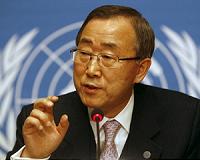
UN Secretary General Ban Ki-moon on Monday urged nations to look beyond narrow interests at an upcoming world climate conference, warning that "we don't have a planet B."
Complaining that global talks aimed at curbing climate change have so far been "slow" and "frustrating" due to negotiators focussing on "narrow national perspectives", Ban urged member states to work faster.
"We don't have any 'plan B' because we don't have any 'planet B'," he told journalists in the Slovak capital Bratislava.
The UN's COP21 conference, running from November 30 to December 11 in Paris, aims at securing a pact on greenhouse gases that would limit global warming to two degrees Celsius (35.6 degrees Fahrenheit) over pre-industrial times.
"Paris is not the destination but it should be a turning point in our efforts to address the climate change," Ban said, adding that he was "reasonably optimistic" the talks would be successful.
The last big push for a world climate deal was in Copenhagen in 2009. It nearly ended in a fiasco after rich and poor countries bickered over how to share the burden for addressing the problem.
Obama deepens effort to win firms' backing on climate
Washington (AFP) Oct 19, 2015 –
President Barack Obama redoubled efforts to enlist titans of business in his fight against climate change Monday, getting dozens to back a global climate deal and steps to curb emissions.
Obama hosted at the White House CEOs from a handful of the 81 companies that have committed to concrete mitigation measures, offering a potent tool against skeptics.
The White House invitees included bosses from Intel, Johnson & Johnson and Hershey, who will take measures like reducing water usage, purchasing renewable energy and adjusting their supply chains.
In July, a dozen firms ranging from Apple to General Motors to Goldman Sachs made similar pledges.
But with weeks to go before a major climate conference in Paris, Obama is pressing other nations, domestic voters, companies and state and local governments to get engaged, in the hope of reframing the debate.
"The perception is that this is an environmental issue, it's for tree huggers, and hardheaded business people either don't care about it, or see it as a conflict with their bottom lines," Obama said.
"Considerations of climate change, energy efficiency, renewable energies are not only not contradictory to their bottom lines, but for these companies they are discovering that they can enhance their bottom lines."
At the December climate summit, countries from around the world will try to forge rules aimed at limiting global temperature increases to two degrees Celsius (3.6 degrees Fahrenheit).
Obama has made action on climate change a priority and has rallied support for the December talks.
Facing stiff opposition from the Republican-controlled Congress, his administration has responded with a steady drumbeat of initiatives to advocate for measures to curb warming.
Todd Brady, global environmental director at Intel, said the administration's drive has given companies the push needed to deepen already existing climate efforts.
"Our pledge is a combination of both actions that are continuing, and new steps," he said.
"It has caused us to step back and take a look at the steps we are taking and say maybe we should be doing more."