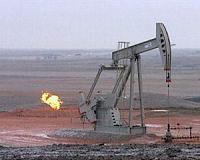
North Dakota rig activity indicates the No. 2 oil producer in the nation is still flirting with an all-time low in the exploration and production sector.
State data show 64 rigs in the active process of exploring for or producing natural reserves in shale-rich North Dakota. That's down one from last week and one above the historic low of 63, set in November 2009. Rig counts for November are down about 8.5 percent.
Lower crude oil prices, off about 9.5 percent for the month, are forcing energy companies to spend less on exploration and production. Last week, oil field services company Baker Hughes reported a total U.S. rig loss of 13, or 1.7 percent, from the week ending Nov. 20. Year-on-year, total U.S. rig counts are down 61 percent and off 65 percent for North Dakota.
North Dakota's rig loss is comparable to Texas, the No. 1 oil producer in the nation, which recorded a 65 percent drop in activity year-on-year.
More than 90 percent of new oil production in North Dakota comes from the Bakken shale reserve. Of all shale basins contributing to new growth in the United States, only the Permian shale basin in Texas is expected to report an increase for December, according to the U.S. Energy Information Administration. Bakken production next month is expected to decline by 27,000 barrels per day.
Oil production in North Dakota in September, the last full month for which data are available, was 1.16 million bpd, down about 2 percent from the previous month.
The North Dakota Industrial Commission said in its latest monthly report that operators are running fewer rigs, though they're more efficient than in the past. Rig counts may drop further, however, as the weakened oil economy persists.
India taking energy demand lead
Paris (UPI) Nov 30, 2015 –
With China's economy slowing, it's India that takes the lead as the country expected to take on more oil than any other, the International Energy Agency said.
"With energy use declining in many developed countries and China entering a much less energy-intensive phase in its development, India emerges as a major driving force in global trends, with all modern fuels and technologies playing a part," a country analysis from the IEA read.
A report from the Asian Development Bank said India's gross domestic product for the current fiscal year, which ends March 2016, is expected at 7.4 percent, down from the bank's estimate in March of 7.8 percent. While relatively on par with its Asian peers, China's economy is slowing from a 7.7 percent growth rate recorded in 2013 to 7.4 percent this year.
With India's economy expected to be five times larger in 2040 than it is today, the IEA, which has headquarters in France, said total energy demand more than doubles. Oil demand for India increases more than any other country and, while gas consumption triples, it plays only a minor role in the nation's energy mix.
India by 2040 relies on oil imports to meet more than 90 percent of its demand, a balance the IEA said may require "constant vigilance" in terms of global energy security." In terms of coal, as with oil, India becomes the largest consumer by a long shot, the IEA said.
Coal India, the largest coal-mining company in the world, said its production was up about 7 percent for the year.
IEA adds there may be considerable challenges to advancing a sustainable energy future for India. The ADB in October signed a $200 million loan agreement with New Delhi to support clean energy programs. It's the first installment of a $500 million lending program for India, which the bank said would catalyze private sector investments in projects ranging from wind to biomass energy.