Yale scientists have developed an ultra-thin coating material that has the potential to extend the life and improve the efficiency of lithium-sulfur batteries, one of the most promising areas of energy research today.
In a study published online March 20 in the Proceedings of the National Academy of Sciences, researchers describe the new material – a dendrimer-graphene oxide composite film – which can be applied to any sulfur cathode. A cathode is the positive terminal on a battery.
According to the researchers, sulfur cathodes coated with the material can be stably discharged and recharged for more than 1,000 cycles, enhancing the battery's efficiency and number of cycles.
"Our approach is general in that it can be integrated with virtually any kind of sulfur electrode to increase cycling stability," said Hailiang Wang, assistant professor of chemistry at Yale and lead investigator of the study.
"The developed film is so thin and light it will not affect the overall size or weight of the battery, and thus it will function without compromising the energy and power density of the device."
New types of electrodes – positive and negative terminals – are considered essential for the development of a new generation of high energy-density batteries. As lithium-ion batteries begin to reach their capacity limits, many researchers are looking at lithium-sulfur as a solution.
Sulfur is both lightweight and abundant, with a high theoretical energy capacity. However, existing lithium-sulfur battery technology suffers from a loss of capacity during cycling.
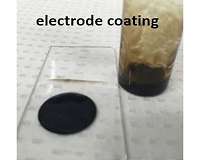
The Yale team made its discovery by combining the distinct properties of two material components. They merged the mechanical strength of graphene oxide with the ability of a dendrimer molecule to confine lithium polysulfides. The result is a gel-like slurry that can be readily coated as a 100-nanometer-thin film onto sulfur electrodes.
TU Graz researchers show that enzyme function inhibits battery ageing
It has been known in biology for a long time that the excited oxygen molecule singlet oxygen is the main cause of ageing in cells. To counter this, nature uses an enzyme called superoxide dismutase to eliminate superoxide as a free radical.
Superoxide also occurs in cell respiration for energy production and is the preliminary stage and thus source of singlet oxygen. TU Graz's Stefan Freun … read more