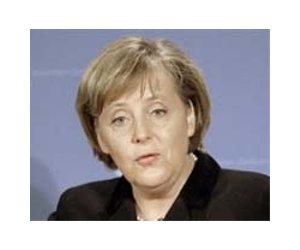
German Chancellor Angela Merkel is in the Persian Gulf region to promote the Middle East peace process, efforts to prevent Iran from acquiring a nuclear weapon and potential business and energy deals.
Merkel arrived Monday in Abu Dhabi, the capital of the United Arab Emirates, the first stop of a 4-day tour that also includes visits to Bahrain, Qatar and Saudi Arabia.
The agenda will be topped by security issues. Iran recently brokered a nuclear deal with Brazil and Turkey. Under the agreement, Iran would ship low-enriched uranium to Turkey in exchange for fuel for research reactors in Iran.
Officials in Europe lauded the deal but they remain cautious.
"This is not a legally binding treaty," a German government official, who asked not to be identified, said last week in Berlin, adding that Merkel would lobby for a "joint international answer" to the Iranian nuclear program while in the region.
The source added that once additional sanctions are in place, the gulf states will have to play along.
"It will be very important that these sanctions are imposed and monitored by the countries in the region," the source said.
Merkel during her gulf tour will also try to round up support for the Middle East peace process. German Foreign Minister Guido Westerwelle is already in the region with visits planned in Lebanon, Syria and Egypt.
The government source mentioned leaders in Saudi Arabia and Qatar as key to the deadlocked process.
Qatar, the government source said, is an "emerging regional political leader" that has in the past successfully mediated in the conflict-ridden Middle East. In Riyadh, Saudi Arabia, which Merkel visits Tuesday, she is expected to thank the royals for their role in the release of two German hostages held by militants in Yemen.
Merkel will also try to secure business and energy deals.
In Abu Dhabi, the chancellor is expected to visit Masdar City, a prestigious project aimed to become the world's first carbon-neutral renewable energy city. It is also home to the international renewable energy association IRENA.
Besides being an emerging political power, Qatar could help diversify Europe's energy imports. The country has the world's third-largest natural gas reserves and is a major importer of liquefied natural gas
Moreover, the gulf is becoming an economically powerful region as markets in Europe are under ongoing pressure.
"The gulf states have proved very helpful in the economic crisis with investments. One example is Qatar's cooperation with Volkswagen and Porsche," the German government official said.
Share This Article With Planet Earth