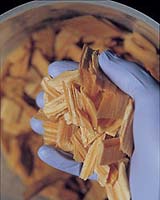
Some 282,000 lives could be saved every year mainly in Africa and Asia through a concerted drive to replace solid fuels such as coal or wood in household cooking, the World Health Organisation said Thursday.
Some 1.5 million people in poor countries are estimated to have died in 2002 as a result of inhaling smoke from domestic stoves or open fires, a WHO report, "Fuel for Life", reiterated.
The victims included 800,000 children and 500,000 women.
Hundreds of million more are thought to be exposed to "the killer in the kitchen" that contributes to pneumonia in children and chronic respiratory diseases in adults, according to the report.
"It's a neglected public health problem that is primarily affecting women and children," said Maria Neira, WHO Director for public health and environment.
"Half of the world's population has no access to clean energy and they are still using solid fuels," she told journalists.
If just 100 million homes a year were able to switch from coal, charcoal or dung to fuels such as liquified petroleum gas (LPG) bottles, about 473,000 people would benefit from healthier lives, according to the report.
"Making cleaner fuels and improved stoves available to millions of poor people in developing countries will reduce child mortality and improve women's health," said WHO Director General Lee Jong Wook.
The report argued that an outlay of 13 billion dollars a year over 10 years by impoverished households, local business partners, microcredit banks and donors could generate economic savings of at least 91 billion dollars through health and productivity gains.
That would help halve the number of people living in dangerously smoke-ridden homes by 2015, according to the WHO.
It would cost each family six dollars to equip themselves with a new stove.
Neira said the WHO was trying to build a business case for the idea without relying on donor aid, partly by aiming to drive down the cost of stoves and cleaner fuels through a massive increase in demand.
Charcoal, coal and wood are favoured because they are readily available at little or no cost for families who live on a few dollars a day.
Source: Agence France-Presse