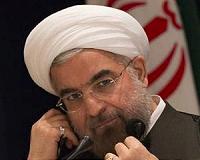
Incumbent Iranian President Hassan Rouhani said easing international sections and addressing a high rate of inflation are priorities for the OPEC member state.
"The first major issue needed to be addressed was the nuclear talks and bringing to an end international sanctions against the country," he said of his first term in office. "The second problem was the rampant inflation rate while the third main problem was propping up production in the country."
A moderate by relative standards, Rouhani is campaigning against rival candidates Mostafa Aqa-Mirsalim, Eshaq Jahangiri, Ebrahim Raeisi, Mohammad-Baqer Qalibaf, and Mostafa Hashemi-Taba in the May 19 election.
Under Rouhani's tenure, Iran brought renewed investment interest to a country that saw sanctions pressures ease as a result of a U.N.-backed multilateral nuclear agreement. In November, the country, a member of the Organization of Petroleum Exporting Countries, became the only party to an effort to balance an over-supplied crude oil market that's allowed to produce more oil in order to regain a market share lost to those sanctions.
Ali Khamenei, the conservative ruling cleric in Iran, has called for a so-called resistance economy, one that limits exposure to international market shocks and sanctions pressures in part by weaning itself off oil for revenue. Non-oil exports for Iran for the 11 months ending March 20 were up 33 percent.
Jahangiri, one of Rouhani's vice presidents, echoed the president's concerns, saying fluctuations in economic growth and higher inflation rates were among the Iranian shortcomings.
International Monetary Fund projections said the economy of Iran should grow at a rate of about 4.5 percent, but swing between growth of 6.6 percent this year and 3.3 percent through 2018.
The Iranian presidential candidates square off for debates later this week.
Pall remains over Canadian oil sands after wildfires
One year after massive wildfires swept through Alberta province in Canada's worst natural disaster in history, the future of the oil sands – which contain a third of the world's oil reserves – remains bleak.
Persistently low oil prices have forced companies to cut costs, and several have gone as far as to stop processing the region's heavy crude and bitumen, which is more expensive and har … read more