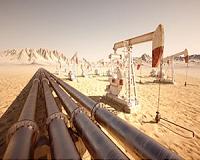
Oil prices continued their slide in early January 2015 following the OPEC decision on November 27, 2014 to hold output levels. The surprise to the market was not so much that OPEC did not cut production but that it signaled it would not defend prices in the future. This decision will be a clear test of the resurgent U.S. oil industry.
Low oil prices are expected to persist through the first half of 2015. More pessimistic views call for a sustained down market deep into 2016. Companies are currently assessing the implications of this, and we expect declines in spending along with increased volatility through 2015. Other market forces to track include the following:
+ Oil macro indicators signal oversupply. Non-OPEC supply growth was 1.8 million barrels per day (Mbd) in 2014, while demand growth came in less than 0.7 Mbd. The oil market will begin 2015 oversupplied by roughly 1.0 Mbd. With OPEC continuing to produce at 30 Mbd, the price response from North American producers becomes critical. There are forces that can rebalance the market in 2015 including new disruptions and more opportunistic buying from China and others. However, producer hedges and high inventories will slow any price adjustments.
+ O&G upstream activity is showing signs of contraction. Recent onshore drilling and rig trends are only showing modest declines, but expectations of a significant downturn are on the horizon. Capital spending from North American producers is expected to contract 15-20 percent. Variation in the quality of producers' assets means lower prices will hurt some companies worse than others. Offshore indicators are similarly negative with offshore drillers increasingly considering "warm stacking" their rigs to reduce capacity.
+ The U.S. is expected to be the primary beneficiary of lower oil prices that will act like an $80 billion stimulus to the U.S. economy. In other countries, such as Japan, weaker currencies will offset some of the benefit of lower oil prices. India and Europe are likely to benefit. Russia and OPEC countries, particularly Iran and Venezuela, will see sharply lower government revenue and this will impact economic growth.
+ Natural gas prices start the year low. The combination of mild winter weather and continued strong production growth from the Appalachia region has resulted in high gas storage inventories. If winter weather-related demand fails to emerge, gas prices could track similar to 2012 and remain low through 2015, supporting industrial consumers but putting further pressure on cash-strapped oil and gas producers.
Clearly, the near-term oil and gas market is challenging for the producer community, but beneficial to energy consumers. Without clear data showing supply reductions, prices will continue to lurch on new information. At the time of this writing in early January, strong Russian and Iraqi production data from December, firm comments from the Saudis, and demand-side weakness are all playing on traders' sentiments. As a result, prices have fallen another $15/bbl since mid-December 2014. In 2015, key questions include:
+ Does oil demand firm up as expected?
+ Will Saudi Arabia let market forces work or will OPEC pressures drive an output cut?
+ How long until a non-OPEC supply response occurs?
The answers to these questions will determine how long this oil cycle lasts.