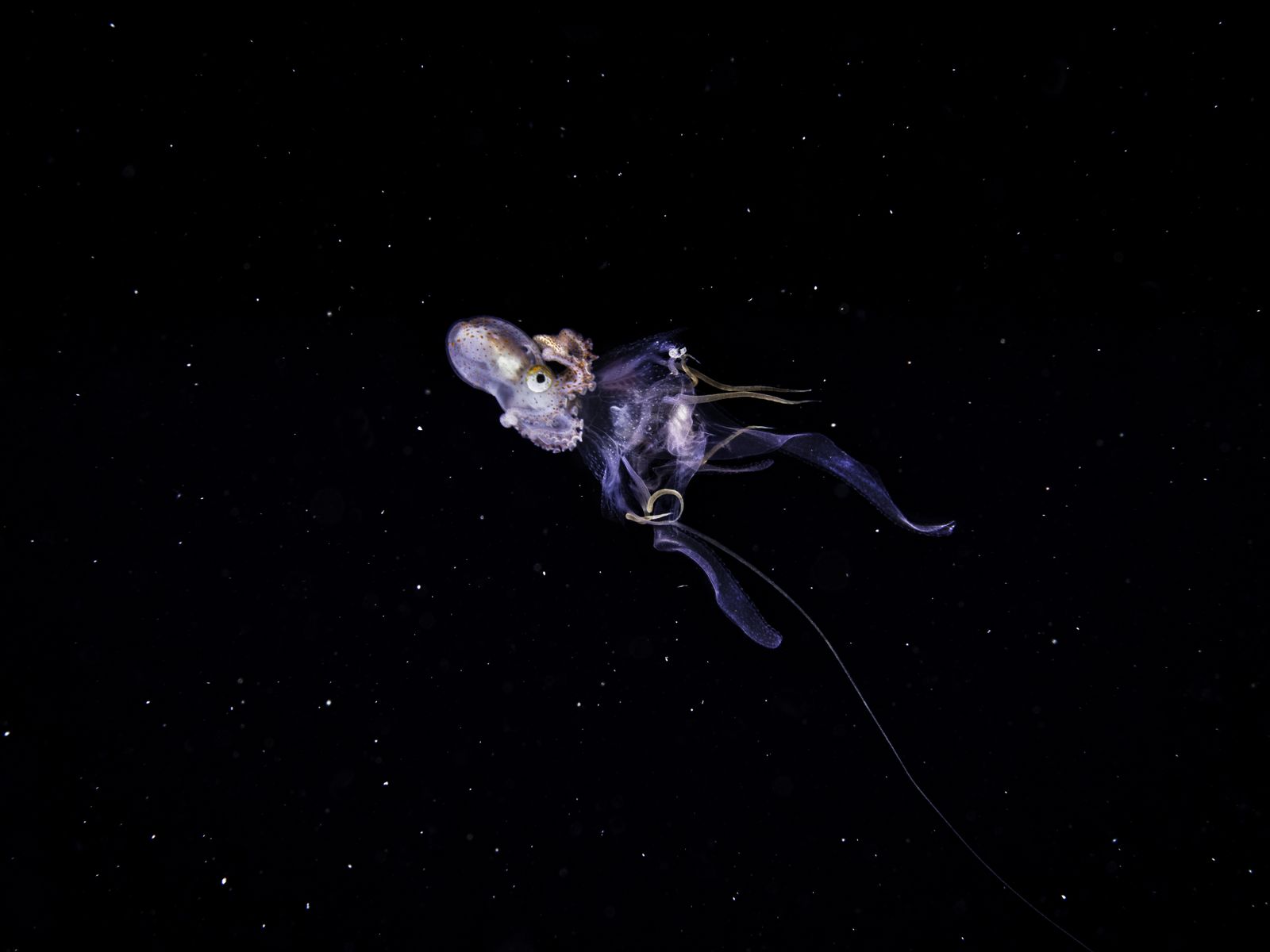
In the black water a kilometre below the surface of Baffin Bay, a shark the length of a small car is gliding forward at roughly 0.3 metres per second — a pace a toddler could outrun on a beach. Its eyes are festooned with white, worm-like parasites called Ommatokoita elongata that dangle from its corneas like tiny streamers. Its heart, scarred and thickened, has been beating without interruption for something between two and four centuries. This is Somniosus microcephalus, the Greenland shark, and according to radiocarbon dating of eye-lens tissue published in Science by a University of Copenhagen–led team, the two largest specimens they measured — 493 and 502 centimetres long — were roughly 335 and 392 years old.
The answer to why it lives so long, so slowly, and so dimly is not one thing. It is a stack of adaptations to a single environment: water that hovers between minus one and four degrees Celsius, in near-total darkness, where food arrives unpredictably and predators are few. Cold slows the chemistry. Darkness relaxes the demand on the retina. Scarcity rewards a metabolism that idles. Together they produce a vertebrate that ages on a timescale closer to a redwood than a mammal.
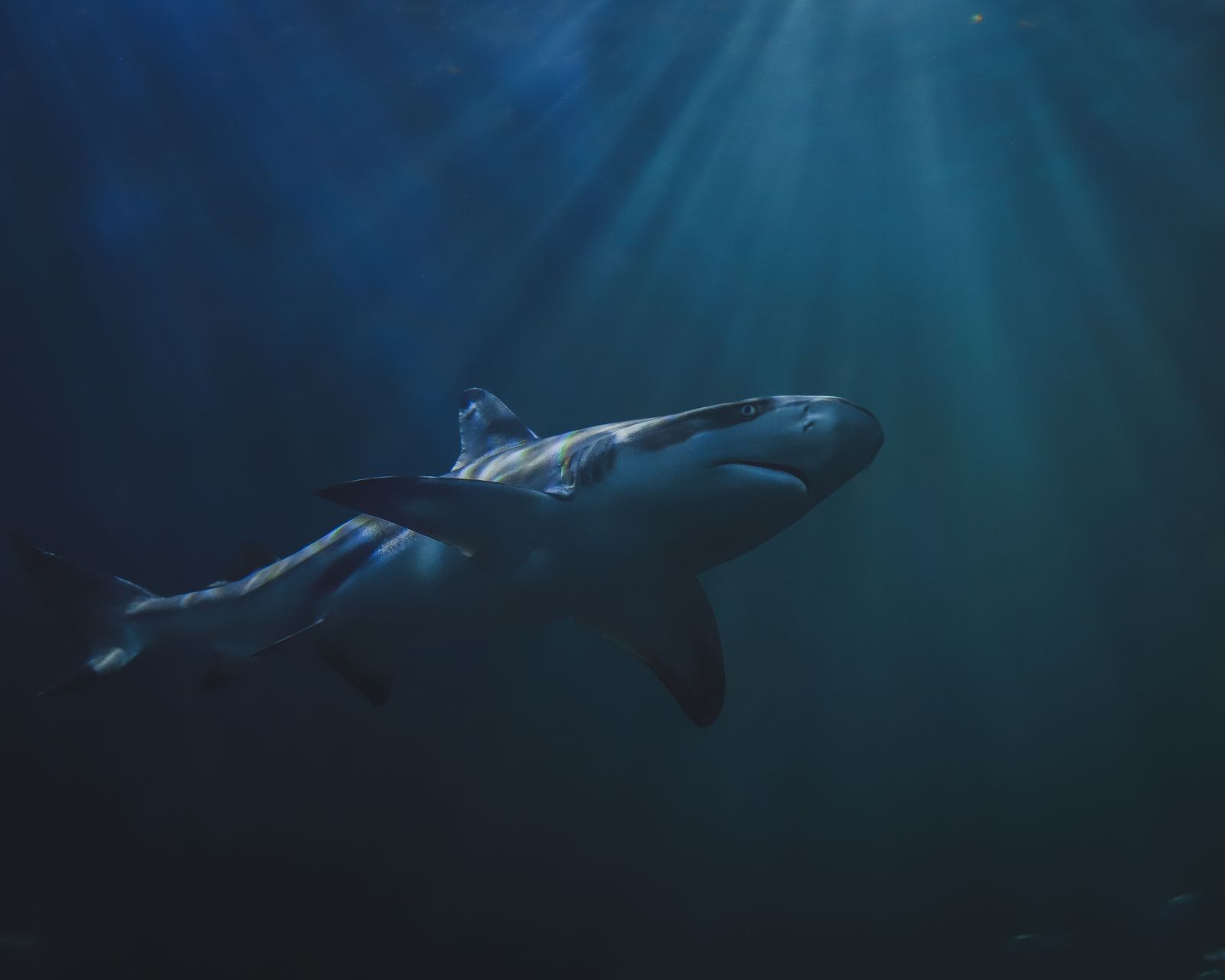
A shark born before the American Revolution
The Copenhagen study, still the most-cited attempt to pin down Greenland shark ages, worked on the eye lens because the lens keeps growing new layers over its original embryonic core — and that core preserves the atmospheric carbon signature from the year the animal was born. Nuclear weapons tests in the 1950s and 1960s left a distinctive carbon-14 spike in the atmosphere and the oceans, and any shark whose lens core sits above that spike must have been born after the mid-twentieth century. Any lens core that sits below it is older.
The largest shark in the dataset dated back to roughly the 1620s, when the Mayflower had not yet sailed. Average lifespan across the sampled females came in at about 272 years. The animals reached sexual maturity at around 150 years old — a delay that has almost no parallel in the vertebrate world.
That number matters for what happened on the west coast of Ireland in April 2026. A 3-metre, 200-kilogram Greenland shark washed up on the tidal flats of County Sligo — the first Greenland shark ever recorded stranded in Ireland. Judging by size alone, it was around 150 years old. Born around the time of the American Civil War. By the standards of its species, an adolescent that had just reached breeding age.
According to the BBC, Emilie De Loose, a marine biologist at the Irish Whale and Dolphin Group, expressed disappointment that the shark died before reaching its reproductive potential. De Loose noted that the 150-year-old shark had just reached breeding age and may never have had the opportunity to reproduce.
Why the swimming is so slow
A Greenland shark cruises at roughly 0.3 metres per second and burst-swims at speeds still slower than a fit human walking. Its growth rate — about one centimetre per year — matches the tempo. Both are downstream of one thing: temperature.
Muscle contraction in ectotherms depends on enzyme kinetics, and enzyme kinetics collapse in cold water. At the temperatures Greenland sharks inhabit, the biochemistry that fires a shark’s red muscle is running at a fraction of the rate it does in a mako or a blue shark in tropical seas. The animal cannot swim fast because its cells cannot metabolise fast. The trade-off is that it also cannot age fast. Cellular damage accumulates as a function of metabolic throughput, and the Greenland shark’s throughput is close to a rounding error.
This is the same principle explored in a 2026 study of Greenland shark hearts, which examined the cardiac tissue of stranded and bycaught specimens. The hearts showed classic markers of ageing — scarring, fibrosis, thickened walls — but continued to function. The study’s authors identified resilience as a key mechanism that enables extreme longevity in these sharks. The heart weighs about 34 kilograms in a large adult, roughly 110 times the mass of a human heart, and it beats slowly enough that individual contractions can be counted by hand.
The problem of the eyes
Almost every Greenland shark carries a pair of copepod parasites anchored into the corneas of both eyes. The parasites, Ommatokoita elongata, hang off the eye like tassels and abrade the cornea as the shark swims. For decades this was the standard explanation for why the animals were assumed to be functionally blind: any vertebrate spending centuries with a crustacean gnawing on its cornea would, presumably, lose the eye.
The assumption turned out to be wrong. A 2026 paper by Lily Fogg at the University of Basel and colleagues examined the retinas and molecular machinery of Greenland shark eyes across a range of ages, including animals estimated at over 100 years old, and found the tissue intact and highly specialised. The retinas function as a low-light camera, packed with rod cells optimised for detecting the faint bioluminescence and downwelling light that reaches the mesopelagic zone. The parasites, Fogg’s team concluded, cause surface damage but do not compromise the underlying visual system.
Researchers found that even in sharks over a century old, the visual system remains intact and functional. The shark’s visual system appears adapted for extreme longevity.
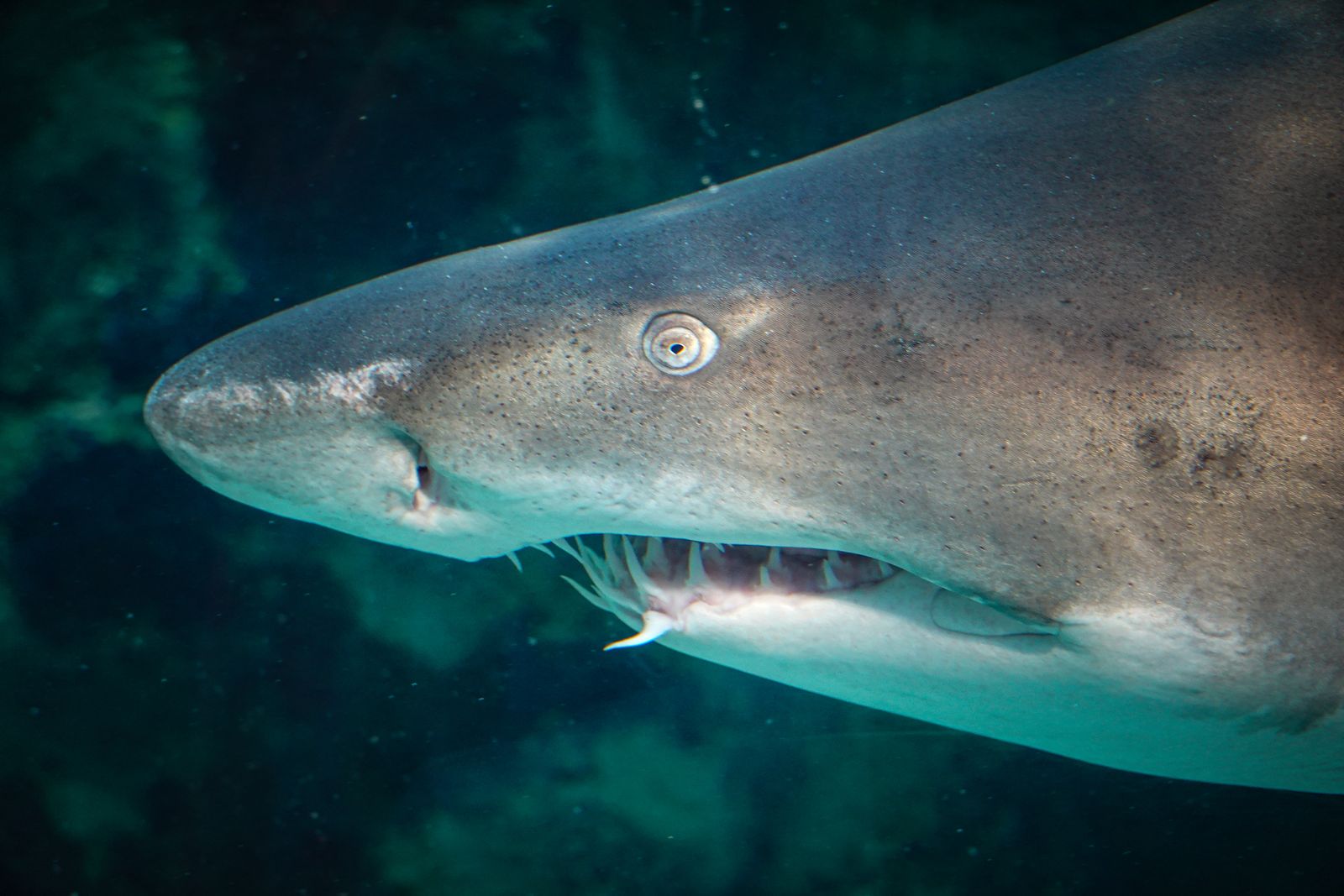
The comparison with human eyes is where the science gets useful beyond the shark itself. Human vision degrades predictably with age: macular degeneration, cataracts, retinal thinning. In the Greenland shark, none of that happens on any timescale a human ophthalmologist would recognise. Fogg’s team identified DNA-repair genes that were unusually active in Greenland shark retinal tissue compared with shorter-lived shark species. The suspicion is that the same repair machinery keeping the retina young is also keeping the whole animal young.
Anti-freeze flesh
Greenland sharks carry high concentrations of trimethylamine N-oxide (TMAO) and urea in their tissues. Both compounds act as cellular anti-freeze and osmolyte stabilisers, letting proteins fold correctly under the pressure and cold of the deep Arctic. The side effect is that the flesh is toxic to eat fresh — Icelandic hákarl, the fermented shark dish, exists specifically to break down the TMAO before human consumption.
The chemistry that lets the shark exist at all is also part of what buffers its cells against damage. TMAO is a known chaperone molecule; it stops proteins from misfolding under stress. Misfolded proteins are one of the standard drivers of ageing across every animal studied. A body that runs on TMAO at high concentrations is a body running with an extra layer of quality control built in.
What the Sligo necropsy found
When the County Sligo shark reached the regional veterinary lab, researchers from the National Museum of Ireland and University College Cork spent days working through the carcass in protective gear. Researchers working on the carcass wore protective gear due to concerns about pathogens that may have accumulated over the shark’s long lifespan.
The liver weighed 50 kilograms — about the mass of an adult Labrador. The heart came in at 34 kilograms. The digestive tract was removed intact; the stomach was empty but the spiral valve, further down, was full, suggesting the animal had eaten recently. Teeth in the upper jaw were straight and dagger-like; the lower teeth were angled like the blade of a saw, ideal for cutting chunks from carcasses on the seabed.
The eyes were removed for radiocarbon dating. A muscle sample was sent for telomere analysis — an experimental technique that measures the protective caps on chromosome ends, which shorten with age and cumulative stress. Together the two methods should narrow the animal’s age to within a couple of decades.
The scavenger’s slow economy
A Greenland shark’s diet reads like a menu written by whatever happened to sink that week: seal carcasses, fish, squid, the occasional polar bear or reindeer that fell through the ice. They have been observed hoovering prey into their mouths with powerful suction, and there is enough evidence of live seal predation to suggest they can ambush sleeping animals in the dark.
The metabolism is built for scarcity. A shark that only needs to eat every few weeks — and that grows a centimetre a year — is a shark that can survive an Arctic winter without seasonal prey. That same low-throughput economy means less oxidative damage, less protein turnover, less DNA replication error accumulating across the decades.
Marine biologists note that basic aspects of Greenland shark biology remain unknown, including the location of their mating and pupping grounds. Only one pregnant female has ever been documented. A vertebrate that lives longer than any other on Earth remains one of the least-observed large animals in the ocean.
The DNA repair question
The gene-expression work by Fogg and collaborators is part of a broader effort to identify the molecular basis of extreme longevity. Comparing Greenland shark tissue with tissue from shorter-lived relatives such as the Pacific sleeper shark and the small-spotted catshark, the Basel team found consistent upregulation of genes involved in base-excision repair and double-strand break repair — the cellular systems that fix damaged DNA before it can be copied into daughter cells.
The implication for human medicine is why the retinal work is drawing interest beyond marine biology. If a vertebrate can keep retinal cells functioning for 150 years with the same genetic toolkit humans carry — just dialled to different levels — then the mechanisms are potentially portable, at least in principle, to therapies for age-related macular degeneration.
What the numbers mean in human time
A Greenland shark born in 1626 would have been a pup when Rembrandt was painting The Anatomy Lesson of Dr. Nicolaes Tulp. It would have reached sexual maturity around 1776, the year the American colonies declared independence. It would have been middle-aged when the first commercial oil well was drilled in Titusville, Pennsylvania in 1859, and elderly by the time the Danish offshore wind industry began scaling up in the 1990s — a transition Energy Daily’s editorial team covered in the opening of the world’s largest offshore wind farm in Denmark.
The temporal scale is the hardest part to hold in the head. Research from cognitive science, discussed in an earlier Energy Daily piece on how humans perceive the passage of time through temporal landmarks, suggests that a human brain marks years by novelty: births, moves, jobs, seasons. A Greenland shark has none of those markers. It has water temperature, water pressure, the slow drift of prey overhead. Four centuries of that.
The Sligo animal, whatever killed it, ended up in a regional veterinary lab in western Ireland with its liver in a steel basin and its lenses en route to a radiocarbon facility. The National Museum of Ireland plans to eventually taxidermy the skin for display. Somewhere in the North Atlantic, another Greenland shark that was already old when Napoleon crossed the Alps is still moving forward at the speed of a walking child, its parasitised eyes fixed on the faintest gradient of light, its scarred heart contracting once, then again, sometime later.