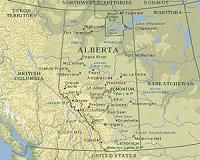
Canada's oil-rich province of Alberta rang in the New Year with a 50 percent increase in a carbon levy that supports green investments, a minister said.
The provincial government said Monday the carbon levy increased from $16 (USD) to $24 per ton of carbon dioxide emissions. More than $1 billion in funds from Alberta's provincial climate plan were used last year to back a light-rail transit system that the government said would reduce greenhouse gas emissions by as much as 30,000 tons, the equivalent of taking 6,000 vehicles on the road during its opening day of service.
"Our made-in-Alberta climate leadership plan works for Albertans and Alberta's economy," Environment Minister Shannon Phillips said in a statement. "Since 2015, our plan has supported mortgage-paying jobs, built an entirely new and long overdue energy efficiency industry, and put a meaningful dent in emissions reductions."
Construction on the first 12 miles of the light-rail system begins in 2020.
Phillips last year made up to $7,500 in rebates for homeowners and up to $375,000 for businesses and non-profit organizations available to help cover some of the costs tied to solar panel installation.
Without the program, the government estimates solar uptake could grow from 2 megawatts to 30 MW by 2022. That quadruples with the program in place, with solar uptake reaching a potential 140 MW during the next five years.
Revenue from the carbon levy supports green infrastructure across the province. Low-and middle-income residents get rebates, which should total about $245 million. Alberta has no provincial sales or payroll tax.
Finance Minister Joe Ceci estimated Alberta's economy is on pace to show a growth rate of gross domestic product of 4 percent for 2017.
Based on reserves for oil sands, a thicker type of oil, Alberta by itself ranks third in the world behind Venezuela and Saudi Arabia with a 2016 reserve estimate of 165.4 billion barrels.
Re-assessing Alaska's energy frontier
Less than 80 miles from Prudhoe Bay, home to the giant oil fields that feed the Trans-Alaska Pipeline, lies the site of USGS' latest oil and gas assessment: the National Petroleum Reserve-Alaska and adjacent areas. Managed by the Bureau of Land Management, the NPR-A covers 22.8 million acres, more than the entire state of South Carolina.
The new USGS assessment estimates 8.7 billion barrel … read more