Between November 2004 and January 2005, a British-led research cruise called CROZEX — the Crozet Natural Iron Bloom and Export Experiment — steamed through the sub-Antarctic Southern Ocean around the Crozet Islands and lowered sediment traps to three kilometres below the surface to catch the carbon falling out of a naturally iron-fertilised bloom. What the traps caught, when compared with catches from adjacent waters lacking that trickle of iron, has become one of the most cited numbers in ocean carbon science: naturally iron-fed patches exported roughly two to three times more carbon to the deep ocean than nearby high-nutrient patches without the iron.
The finding matters because it is not a model. It is not a tank experiment. It is a measurement made at 3,000 metres depth, in one of the roughest stretches of ocean on Earth, of carbon actually leaving the surface world.
Why iron, of all things
The Southern Ocean is one of the planet’s largest so-called high-nutrient, low-chlorophyll regions. The water is loaded with nitrate and phosphate — the macronutrients that phytoplankton need to grow — and yet the surface stays comparatively empty of the green haze you would expect. The bottleneck is iron. Without it, photosynthesis stalls, no matter how much nitrate is drifting past.
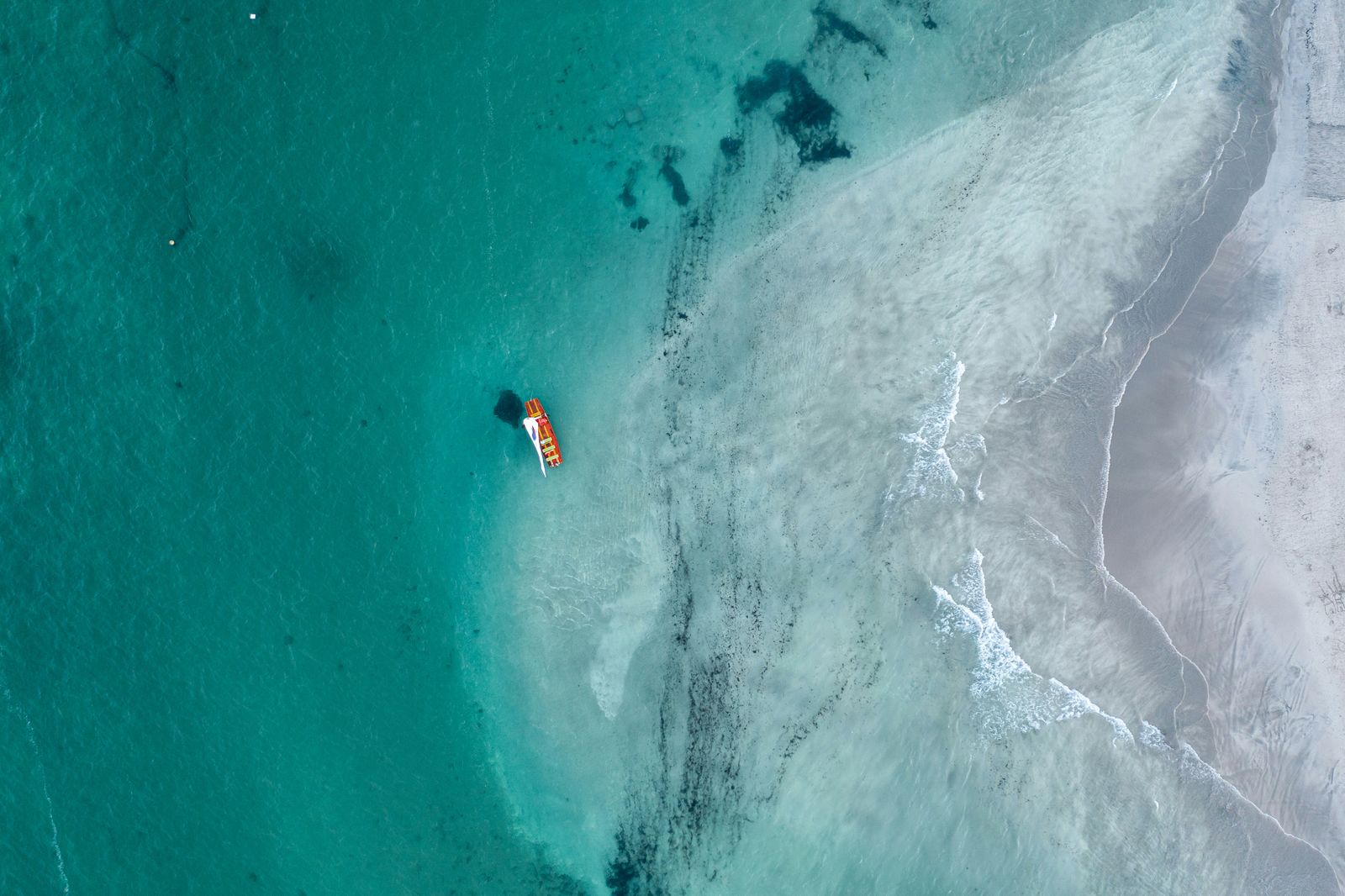
Around the Crozet Islands, a small archipelago halfway between South Africa and Antarctica, the seafloor leaks iron from island sediments and shallow shelves. The current sweeps that iron north into open water every austral spring. The result is a bloom you can see from orbit — a green comma smeared across the grey.
A few hundred kilometres south, the water is chemically almost identical except for that one missing ingredient. That symmetry is what made CROZEX possible. Two patches of ocean, side by side, one fed iron by geology, the other not. A natural control experiment.
What the sediment traps caught
CROZEX used moored sediment traps — funnels tethered in the water column that catch sinking particles in rotating cups over months — deployed at multiple depths including around three kilometres down. The trap catches were combined with thorium-234 tracer surveys, a radiochemical technique that uses the disequilibrium between thorium-234 and uranium-238 in seawater to estimate how much particulate carbon is falling out of the surface layer.
Under the iron-fertilised bloom, the carbon flux at depth was two to three times higher than under the adjacent high-nutrient patch. The particles were bigger, denser, and sinking faster: diatom aggregates armoured with silica shells, and the compact faecal pellets of the zooplankton that had been eating them.
Similar work around the Kerguelen Plateau, farther south, has since found comparable enhancements under another naturally iron-fed bloom — on some measures a good deal larger than Crozet’s. The Crozet number is not an outlier. It is one point in a pattern.
The biological pump, in one sentence
Phytoplankton pull carbon dioxide out of the surface water. Some of that carbon is eaten by zooplankton, packaged into faecal pellets, and sinks. Some of it clumps into aggregates when the bloom dies. The particles fall. If they fall past about a kilometre, the carbon is effectively locked away from the atmosphere for decades to centuries. If they fall to three kilometres, as CROZEX measured, it is closer to a millennium.
That is the biological carbon pump. Phytoplankton account for about half of all photosynthetic carbon capture on Earth and produce roughly half the oxygen in the atmosphere, according to reporting in Mother Jones. They do all this while being invisible to the naked eye.
Diatoms do the heavy lifting
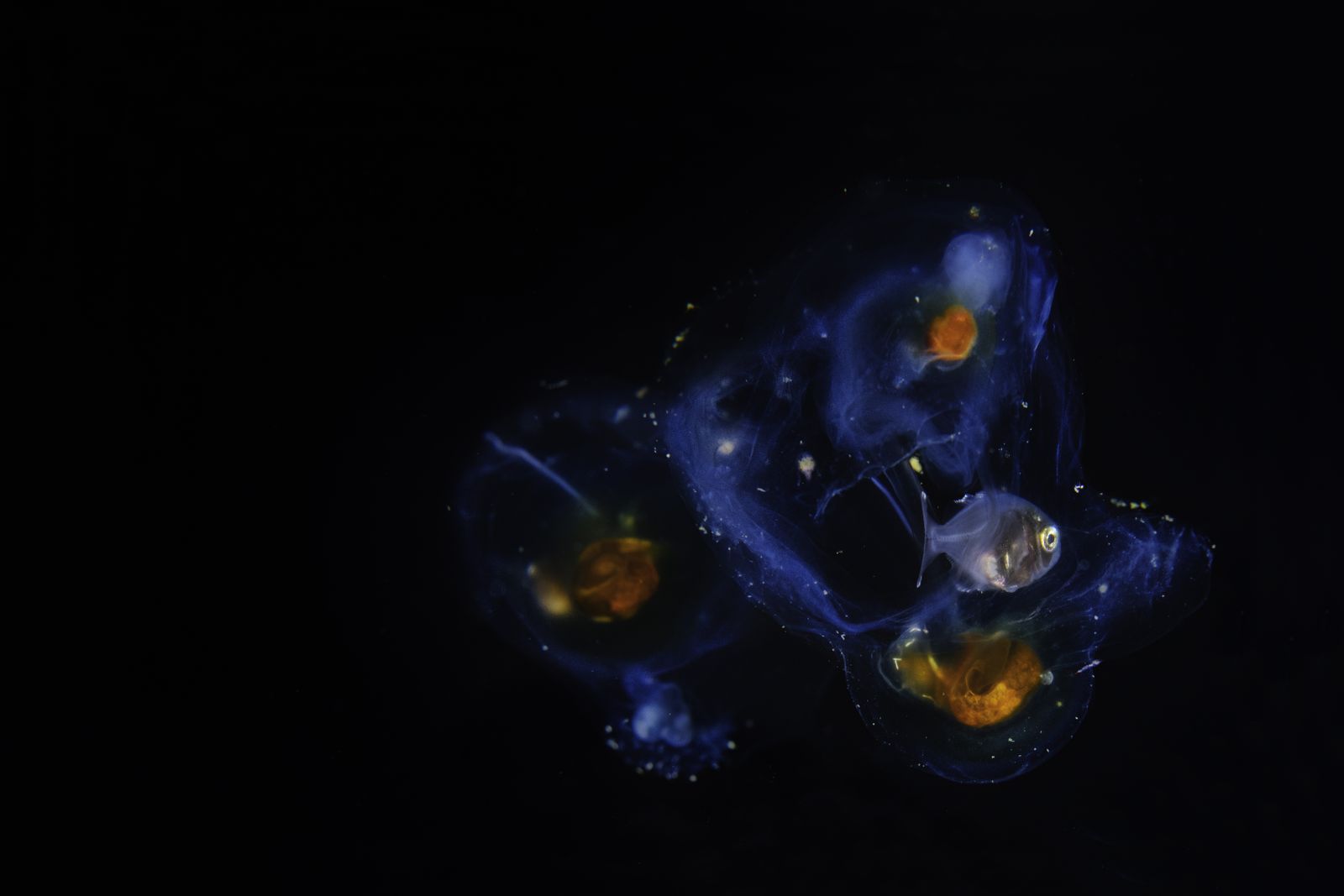
Not every phytoplankton exports carbon equally. Diatoms — a group that builds ornate glass-like shells out of silica — are the workhorses of the deep-sinking bloom. Their shells give them ballast. Their size means zooplankton pellets containing them are dense. When a diatom bloom collapses, the aggregates plummet.
Flagellates, by contrast, are smaller and lighter. Their carbon tends to be recycled near the surface rather than exported to depth. This is why the community composition of a bloom matters as much as its size. An iron-fed bloom dominated by large diatoms will lock away carbon. A bloom dominated by picoplankton will mostly just feed the surface food web and release the carbon back within days.
CROZEX and Kerguelen both confirmed the diatom pattern. The iron patches were greener, yes, but they were also structurally different — bigger cells, faster sinking, deeper reach.
Why this became the argument for ocean iron fertilisation
The late oceanographer John Martin famously quipped in the 1980s: “Give me a half tanker of iron, and I will give you an ice age.” The provocation was that if a trickle of iron could triple carbon export in the Southern Ocean naturally, then dumping iron deliberately might do the same on demand.
A dozen small-scale field experiments followed over the next two decades, most of them tipping iron sulphate off the back of a research vessel and watching a bloom appear within days. Most produced blooms. Fewer produced measurable, verifiable deep export. CROZEX remains one of the cleaner natural analogues because nobody had to add anything — the iron was already there, on a schedule set by geology and currents.
A modelling study from the Technical University of Denmark, published in Nature and summarised by AzoCleantech, simulated 60 years of deliberate iron addition across ten ocean regions. The Southern Ocean came out best on the cost–benefit ledger: high CO₂ uptake, comparatively limited ecological damage, and a faster return to the original state once the iron stops. The equatorial Pacific also removed large amounts of carbon, but the consequences travelled. Nutrient-poor water carried away from the fertilised patch cut plankton production elsewhere, larger zooplankton declined, and low-oxygen zones expanded — across areas many times bigger than the patch that was treated.
Even in the most aggressive scenarios, the Danish team estimated that iron fertilisation could remove between 0.14 and 0.70 billion tonnes of CO₂ per year. Humanity currently emits around 40 billion tonnes annually. The maths is stark: at best, iron fertilisation is a supplement, not a substitute.
The carbon that comes back
Not all sequestered carbon stays sequestered. The Danish modelling found that more than half of the CO₂ removed during iron fertilisation returns to the atmosphere within decades once the intervention stops. Ocean currents carry the affected water back into contact with the surface. Bacteria remineralise sinking particles before they reach the deep sea. Only the fraction that falls past the mesopelagic zone — that layer between 200 and 1,000 metres where most remineralisation happens — has a real chance at long-term storage.
CROZEX’s three-kilometre traps were designed precisely to catch what got past that filter. The two-to-three-fold enhancement is measured at the depth that counts.
What geology has been doing for millennia
Natural iron fertilisation is not new. Iron reaches the open ocean from windblown desert dust, from glacial meltwater, from continental shelves, and — as researchers at Boston College reported in June 2026 in Nature Geoscience — from mid-ocean-ridge volcanism during ice-age falls in sea level. The mechanism runs deep, not shallow. As sea level dropped, pressure on ridge systems eased, hydrothermal iron release increased thousands of metres down, and mixing and upwelling carried some of that iron up into sunlit water.
The team, led by Boston College assistant professor Xingchen “Tony” Wang, worked in the eastern equatorial Pacific above the East Pacific Rise. They measured nitrogen isotopes in the fossil shells of foraminifera across a 200,000-year sediment record, a proxy for how completely surface phytoplankton consumed the nutrients available to them. During the last two exits from ice ages, nutrient use rose at the same time hydrothermal iron emissions from the ridge did. Dust-borne iron, shifts in the iron-limited zone and Southern Ocean nutrient changes all fitted the timing less well.
Whether the same seafloor-to-surface route operated in the Southern Ocean — where nutrient use has a stronger grip on atmospheric CO₂ — is what the team says it wants to test next. The Crozet bloom is a smaller, present-day version of the same basic arrangement: geology delivering iron, biology delivering carbon export.
Iron-rich smoke from Australia’s 2019–20 bushfires fell onto the Southern Ocean and triggered enormous plankton blooms. Hawaiʻi’s 2018 Kīlauea eruption sent an ash plume nearly five miles high, and the resulting bloom in the North Pacific Subtropical Gyre was probably the largest ever reported for that ocean.
Why the Antarctic iron story just got more complicated
For years, one silver-lining hypothesis about a warming Antarctic was that melting glaciers would release trapped iron into the surrounding sea, fertilising blooms and partially compensating for rising emissions. New evidence, reported by ScienceDaily in February 2026, undercuts the premise that hypothesis rests on.
A Rutgers-led team sampling at the Dotson Ice Shelf in West Antarctica’s Amundsen Sea — in what they describe as the most precise measurement so far of iron flowing from an Antarctic glacier — found that meltwater accounted for only about 10 per cent of the dissolved iron leaving the ice-shelf cavity. Roughly 62 per cent came from deep ocean water and another 28 per cent from continental-shelf sediments. The melting ice itself, in other words, carries far less iron than the fertilisation story assumed, and what it does carry appears to come from bedrock ground up beneath the glacier rather than from the ice driving sea-level rise.
That is a separate finding from CROZEX. It does not contradict the Crozet measurement. It does complicate any easy story about the Southern Ocean self-fertilising its way through the climate crisis.
The case against pouring iron overboard
Even in the region where the modelling looks best, ecological objections stack up. Blooms consume more than just carbon: they draw down silicon, cobalt, zinc. Currents carry that nutrient-depleted water elsewhere, potentially starving other ecosystems. As Scripps ocean biogeochemist Katherine Barbeau warned in the Mother Jones piece, the wrong species — like the toxic diatom Pseudo-nitzschia, which produces the neurotoxin domoic acid — could bloom instead of the desired ones.
Large-scale iron addition also risks creating dead zones. When phytoplankton die and bacteria consume them, the bacteria strip oxygen from the surrounding water. Push it hard enough and fish suffocate.
Objections like these have blocked real projects. In January 2009, WWF publicly opposed LOHAFEX, a large-scale iron-fertilisation experiment in the Southern Ocean that the German government had just approved, arguing that too little was known about the ecological effects to justify work on that scale and that the go-ahead cut against the de facto moratorium agreed the previous year under the Convention on Biological Diversity.
What CROZEX still tells us
Strip away the geoengineering argument and the CROZEX number is simply a measurement of how the ocean works. A trickle of dissolved iron, delivered by the seabed around a few volcanic islands, triples the amount of carbon that falls into the abyss. The Southern Ocean is already doing this, on its own schedule, every spring, without anyone asking.
The parallel to earlier work on the greenhouse effect is direct. As Energy Daily has covered previously, Eunice Newton Foote’s 1856 glass cylinders demonstrated the physics of CO₂ warming with nothing more than sunlight and a thermometer. CROZEX did something structurally similar for the ocean: it used the natural experiment already running around the Crozet Islands to quantify the biological response to iron.
And the measurement has outlived the cruise. Autonomous BioGeoChemical-Argo floats now drift across the Southern Ocean year-round, carrying optical and oxygen sensors that watch particles sink out of the surface layer — the same quantity CROZEX caught in cups, sampled continuously instead of seasonally, across an entire basin rather than two patches of it.
Three kilometres down
The particles CROZEX caught at three kilometres started life as sunlight hitting a diatom the width of a human hair. They were eaten, packaged, excreted, aggregated, and then fell for weeks through cold black water before landing in a plastic cup on a British mooring. Multiply that path by the surface area of the sub-Antarctic bloom and you get a chunk of the biological carbon pump made legible.
The Crozet Islands are still there. The current still sweeps iron north every spring. The bloom still appears on satellite images in November — a green smear on grey water, followed a few months later by a fall of carbon into the dark that no one is around to watch.