Marie Curie is still the only person in the 125-year history of the Nobel Prizes to win in two different sciences. Physics in 1903 for radioactivity. Chemistry in 1911 for isolating radium and polonium. Four other individuals have collected a second Nobel since — John Bardeen, Frederick Sanger, Karl Barry Sharpless and Linus Pauling — and none of them managed what she did.
The distinction sounds like trivia. It is closer to a structural fact about how modern science is organised.
The double that has never been repeated
Curie won the 1903 physics prize jointly with her husband Pierre Curie and Henri Becquerel, for work on the spontaneous radiation Becquerel had first noticed coming off uranium salts. Eight years later, working alone as a widow raising two daughters, she won the chemistry prize for isolating pure radium and for characterising polonium, the element she had named after her occupied homeland. She was the first woman to win a Nobel Prize and the first person to win it twice.
No one has matched the cross-discipline part since. Bardeen won two physics prizes. Sanger won two chemistry prizes. Sharpless did the same. Pauling took chemistry in 1954 and the Peace Prize in 1962, which is a different category entirely — not a second science.
That leaves Curie alone in a very small room.
The five double laureates, and why four of them don’t count the same way
The Conversation’s survey of the five scholars who have won two Nobel Prizes lays the pattern out clearly. John Bardeen took the physics prize in 1956 for the transistor and again in 1972 for the theory of superconductivity — both in the same field, both extending a single line of inquiry into solid-state electronics.
Frederick Sanger won chemistry in 1958 for sequencing insulin and again in 1980 for a method to read DNA. Different molecules, same craft: reading the order of building blocks in long biological chains.
Karl Barry Sharpless took chemistry in 2001 for chirally catalysed oxidation reactions and again in 2022 for click chemistry. Same prize, same broad domain of synthetic organic chemistry.
Linus Pauling is the closest structural parallel to Curie — two prizes, in different Nobel categories. But chemistry and peace are not two sciences. His 1962 award recognised his campaign against atmospheric nuclear testing, not a second scientific breakthrough.
Curie remains the only laureate whose second medal came for advancing a different natural science than the first.
Why the physics prize and the chemistry prize describe the same discovery differently
The physics committee in 1903 rewarded the phenomenon. Radiation coming off matter, spontaneously, without any obvious energy input, breaking the classical picture of a stable atom. Becquerel had spotted it. The Curies had chased it down and named it.
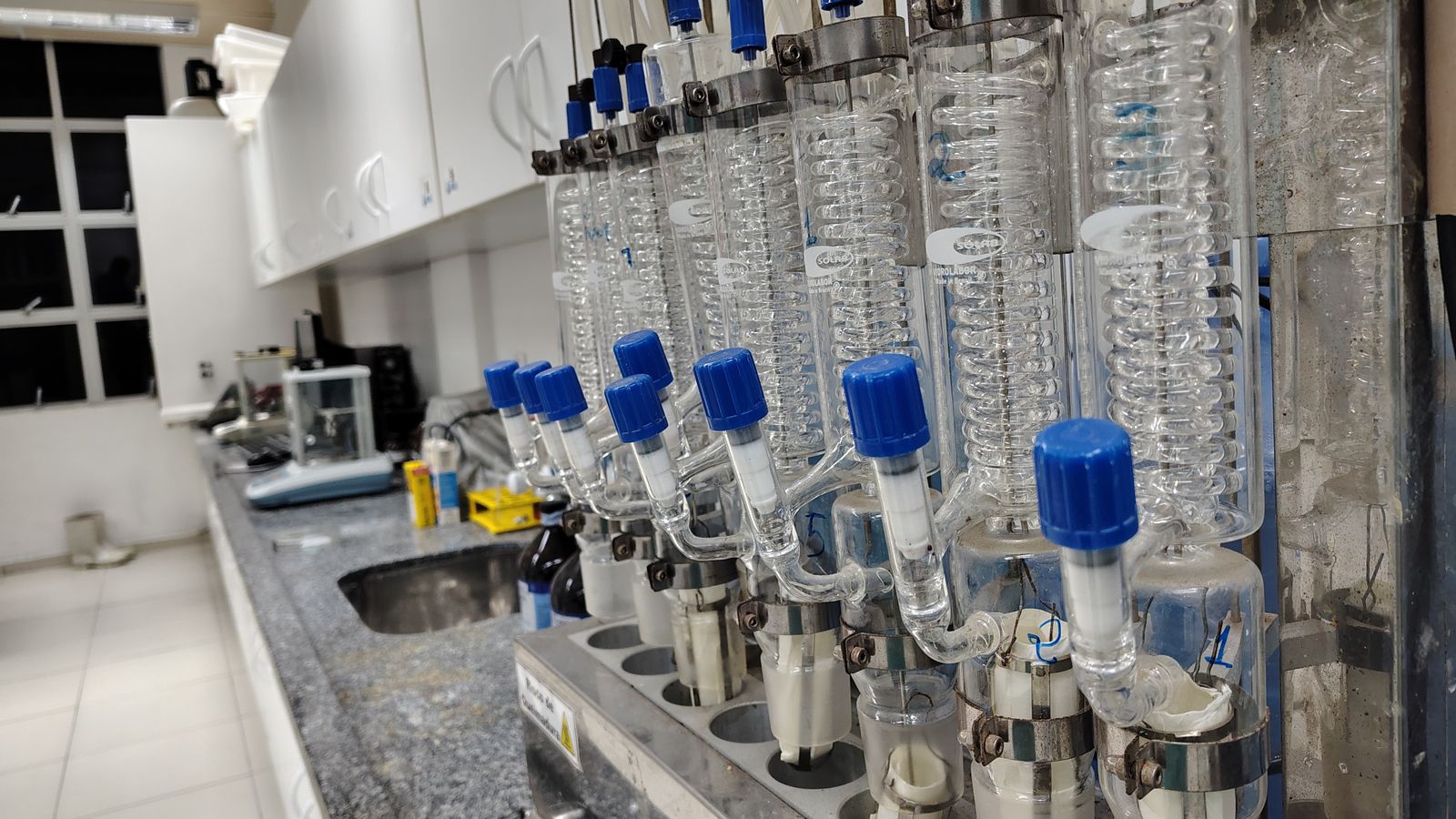
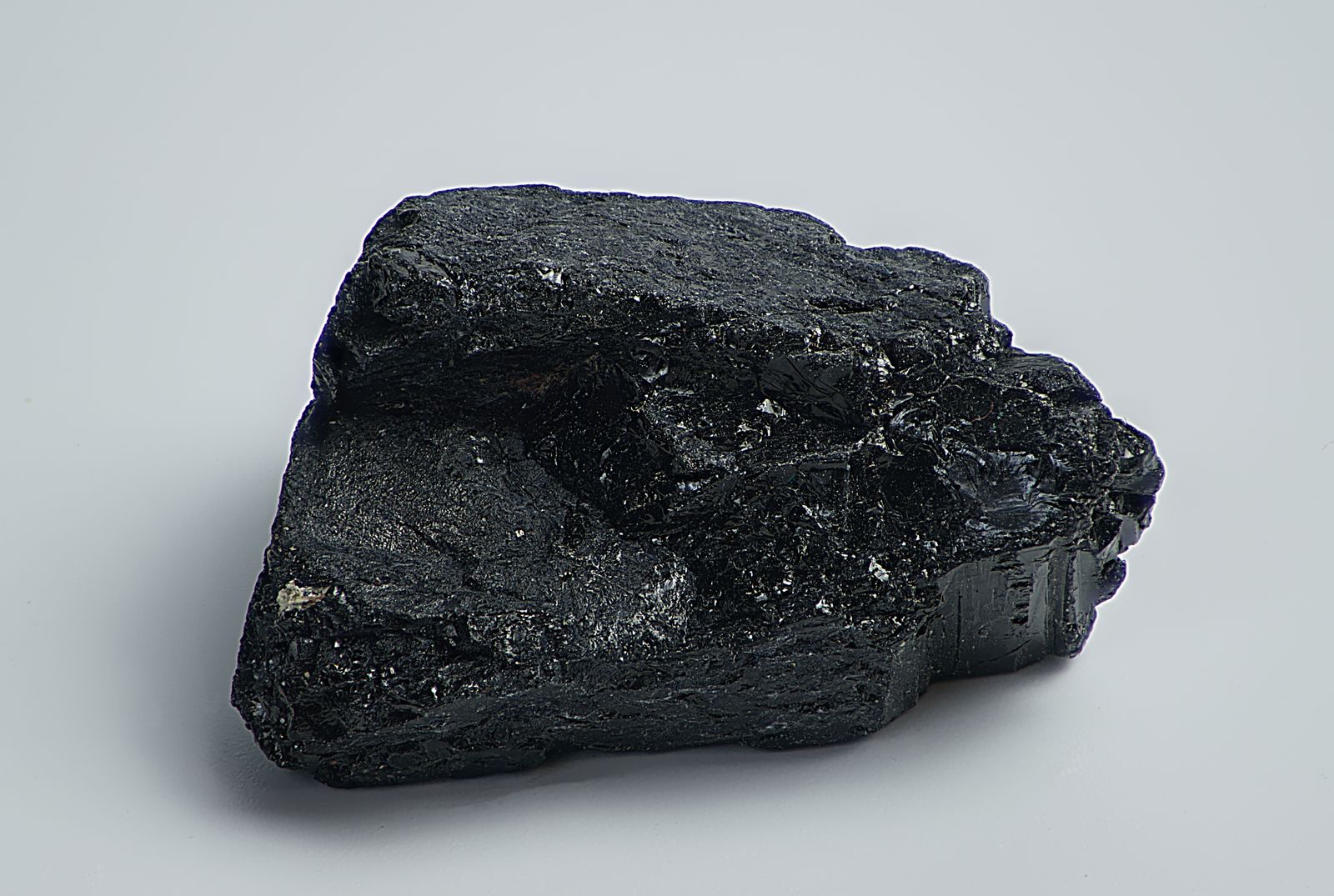
The chemistry committee in 1911 rewarded the substances. Radium and polonium were new entries on the periodic table. Isolating a decigram of pure radium chloride from tonnes of pitchblende ore — the black, tarry uranium mineral shipped in from mines in Bohemia — was a chemical achievement in the old-fashioned sense. Grinding, dissolving, precipitating, crystallising. Repeat for four years in a leaking shed in Paris.
One discovery, two disciplines. That is the trick nobody has repeated.
The years between the prizes
Pierre Curie died in April 1906, hit by a horse-drawn wagon on the rue Dauphine. Marie was 38, with two daughters — Irène, then 8, and Ève, not yet two. The Sorbonne offered her Pierre’s teaching chair, and she became the first woman ever to lecture at the institution. She kept the laboratory going.
Between the two Nobel Prizes she processed more pitchblende, extended the measurements, and built the international standard for the radium unit. She also drew a stream of young women scientists to Paris — Norwegian radiochemist Ellen Gleditsch, Canadian physicist Harriet Brooks, and dozens more — who came to work in what they called simply the Curie lab, as the historian Dava Sobel documents. More than 40 women passed through it in her lifetime.
Her daughter Irène later won her own Nobel in chemistry, in 1935, sharing it with her husband Frédéric Joliot for producing new radioactive elements by bombarding stable ones with alpha particles. It made the Curies the most decorated family in Nobel history.
What Bardeen, Sanger and Sharpless actually did
The three post-Curie double laureates in the sciences all stayed in their lane, and the lane got them their second medal.
Bardeen was at Bell Labs when he and Walter Brattain built the first working point-contact transistor on a strip of germanium and a triangle of gold foil pressed against it with a spring. William Shockley shared the physics prize with them in 1956. That device sits inside every semiconductor on Earth today. His second prize came for BCS theory — Bardeen, Cooper, Schrieffer — explaining why some metals lose all electrical resistance below a certain temperature. Both prizes, in effect, described how electrons behave inside solids.
Sanger’s two prizes are the reason biologists can read a genome at all. He worked out the amino-acid sequence of bovine insulin in the early 1950s, proving that a protein was a defined chemical structure rather than a fuzzy statistical object. His 1980 method for sequencing DNA — the dideoxy chain-termination technique — was the backbone of the Human Genome Project until high-throughput sequencing replaced it in the 2000s.
Sharpless got his second prize in 2022 for click chemistry, a way of snapping molecules together with the reliability of Lego bricks. His co-laureates were Morten Meldal and Carolyn Bertozzi, who extended the method into living cells.
Why the double has stayed unrepeated for 115 years
Physics and chemistry looked porous in 1903. Radioactivity itself sat on the border — the phenomenon was physical, the substances were chemical, and no one yet knew what an atomic nucleus was, let alone that it could split. Ernest Rutherford, who worked on the same problems as Curie, received his Nobel in chemistry in 1908, later remarking on the irony of a physicist being recognised in chemistry.
The border has thickened since. Modern physics laureates work on gravitational waves, quantum entanglement, exoplanet detection. Modern chemistry laureates work on ribosome structures, CRISPR editing, lithium-ion cathodes. The two committees still overlap at the edges — recent chemistry prizes have recognised work with physical applications — but the disciplinary machinery has grown too specialised for one career to leap the fence twice.
There is also the geographic squeeze. A UNESCO analysis of laureate origins, published in 2021, counted 281 laureates affiliated solely with winning US institutions since 1969 and found 87 of them born abroad — one measure of the way immigrant scientists account for a disproportionate share of the awards. A single laureate carrying two prizes across two sciences is a much harder feat when each prize is typically shared three ways among researchers on three continents.
The cost of the work
Curie died in 1934 of aplastic anaemia, almost certainly from decades of handling radioactive material without shielding. She carried test tubes of radium in the pockets of her lab coat because she liked the pale blue-green glow they cast in a dark room. Her notebooks, her cookbooks, her furniture — much of it is still radioactive. Curie material is stored in lead-lined boxes and handled with protective equipment.
She and Pierre were reinterred in the Panthéon in Paris in 1995 in lead-lined coffins, for the same reason. She was the first woman moved there on her own merits.
The physics she opened turned into the field that Rosalind Franklin and Raymond Gosling would later use to expose a hydrated DNA fibre to X-rays for 62 hours and produce Photo 51 — the pattern that gave Watson and Crick the double helix. The chemistry she opened seeded the isotope tracers that let biologists follow metabolism, and the radium therapies that gave oncology its first tool against solid tumours.
The company she keeps
Curie went from one half of a scientific partnership in 1906 to the only individual ever awarded Nobels in two scientific fields five years later. She did the second prize’s work as a single parent, running a lab that was still, in effect, a converted storeroom.
The scale is worth stating precisely, because it is usually stated wrongly. The Nobel Foundation’s own tally records 633 prizes across all six categories between 1901 and 2025, going to 1,026 people and organisations. Only 352 of those are science prizes — 119 in physics, 117 in chemistry, 116 in physiology or medicine — shared among 662 laureates. Four of those 662 have collected a second science prize. One of them crossed a discipline to do it.
An interesting sidelight: in 2025, three of the six US science laureates were immigrants, on figures compiled by the National Foundation for American Policy. Curie, a Polish woman working in France on ore shipped from Bohemia, was the template for that pattern more than a century before anyone thought to count it.
Albert Einstein wrote to her in November 1911, during the scandal over her relationship with Paul Langevin, when the Paris press was tearing at her reputation. Einstein told her to ignore the mob and keep working. The chemistry prize had already been announced by then, and members of the Swedish academy were quietly suggesting she stay away from the ceremony. She went to Stockholm in December and collected it.
What is still on the shelf
The radium samples the Curies isolated are still being used, in trace amounts, as calibration standards in radiation labs. The unit of radioactivity was called the curie for most of the 20th century — a curie being roughly the activity of one gram of radium-226, about 37 billion disintegrations per second — before the SI system replaced it with the becquerel in 1975.
Radium itself has largely been retired from medicine, replaced by shorter-lived isotopes with less collateral damage. Polonium-210, the other element the Curies discovered, made a grim reappearance in 2006 as the poison used to kill the former Russian security officer Alexander Litvinenko in London. It is still made in small quantities in nuclear reactors.
The lineage runs from a Warsaw governess reading physics textbooks at night to the power grids of the mid-20th century. It runs through a shed where a woman in a stained apron stirred a boiling vat of uranium residue with an iron rod as tall as she was, watching for the faint blue glow that told her she was concentrating something new.
115 years on, nobody has followed her across the fence.