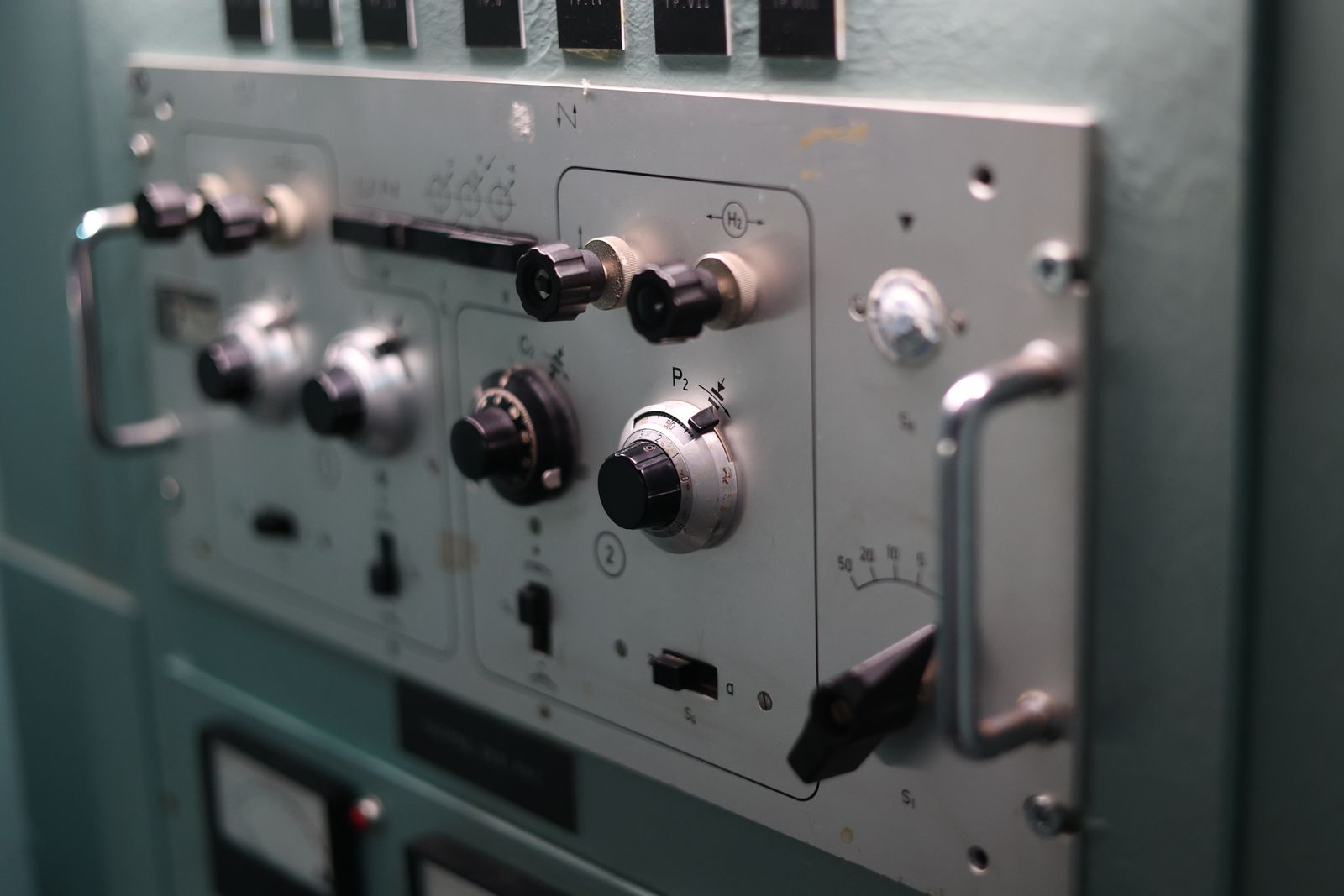
On 27 June 1954, a graphite-block reactor about a hundred kilometres southwest of Moscow pushed 5 megawatts of electricity onto the Soviet grid and started charging for it. That single afternoon at the Obninsk Nuclear Power Plant made the USSR the first country anywhere to sell atomic electricity to paying customers — a lead the West would not close for almost three years, when Britain’s Calder Hall finally came online in October 1956.
Five megawatts is a small number. It is roughly the draw of a large supermarket, or about 3,000 modern electric kettles running at once. But the significance was never the wattage. It was the meter.
A reactor in a closed science city
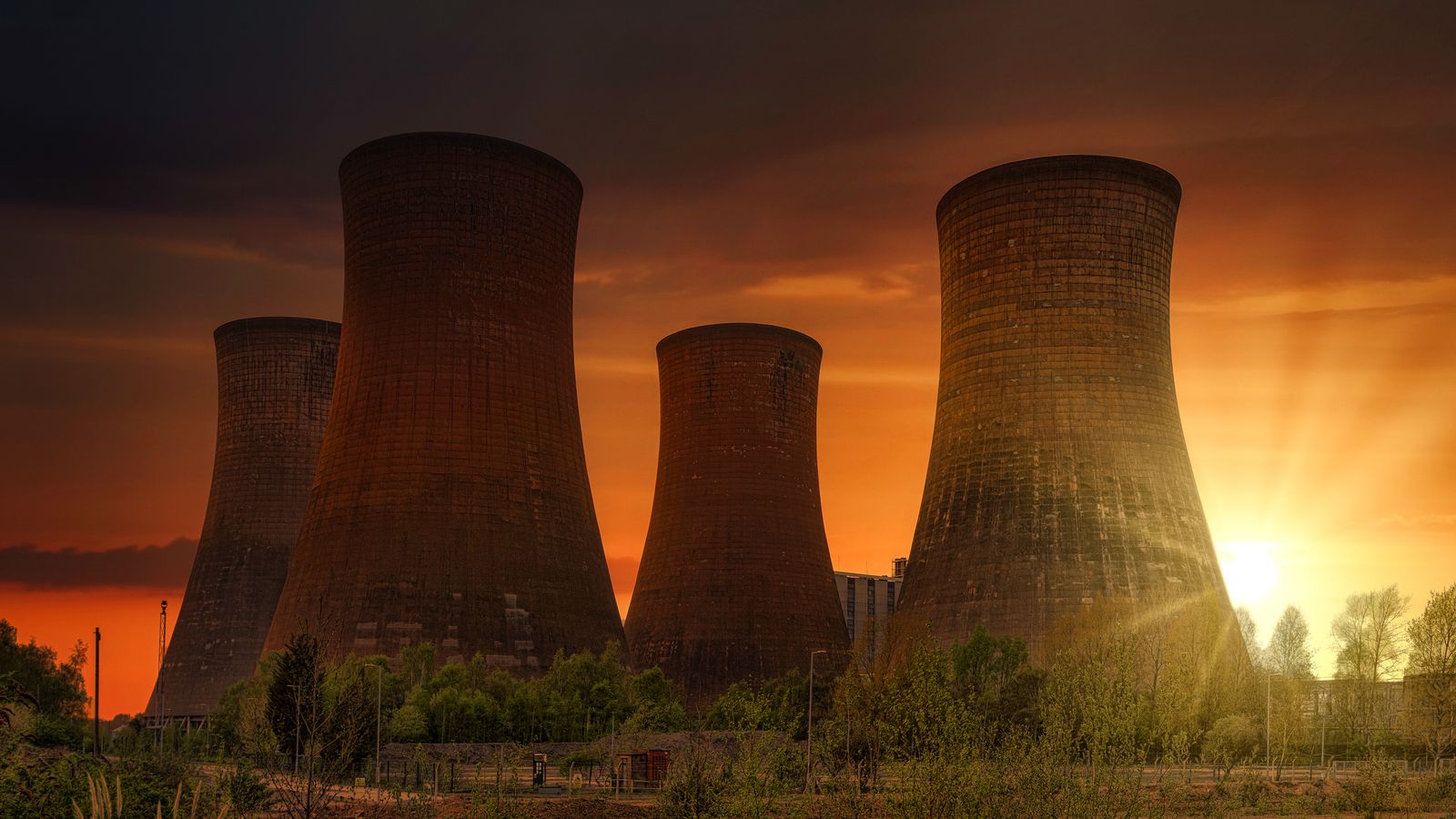
Obninsk sits in the Kaluga region, about 100 kilometres down the road from Moscow. In 1954 it was a closed science town, one of the archipelago of secret settlements the Soviet Union built around its atomic programme. The reactor itself — designated AM-1, for Atom Mirny, or “peaceful atom” — was a channel-type uranium-graphite design, water-cooled, with fuel elements slotted into vertical channels bored through a stack of graphite blocks. The AM-1 was the first nuclear reactor anywhere to produce electricity at any significant scale, and it ran on that duty from 1954 to 1959 before being handed over almost entirely to research.
Igor Kurchatov — the physicist who had led the Soviet atomic bomb project — was named research supervisor. Nikolay Dollezhal, later the father of the RBMK line that would end up at Chernobyl, was chief designer. As Rosatom recounted at the plant’s 65th anniversary in 2019, the recommendation to pursue a uranium-graphite design for civilian electricity came directly from Kurchatov himself.
The station operated for nearly five decades. It was finally shut down in 2002, having outlived the country that built it by more than ten years.
What “first” actually means
There is a small but important distinction buried in the record books. The experimental breeder reactor EBR-I at America’s Argonne National Laboratory lit four light bulbs in 1951 — the first nuclear reactor to produce any electricity at all. But EBR-I never sold a kilowatt-hour. It was a physics demonstration on a test bench in the Idaho desert. Its output never left the building.
Obninsk was different. Its 5 megawatts flowed onto the wider Soviet distribution network and were billed. The plant supplied electricity to homes, factories and offices in the Kaluga region as a commercial generator, not a laboratory curiosity. That is the line the Soviet Union crossed first.
Britain’s Calder Hall, in Cumbria, is the milestone the English-language histories usually reach for. Queen Elizabeth II opened it on 17 October 1956, and it fed roughly 50 megawatts into the national grid — an order of magnitude larger than Obninsk. It was also, importantly, dual-purpose: the reactors were built to produce weapons-grade plutonium as well as electricity, a fact British officials were reticent about at the time. Calder Hall’s grid connection came almost twenty-eight months after Obninsk’s.
The engineering, in plain terms
The AM-1 core was a stack of graphite bricks pierced by vertical fuel channels. Each channel held a tubular fuel element of uranium dioxide clad in stainless steel. Ordinary water, pumped at pressure through the channels, took away the heat and turned it into steam in a secondary loop. The steam ran a turbine. The turbine ran a generator. The generator’s output ran through a transformer and out to the grid.
The design choices were shaped by wartime scarcity as much as by physics. Graphite was cheap and available. Heavy water was not. The channel-type layout meant fuel could in principle be swapped without shutting the reactor down — a feature that would later become central to the RBMK design used at Chernobyl.
Why a graphite reactor, and why then
The Soviet atomic programme in 1949 was primarily a weapons programme. Kurchatov’s team had detonated their first bomb in August of that year. The graphite-moderated pile at Chelyabinsk-40 that produced its plutonium was the template from which almost every subsequent Soviet reactor evolved, including Obninsk. The civilian station was, in a sense, the weapons programme learning to talk to the electricity ministry.
That lineage would echo for decades. The RBMK reactors that dominated Soviet civilian power in the 1970s and 80s were graphite-moderated, water-cooled, channel-type descendants of AM-1. The Beloyarsk plant in the Urals — the site of Russia’s later fast-breeder programme — began life with a pair of AMB reactors, essentially scaled-up Obninsks. Only after the late 1960s did the Soviet Union commit its main civilian effort to the pressurised-water VVER line and the RBMK, retiring most of the intermediate experiments.
The other race, the one behind the meter
Obninsk also seeded a second, less-publicised competition. Barely a year after the plant switched on, the first Soviet experimental fast-breeder reactor went into operation. As POWER Magazine noted in its coverage of the BN-800 unit at Beloyarsk, no other country has anything close to that fast-neutron track record.
The point is that Obninsk was not a one-off. It was the opening move in a national industrial strategy that has produced a construction portfolio of reactor units across multiple countries. VVER-1200 units are currently under construction in Bangladesh, Turkey, Egypt and Hungary, and a pair have been supplying Belarus’s grid at Astravets since 2021. Russia’s push to add Finland to that list collapsed in 2022, when Fennovoima cancelled its contract with Rosatom over the war in Ukraine, and Uzbekistan’s own nuclear plans have since shifted away from the VVER-1200 toward a mix of VVER-1000 units and small modular reactors. The 5-megawatt reactor at Obninsk is the ancestor of all of them, wherever those national programmes eventually landed.
What the West was doing that summer
In June 1954 the United States was still years away from its first commercial nuclear station at Shippingport, Pennsylvania. Britain’s Calder Hall was under construction on the Cumbrian coast. France’s first power-producing reactor at Marcoule was still to come. President Eisenhower had given his “Atoms for Peace” speech at the UN General Assembly just months earlier, laying out a vision of civilian nuclear power the United States could not yet actually deliver.
The Soviet announcement in the summer of 1954 landed in that gap. It was a propaganda coup as much as an engineering one — proof that peaceful atomic power was not a Western monopoly, and that the country that had built the bomb second was capable of building the reactor first.
The long arc of grid firsts
Energy history is full of these hinge moments where a single connection to a wider grid changes what counts as possible. Tesla and Westinghouse lighting the 1893 Chicago World’s Fair settled the AC-versus-DC question; the Spindletop gusher in 1901 opened the age of cheap petroleum. Obninsk belongs on that list. It is the moment a fissioning uranium nucleus, an idea only sixteen years old in 1954, entered the same category as coal and hydro and gas: a thing you could buy from the wires in the wall.
What came after the switch was thrown
By the time Obninsk shut down in 2002, the plant had spent most of its later life as a research facility rather than a bulk power producer — training reactor operators, testing fuel designs, producing medical isotopes. The town around it kept its scientific identity. World Nuclear News reported in 2020 that Rosatom’s medical-isotope subsidiary planned to build a dedicated production plant on the site of the Karpov Physical-Chemical Research Institute in Obninsk, keeping the city tied to the industry it helped invent.
The plant itself is now a museum. Visitors walk through the same control room where operators, on a Sunday morning in June 1954, watched needles rise on analogue meters as the turbine spun up and the breakers closed on the outgoing line. The reactor hall is still there. The graphite core is sealed and silent.
Five megawatts, and the shape of what followed
The scale of what came next is worth holding against that original 5-megawatt figure. A single unit of the BN-800 at Beloyarsk, commissioned in 2016, produces 789 megawatts net — more than 150 Obninsks. A VVER-1200, the reactor Russia is now selling abroad, produces 1,200 megawatts. The Rooppur plant Russia is building in Bangladesh will have two of them. The Hinkley Point C plant under construction in Britain will produce about 3,200 megawatts across two European Pressurised Reactors. All of them trace back, through paperwork and personnel and design DNA, to the graphite stack in Kaluga.
Other grid-scale bets have emerged since — the 1,728-megawatt Dinorwig pumped-hydro station in Wales, for instance, which can start delivering power within twelve seconds of a button press. The Obninsk output would have been swallowed by that plant’s ramp-up. The point stands anyway. The first customer paying a Soviet electricity bill for atomic-generated power in June 1954 was buying something the world had literally never sold before.
Seventy-two years on, one in every ten kilowatt-hours consumed on Earth comes from a nuclear reactor. The line that runs from those meters back to the graphite core southwest of Moscow is unbroken. On a summer afternoon in 1954, the meter started spinning, and it has been spinning somewhere on the planet ever since.