
On 1 March 1982, a titanium-shelled probe the size of a small car parachuted through a sky of sulphuric acid, hit the surface of Venus at roughly 7.5 metres per second, and kept transmitting for 127 minutes from a place where the ambient temperature is hot enough to melt lead and the atmospheric pressure is equivalent to standing under nearly a kilometre of seawater. The probe was Venera 13, and it holds the record for the longest any human-built machine has ever functioned on the surface of Venus.
The Soviet Union built it to die. That was the design brief. Engineers at the Lavochkin Association assumed the lander would be cooked, crushed, or corroded within about half an hour of touchdown. Instead it lasted more than two hours, photographed a yellow-tinged plain of flat volcanic rock, drilled a soil sample, analysed it with an onboard X-ray fluorescence spectrometer, and recorded the first audio ever captured from the surface of another world — the low hiss of Venusian wind against a titanium hull.
The place they were landing on
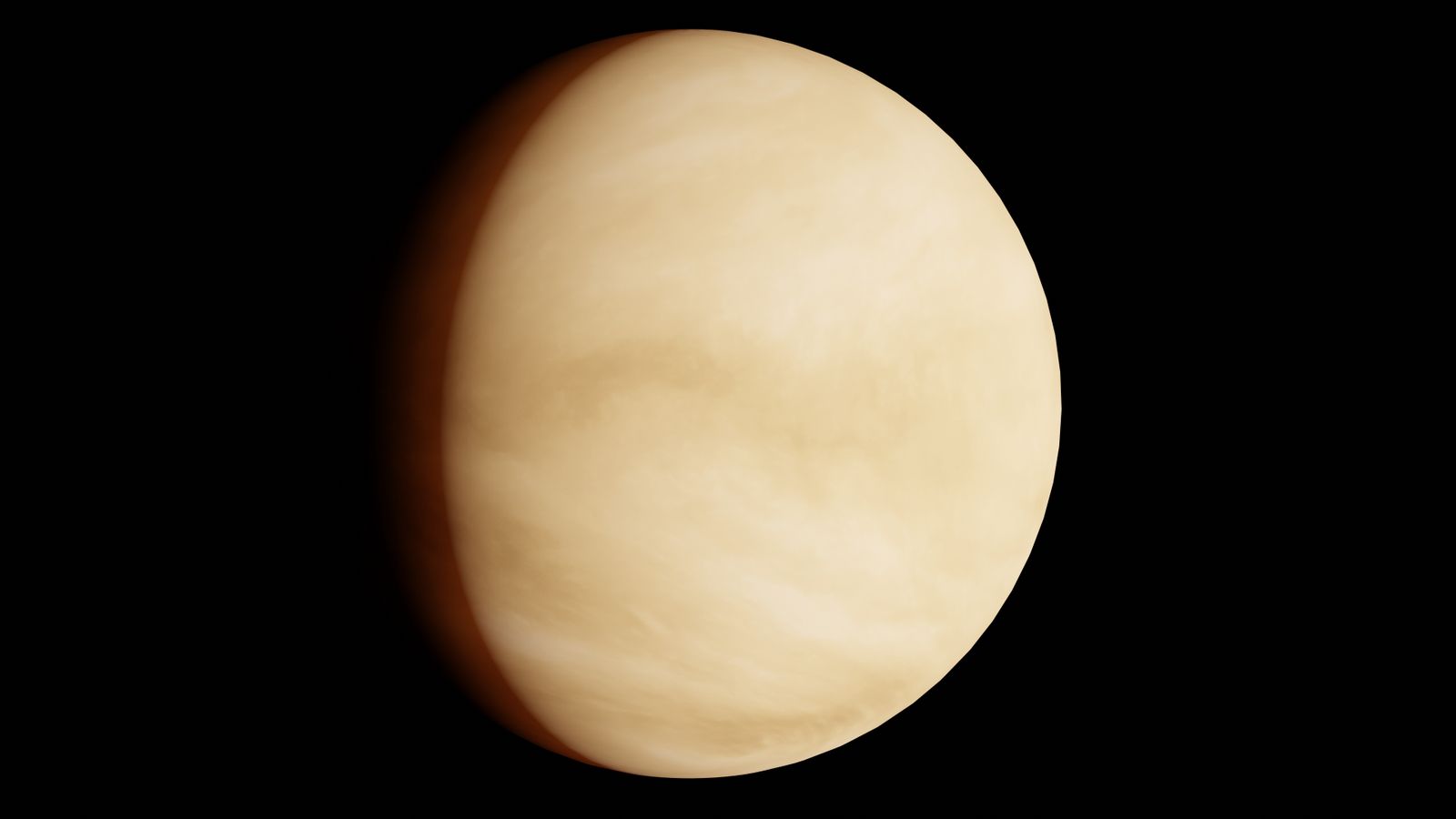
Venus is the closest planet to Earth in size and mass, and by almost every other measure the most hostile solid surface in the solar system. The average surface temperature at the equator is around 880 degrees Fahrenheit, or roughly 471 degrees Celsius, according to Bruce Campbell, a senior scientist at the Smithsonian’s National Air and Space Museum. Lead melts at 327 degrees Celsius. Zinc melts at 419. Tin, at 232, would puddle on the ground within seconds.
The atmospheric pressure at the surface is roughly 92 times Earth’s sea-level pressure, or about 9.2 megapascals. A US Navy Los Angeles-class submarine has a rated crush depth somewhere below 730 metres, corresponding to about 7.3 megapascals. Venus’s surface pressure exceeds that. A submarine at the mean elevation of Venus would already be past the point at which its hull collapses.
The atmosphere itself is 96.5% carbon dioxide, laced with clouds of sulphuric acid droplets that a recent analysis of Venus Express data suggests also hold large reservoirs of water and dissolved iron. Anything descending through those clouds is being showered in an acid mist for about an hour before it ever touches solid ground.
How you engineer a machine to survive that
The Venera series was one of the most sustained planetary engineering programmes in history. The Soviet Union launched more than a dozen Venera missions between 1961 and 1984. Venera 3 became the first human-made object to reach the surface of another planet in 1966, though it fell silent on the way down. Venera 7, in 1970, was the first craft to transmit from the surface of another planet, sending signals for about 23 minutes before overheating. That is the 1970 landing Russian First Deputy Prime Minister Denis Manturov invoked this March when discussing plans for the Venera-D revival.
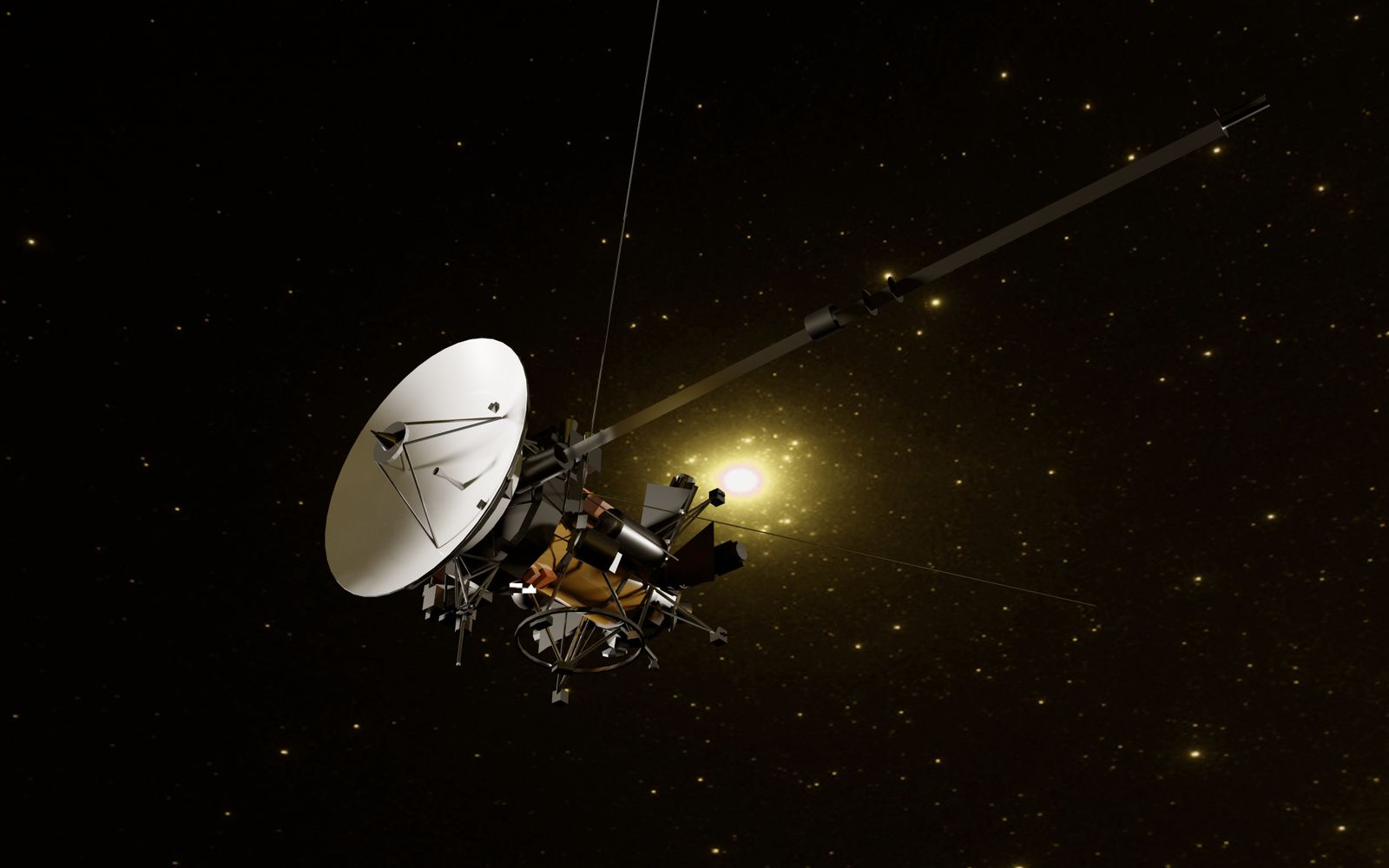
By the time Venera 13 launched in late 1981, the Lavochkin engineers had iterated through a dozen previous designs. The lander was a spherical pressure vessel about a metre in diameter, machined from titanium, with walls thick enough to hold back 92 bars of pressure. It arrived at Venus riding a doughnut-shaped landing ring that was designed to crumple on impact and absorb the shock of a hard touchdown.
The thermal trick
The single most important design choice was thermal inertia. Venera 13 was not actively cooled in any conventional sense during its surface operations. Instead, the interior of the pressure vessel was pre-chilled on the way in. During the cruise from Earth, the internal components were held at around minus 10 degrees Celsius. The titanium shell was heavily insulated, and the interior was packed with lithium nitrate trihydrate — a phase-change material that absorbs enormous amounts of heat as it melts.
Once on the surface, the lander behaved like a thermos flask running in reverse. Venusian heat leaked slowly through the insulation. The phase-change salts inside soaked up that incoming heat by melting, holding the internal electronics near room temperature for as long as the salts had capacity. When the salts were fully melted, the interior began to climb toward ambient. That climb is what eventually killed the lander.
The 127 minutes
Venera 13 touched down in the Phoebe Regio region on 1 March 1982. The design lifetime was 32 minutes. The lander operated for 127. During that window it did more science than most orbital missions manage in a year.
It deployed a camera behind a quartz window and took the first colour photographs of the Venusian surface — a flat plain of layered basaltic slabs, tinged orange-yellow by the way sulphuric-acid clouds filter sunlight.
It also fired a small pyrotechnic drill through its own landing ring into the ground, pulled a soil sample into a sealed chamber that had to be depressurised from surface conditions down to near-vacuum for analysis, and ran the sample through an X-ray fluorescence spectrometer. The results identified the rock as weathered leucitic basalt, chemically similar to certain terrestrial volcanic rocks.
A microphone on the exterior of the lander picked up the acoustic signature of the wind and the sound of the drill firing, making Venera 13 the first spacecraft to record audio from the surface of another planet. The winds at ground level are slow — roughly a metre per second — but the atmosphere is so dense that a light breeze on Venus carries momentum closer to a strong ocean current on Earth.
Why 127 and not 320
The lander did not fail catastrophically. It slowly cooked. As the phase-change salts finished melting, the interior temperature climbed past the operating limits of the electronics, and the transmitter’s oscillator drifted out of the frequency band the orbiter above was listening on. The Venera 13 flyby bus, passing overhead, relayed the signal until the signal simply stopped being coherent.
The 127-minute figure comes from Roscosmos telemetry and has been carried into the technical literature; NASA Glenn engineers, writing up their own high-temperature electronics work, note that two hours and seven minutes remains the surface-operation record, set by Venera 13. Venera 14, its twin, followed days later in March 1982 and lasted 57 minutes. Venera 12 managed 110 minutes. None have come close since, because nothing has landed since.
Why nobody has tried again in 40 years
The last successful Venus landing was Vega 2, a Soviet mission that touched down in June 1985 and operated for 56 minutes. Every attempt to return has stalled, been cancelled, or remains on paper. NASA’s VERITAS orbiter and DAVINCI descent probe are both in development. ESA’s EnVision orbiter is scheduled for the early 2030s. India’s Shukrayaan-1 is targeting the late 2020s. Rocket Lab and MIT have a small private probe called Venus Life Finder aimed at the cloud layer.
Russia’s Venera-D concept, first proposed in 2003, is now targeting a 2036 launch, according to statements this year from First Deputy Prime Minister Manturov and from Oleg Korablev at the Space Research Institute. The proposed architecture includes an orbiter with a three-year lifetime, a balloon probe that would drift through the cloud layer, and a lander designed to survive on the surface for a few hours — an improvement on Venera 13’s 127 minutes, but only a modest one. One of the mission’s stated goals is to test the cloud layer for biomarkers, following the disputed 2020 detection of phosphine that reignited interest in the possibility of microbial life aloft.
The reason the gap has been so long is not scientific interest but engineering. Every material used in a Venus lander has to withstand a chemistry that eats most metals, at a temperature that softens most electronics, under a pressure that crushes most structures. Silicon-carbide electronics that can operate at 470 degrees Celsius have been demonstrated at NASA Glenn but remain slow and expensive. High-temperature batteries are still an active research problem. The Soviet approach — pre-chill the interior, seal it in titanium, race the clock — remains, more than four decades later, the only method that has actually put a working camera on the ground.
The scale of the achievement
Consider what 127 minutes on Venus means in energy terms. The heat flux into a 1-metre titanium sphere sitting on a 471-degree surface, surrounded by 92-bar carbon dioxide, is on the order of several kilowatts. The phase-change salt system inside Venera 13 absorbed roughly the same energy a domestic electric kettle dissipates over the course of two hours — but had to do it without any moving parts, without any external radiator, and while the electronics inside kept running.
The lander’s transmitter ran at about 80 watts. That signal was relayed by the Venera 13 flyby bus and received by the Soviet deep-space antenna at Yevpatoria in Crimea. The panoramas were built from scans roughly a thousand lines long and 252 pixels across, relayed in strips over most of the lander’s operational life. The colour image the world remembers — the yellow rocks, the flat horizon, the corner of the lander’s own landing ring in the foreground — was reconstructed from those strips.
What still sits there
Venera 13’s titanium shell is still on the surface of Venus, in Phoebe Regio. The camera window has almost certainly clouded over by now, etched by decades of sulphuric acid. The interior electronics are long since cooked into slag. The landing ring is presumably intact — titanium is stable in the Venusian atmosphere, which is why it was chosen in the first place. If a future lander returned to Phoebe Regio, it would likely find a metallic disc, slightly deformed by its impact, sitting on the same flat volcanic slabs it photographed on 1 March 1982.
The other Venera hulls — Venera 7, 8, 9, 10, 11, 12, 14, Vega 1, Vega 2 — are also still there, scattered across the lowlands. Nine machines from a country that no longer exists, resting on a surface no other nation has managed to touch, in an atmosphere that has been slowly polishing their titanium shells for four decades. The next visitor is scheduled for 2036, if the schedule holds. It will find company waiting.