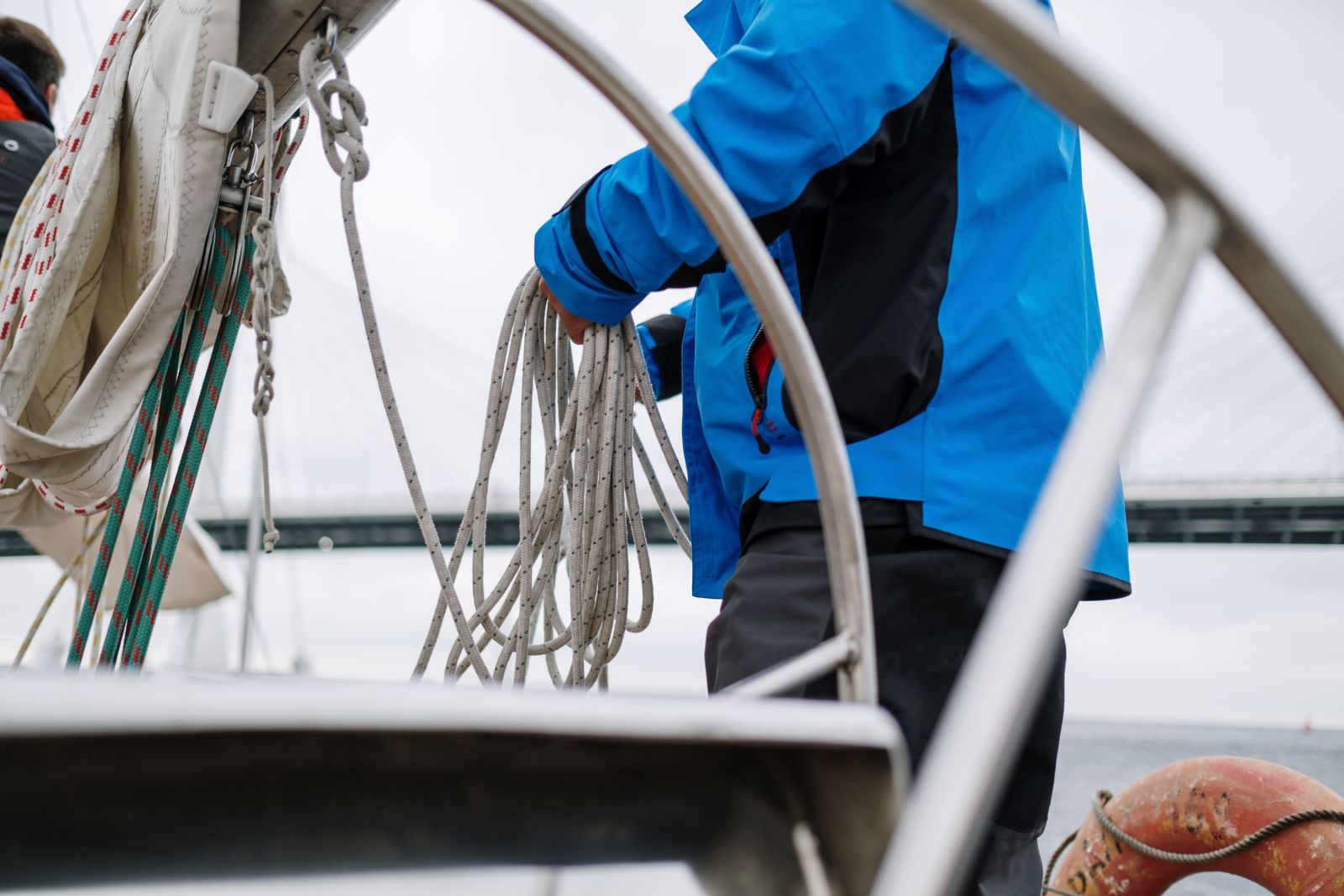
Engineers at the University of Texas at Austin and collaborators at Sichuan University have developed a wearable textile system that can collect hundreds of millilitres of water from the air each day. The work was published in a peer-reviewed Science Advances paper in June 2026, which reported that the prototype recovered between 410 and 894 millilitres across relative humidity levels ranging from 20 to 80 percent.
The jacket is real, but it is not a self-contained garment that quietly fills a reservoir while its wearer sleeps. According to the University of Texas at Austin, its textile collects moisture and funnels it into detachable harvesting units. Those units must then be placed in a foldable collector and heated to recover the water.
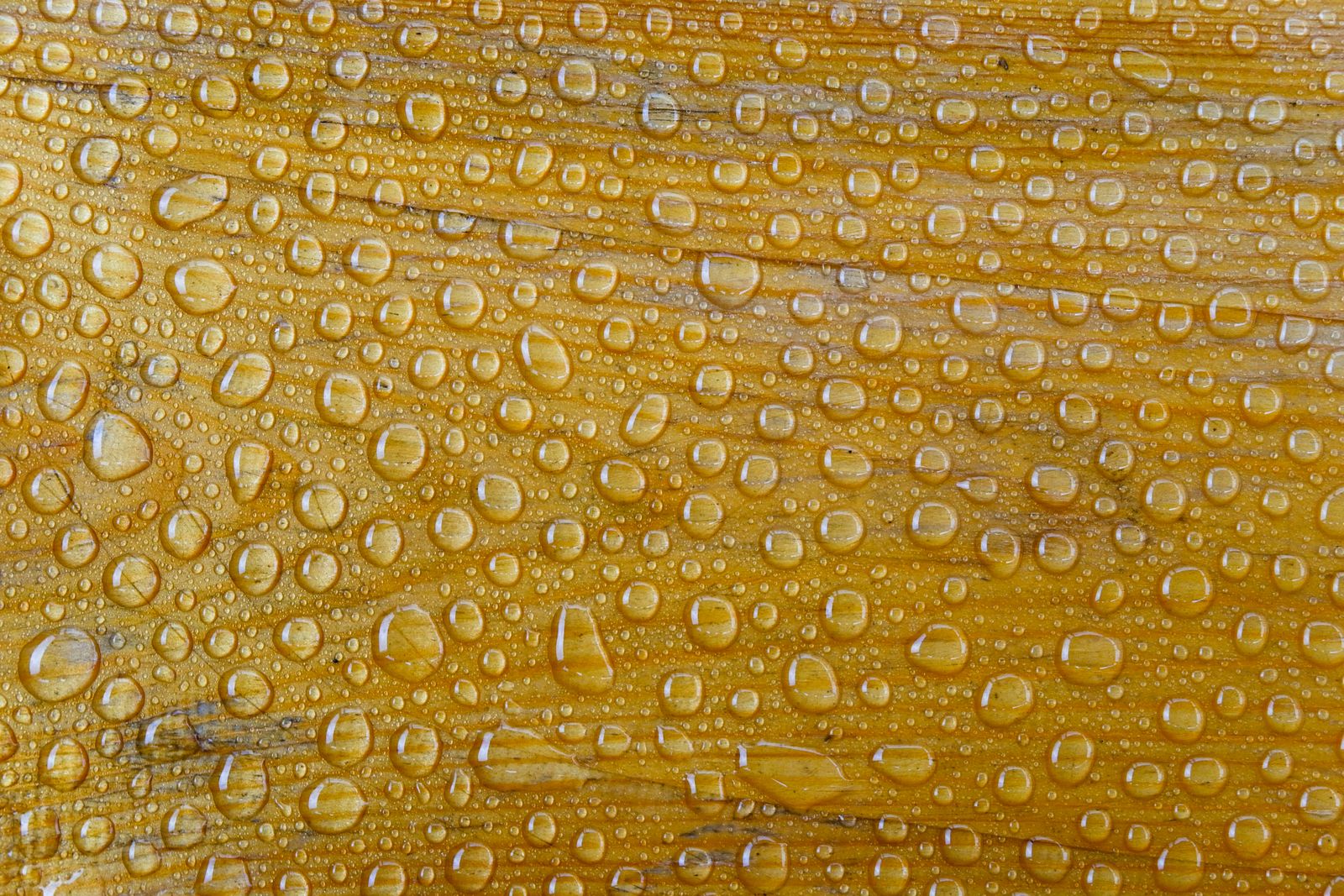
What makes the water-harvesting textile different
Atmospheric water harvesting is not a new idea. Sorbent materials can attract water vapour from the surrounding air, hold it and later release it when conditions change or heat is applied. The difficult part is turning that behaviour into a system that remains efficient after the material is enlarged from a laboratory sample into something the size of a garment.
Conventional sorbent beds can become slower as their size increases because vapour has farther to travel through the material. The UT Austin-led team addressed that problem by engineering what it calls hierarchical open porous fibres. Their surfaces encourage vapour to become liquid, while pores inside each fibre give the captured water a pathway through the material.
When the fibres are woven together, the resulting textile remains porous enough for vapour to move through it rather than becoming trapped at the outer surface. The researchers reported that the design performed three to 10 times better at scale than more conventional sorbents. Tests also showed that the fabric could withstand rolling, folding and twisting, all of which matter if it is eventually used in clothing or outdoor equipment.
Why the 900-millilitre figure needs context
The headline figure is not an invented laboratory projection. The research paper reports 410 to 894 millilitres of collected water, with the exact amount depending heavily on relative humidity. Rounding the upper result gives the widely reported claim of up to 900 millilitres per day.
That does not mean every wearer would receive nearly a litre in every location or season. Atmospheric water systems have more moisture available in humid conditions, while lower humidity generally reduces the amount that can be captured during a given period. The paper’s range therefore describes performance under tested conditions, not a guaranteed daily output for a future customer.
The number also belongs to the complete wearable prototype and portable collection system, not to the jacket fabric operating alone. The textile gathers and moves the moisture, but the harvesting units still have to be removed, heated and paired with a condensation process before usable liquid water is recovered.
A separate solar device produced more than a litre
The jacket research was announced alongside another atmospheric water project from the same UT Austin group, but the two systems should not be treated as a single invention. In a separate Nature Water study, the researchers developed a field-portable system that placed cellulosic gel fabric into cartridges connected to a solar-powered collection unit.
Outdoor trials of that larger device produced 1.3 litres per day in Austin using two modules. Testing in the Chihuahuan Desert reported an area-based yield of 4.3 litres per square metre per day, while the system also continued operating under reduced sunlight. Those results demonstrate how solar energy can drive the water-release stage, but they do not make the current jacket a fully self-contained solar appliance.
The jacket is better understood as a wearable capture platform
The most significant part of the project may be the form of the sorbent rather than the garment chosen to demonstrate it. Clothing offers a large flexible surface that can remain exposed to the surrounding air as a person moves. The same fibres could also be woven into backpacks, tents, emergency shelters or other equipment that offers more collecting area and fewer comfort constraints.
Guihua Yu, who helped lead the research, described the project as an attempt to move atmospheric water harvesting away from boxes, panels and large sorbent beds. Keith Johnston, a co-author, highlighted the pathway created for water to move from vapour in the air, to liquid on the fibre surface and then through the textile. That transport process is what allows the material to keep working when it is scaled into wearable pieces.
The technology remains a research prototype. A commercial version would still have to address how the harvesting units affect weight and movement, how the fabric can be washed, how repeatedly exposed components can be kept hygienic and how the collector can be carried without cancelling out the convenience of the jacket itself.

Other water harvesters use very different cycles
The overnight absorption and daytime release cycle sometimes associated with this jacket actually describes a different atmospheric water project. MIT researchers Chang Liu and Xuanhe Zhao developed a passive, window-sized hydrogel panel that was tested in Death Valley. It absorbed vapour during the more humid night and used daytime solar warmth to release water that condensed on glass.
That MIT panel produced between 57 and 161.5 millilitres per day across humidity levels from 21 to 88 percent. Its cycle was genuinely passive and required no battery or connection to the electrical grid, but it was a rigid glass-enclosed panel rather than a wearable textile. Applying its operating description to the UT Austin jacket incorrectly combines two separate studies.
Earlier MIT research also produced a lithium-chloride-infused hydrogel capable of absorbing substantial amounts of vapour even at 30 percent relative humidity. That project focused on increasing how much moisture a gel could hold, while the newer wearable study focuses more heavily on moving water quickly through scalable fibres.
The wider field is testing several release methods
Other laboratories are accepting higher energy requirements in exchange for faster cycling or greater output. A photovoltaic-powered system reported by PV Magazine uses solar panels, batteries and electrically heated activated-carbon fibre to capture and release moisture through several cycles each day.
Commercial developers are also seeking independent performance data. AirJoule Technologies commissioned a system at Arizona State University in January 2026 for academic evaluation of its performance and water quality under hot, low-humidity conditions. The announcement came from the company, so the eventual peer-reviewed findings will matter more than the commissioning claim itself.
At MIT, another group has investigated avoiding lengthy heating cycles altogether. An ultrasonic device covered by New Atlas used vibrations to shake water droplets from a saturated sorbent in two to seven minutes. The approach still requires electrical power, but it could allow the material to begin another capture cycle much sooner.
Calling the whole jacket passive goes too far
The moisture-capture stage can reasonably be described as passive because the fibres interact with ambient vapour without running a pump through the garment. The full water-production cycle is different. Recovering the liquid requires heat and collection hardware, so the existing prototype is not simply worn overnight and opened like a water bottle the next morning.
A future version might obtain that heat from sunlight, waste heat or a compact low-power system. It might also move the textile into tents or backpacks, where larger collecting surfaces and detachable components would be easier to accommodate. Those are plausible engineering directions, but they are not features the current jacket has already demonstrated as a consumer-ready product.
The real advance is inside the fibres
The prototype does not need a fabricated Swiss origin or an exaggerated internal reservoir to be noteworthy. Its reported output is peer-reviewed, its researchers are identifiable and its fibre architecture addresses a genuine obstacle in scaling atmospheric water harvesters beyond small samples.
The harder question is whether the collection equipment can become light, reliable and convenient enough to justify wearing it. Until that happens, the jacket is best viewed as evidence that moisture-harvesting textiles can work at a useful scale, not as a finished garment capable of replacing the water bottle on someone’s back.