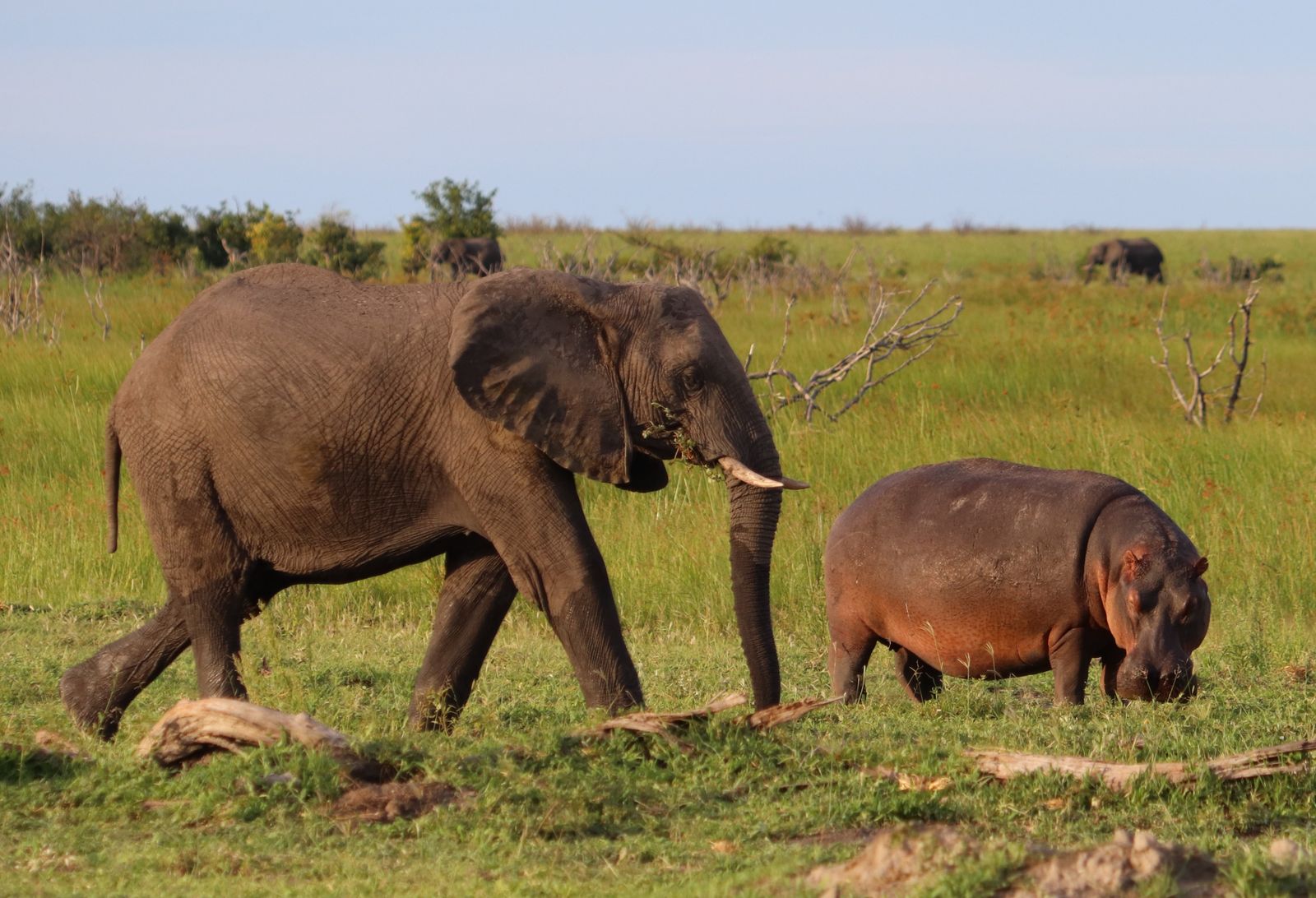
Across the community lands of southern Kenya and northern Tanzania, the WWF-led Land for Life project combined predator-resistant livestock enclosures, locally recruited conflict officers, closer herding, rangeland management and new livelihood opportunities. During the project, reported carnivore attacks on livestock grazing in fields fell from 516 incidents in 2022 to 300 in 2024. Attempted retaliatory killings of carnivores fell from 19 to 3 over the same period.
The work covered approximately 8,890 square kilometres between the Mara-Serengeti and Amboseli-Kilimanjaro national parks, including the Loita Forest in Kenya and the Lake Natron landscape in Tanzania. These were not empty buffer zones around protected areas. They were inhabited pastoral lands through which lions, elephants, wildebeest, livestock and people all continued to move.
The figures do not prove that one device or one organisation caused every decline. They are project monitoring results rather than the findings of a controlled experiment. What they do show is that conflict fell while several practical interventions were operating together across a landscape larger than Puerto Rico.
A landscape too large for a fence
The conventional response to dangerous wildlife is separation. Put wildlife inside a park, livestock outside it and a barrier between them. That logic becomes harder to apply when the animals move farther than the boundaries drawn for them.
The community lands between the region’s national parks contain migration routes, water sources, grazing areas and settlements. Elephants follow seasonal paths to water, while lions and other carnivores follow prey across land that may also support cattle, goats and sheep. A fence protecting one property can become an obstacle across a much longer ecological route.
At the same time, expecting pastoral families to tolerate livestock losses without protection is not a conservation strategy. For many Maasai households, livestock represents food, savings, status and the means to survive drought. When a predator kills a cow or several goats, the loss is immediate even if the wider ecological benefit of protecting carnivores is shared by millions of people elsewhere.
Land for Life did not remove every livestock enclosure or declare fencing inherently harmful. Instead, it distinguished between barriers that fragment a landscape and smaller structures that protect animals at the point of greatest danger. The approach was to keep large rangelands connected while making individual herds more difficult for predators to attack.
The wall that protects a herd without closing a corridor
One of the clearest examples is the Living Wall developed by African People & Wildlife. A circle of living Commiphora branches or similar trees is planted around a livestock enclosure and reinforced with chain-link fencing. As the trees grow, they add height and density to the enclosure without stretching a solid perimeter across the surrounding rangeland.
During Land for Life, partners constructed 262 new Living Walls. WWF reports that they benefited an estimated 3,329 people, protected nearly 38,000 livestock animals each night and involved the planting of almost 30,000 trees. Owners also contributed to construction, making each enclosure a household asset rather than a structure imposed from outside.
The project installations formed part of a much larger programme in northern Tanzania. African People & Wildlife now reports more than 2,100 Living Walls protecting over 320,000 livestock each night. Its teams monitor the condition of the structures because a predator-resistant enclosure remains useful only while its fencing, trees and entry points remain secure.
For an individual herder, the effect can be measured in animals still alive the following morning. In an African People & Wildlife case study, Tanzanian herder Raphael Leemai Siria said he had once lost as much as a quarter of his cattle to predators in an average year. After installing a Living Wall, he reported: “Since the Living Wall was installed, I have not incurred any attacks at the boma.”
A stronger night enclosure does not solve every form of conflict. Livestock can still be attacked while grazing, particularly when an animal becomes separated from its herd or remains in the bush after dark. That is why the decline from 516 field attacks to 300 cannot be explained by Living Walls alone.
The field is where coexistence is won
During daylight hours, the most important barrier between a predator and a cow may be a person who understands the grass, the terrain and the behaviour of the herd. Good herding is not simply walking behind livestock. It involves keeping animals together, choosing safer routes, noticing signs of predators and returning every animal to the enclosure before nightfall.
A peer-reviewed study of Maasai herding practices in the Amboseli ecosystem found that livestock which became lost or remained untended accounted for more than 80 percent of recorded lion attacks on livestock. Researchers interviewed more than 120 community members, including elders and people recognised locally as master herders. Their findings connected careful herding not only with lower predator risk, but also with healthier pastures and better livestock management.
Separate research in southern Kenya reached a similar conclusion about active protection. A 26-month study of lion attacks recorded 29 attacks that killed 41 livestock animals and injured another 19. Active guarding at pasture disrupted most attacks in which it occurred and was associated with lower livestock mortality.
Land for Life added a rapid-response layer to this older knowledge. African People & Wildlife’s Human-Wildlife Coexistence Officers were recruited from the northern Tanzanian communities where they worked, while the South Rift Association of Land Owners supported Kenyan livestock guardians known as ilaretok. Reports of attacks, carnivore sightings and requests for Living Walls could be passed to people already familiar with the families, herds and terrain involved.
WWF says the Tanzanian coexistence team responded across 20 rural communities and prevented an estimated $1,360,635 in livestock losses. In Kenya, more than 120 residents spent eight days clearing invasive Prosopis juliflora from 24 kilometres of paths and roads around water points. The cleared routes gave 5,182 people better sight lines in places where an unseen elephant or buffalo could turn an ordinary journey into a dangerous encounter.
Why fewer attacks can mean fewer dead lions
Livestock protection and carnivore protection are linked by retaliation. When a lion or hyena kills a valuable animal, people may pursue the suspected predator with spears, poison or other weapons. Preventing the original loss interrupts that sequence before it reaches the animal.
The Land for Life figures suggest that this interruption became more common between 2022 and 2024. Reports of grazing-time attacks fell by approximately 42 percent, from 516 to 300. Attempted retaliatory killings fell by approximately 84 percent, from 19 to 3.
Those numbers must be read precisely. They count reported incidents and attempted retaliatory killings recorded through the project, not every interaction across East Africa. They also do not establish that regional lion populations increased, or that the project alone caused the entire decline.
Longer research shows why that caution matters. A 20-year review of lion conservation on Kenyan commercial rangelands found that husbandry, enclosure quality, local economics and sustained engagement all influenced whether people and lions could coexist. Short projects can install equipment, but trust, maintenance and responses to repeated losses have to survive after the original funding period ends.
What the project changed, and what it did not
Land for Life also supported beekeeping, beadwork, poultry production, sunflower farming, financial literacy and marketing skills. WWF reports that 6,931 men and women received help finding additional ways to make a living. That does not demonstrate that 6,931 household incomes rose by a measured amount, but it does show the scale of the effort to reduce dependence on a single vulnerable source of wealth.
The distinction matters because diversification changes how much damage one bad night or one failed rainy season can do. A second activity does not replace cattle as the centre of Maasai pastoral life. It can, however, provide food or cash when drought weakens a herd or a predator takes an animal.
In the Loita Forest, which supports water, pasture, fuelwood and medicinal resources used by more than 20,000 people, the project brought leaders and governments together around an agreement that the forest should become community-managed land. The agreement was an important commitment, but it should not be confused with proof that every legal and administrative step has already been completed. The landscape remains subject to pressure from land conversion, fragmentation and competing demands on water and grass.
The wider argument over cattle and wildlife also remains unsettled. A 2024 study conducted near the boundary of the Maasai Mara reported little detectable effect from a relatively low level of cattle presence, but the findings and their interpretation were challenged by other ecologists. As Mongabay’s account of the debate made clear, evidence from one small area cannot justify unrestricted grazing across every protected landscape.
The significance of Land for Life is therefore narrower and more concrete. It does not prove that any number of cattle can occupy any wildlife habitat without consequences. It shows that across a particular 8,890-square-kilometre landscape, targeted enclosures, attentive herding, local response teams, clearer routes and livelihood support coincided with fewer reported attacks and far fewer attempts to kill carnivores in retaliation.
Energy Daily has examined a similar pattern in the partial recovery of the North Aral Sea, where one carefully placed structure changed the movement of water without repairing an entire regional water system. It appears again on the German island of Pellworm, where local ownership helped energy infrastructure endure. The common thread is not that small tools solve large crises, but that an intervention works best when it changes the daily calculation of the people expected to maintain it.
At night, thousands of cattle, goats and sheep now gather inside rings of living trees while lions and hyenas remain outside. At dawn, the gates open and the herds return to grasslands still crossed by elephants and wildebeest. Between those two moments sits the difference recorded in the project ledger: 216 fewer reported field attacks, 16 fewer attempted acts of retaliation and a little more room for both a pastoral livelihood and a predator to survive.