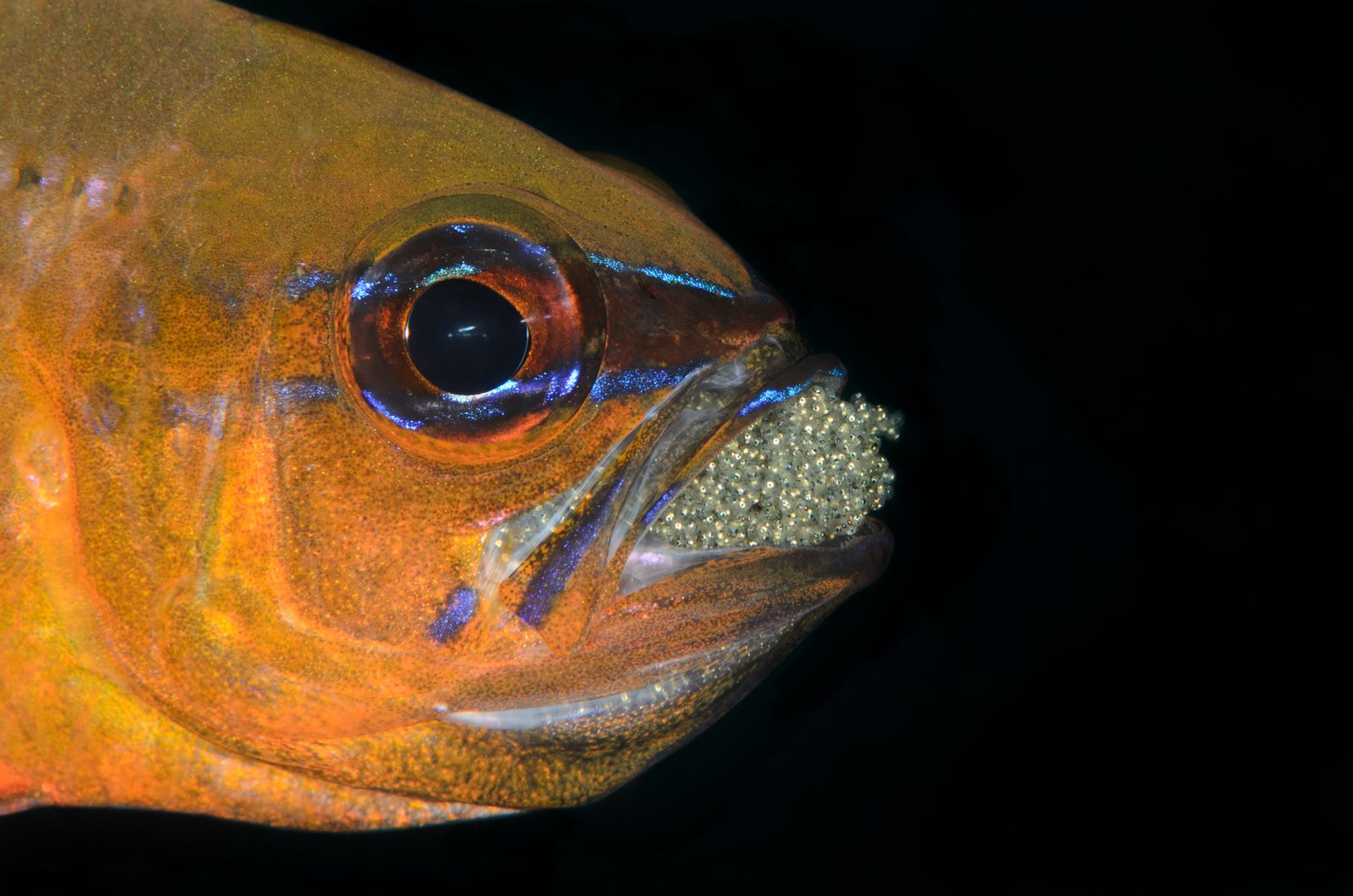
Somewhere off the coast of Baja California right now, a small pink crustacean is sitting inside the mouth of a snapper, doing the job of the fish’s tongue. It is not a metaphor. The fish’s original tongue is gone, dissolved months earlier when the parasite severed its blood supply, and the crustacean has clamped onto the stump, its seven pairs of legs gripping the muscle where the tongue used to attach. When the fish opens its mouth to feed, water moves across the parasite’s body. When the fish presses food against the roof of its mouth, it presses against the parasite’s back. The animal has become a working organ.
The species is Cymothoa exigua, and biologists at Texas Parks and Wildlife, the NOVA science unit at PBS, and port health inspectors in Suffolk have all documented the same extraordinary biology: a marine parasite that feasts on a fish’s tongue and then becomes its tongue.
It is the only known case in the animal kingdom of a parasite functionally replacing a host organ.
What the animal actually is
Cymothoa exigua is an isopod, a member of a crustacean order with a fossil record extending back hundreds of millions of years. The name comes from Greek: iso for equal, pod for feet, a reference to the matched pairs of legs that run down the sides of every isopod’s body. Most isopod species are harmless. Woodlice under a garden log are isopods. So are the pillbugs that curl into armored spheres when a child pokes them.
A small number went a different direction. They became parasites of fish. And one of them, Cymothoa exigua, went further than any of the others.
Adults are roughly the size and shape of a thumbnail, pale pink to grey, with two dark compound eyes set near the front. From above, they look like nothing so much as a woodlouse that has been slightly flattened and given a marine paint job. From the fish’s perspective, they look like a tongue, because that is what they have replaced.
How the takeover happens
The life cycle begins with juveniles, all born male, drifting in warm coastal water. According to Gizmodo’s account of a documented case at Galveston Island State Park in Texas, a young male finds a host fish and slips in through the gill slits, latching onto the gill filaments. There it feeds on blood and grows.
When conditions are right, one of the males on the gills migrates forward into the mouth and changes sex. The now-female isopod positions herself on top of the fish’s tongue and begins using her front claws to sever the tiny arteries that supply it with blood.
Deprived of circulation, the tongue withers and eventually falls away. The isopod then attaches herself to the remaining muscular stub at the floor of the mouth, gripping with the rear legs and hanging out into the oral cavity where the tongue used to be.
She stays there for the rest of the fish’s life.
A working replacement, not just an occupant
The strange part, the part that separates this parasite from every other body-snatcher in the ocean, is what happens next. The fish keeps eating. The fish keeps living. And the isopod, sitting where the tongue used to be, appears to do the tongue’s job.
Fish tongues are not muscular like a mammal’s. They are more like a bony pad on the floor of the mouth, used to press prey against the palate and help move food toward the throat. The isopod’s body, wedged into the same position, performs that same mechanical function. Food gets pressed against her back. Water flows around her. The fish, as far as anyone can tell, adapts.
As Forbes summarised in a 2024 write-up of the species, this is the only parasite known to science that removes a host organ and then functionally takes its place. Other parasites castrate their hosts, hollow them out, steer their behavior. None of them offer a replacement part.
The fish is not cured. It is often underweight, because eating is harder with a crustacean in the way, and heavily parasitized individuals do worse. But a lightly parasitized snapper or croaker can live what looks, from the outside, like a normal life.
Which fish, and where
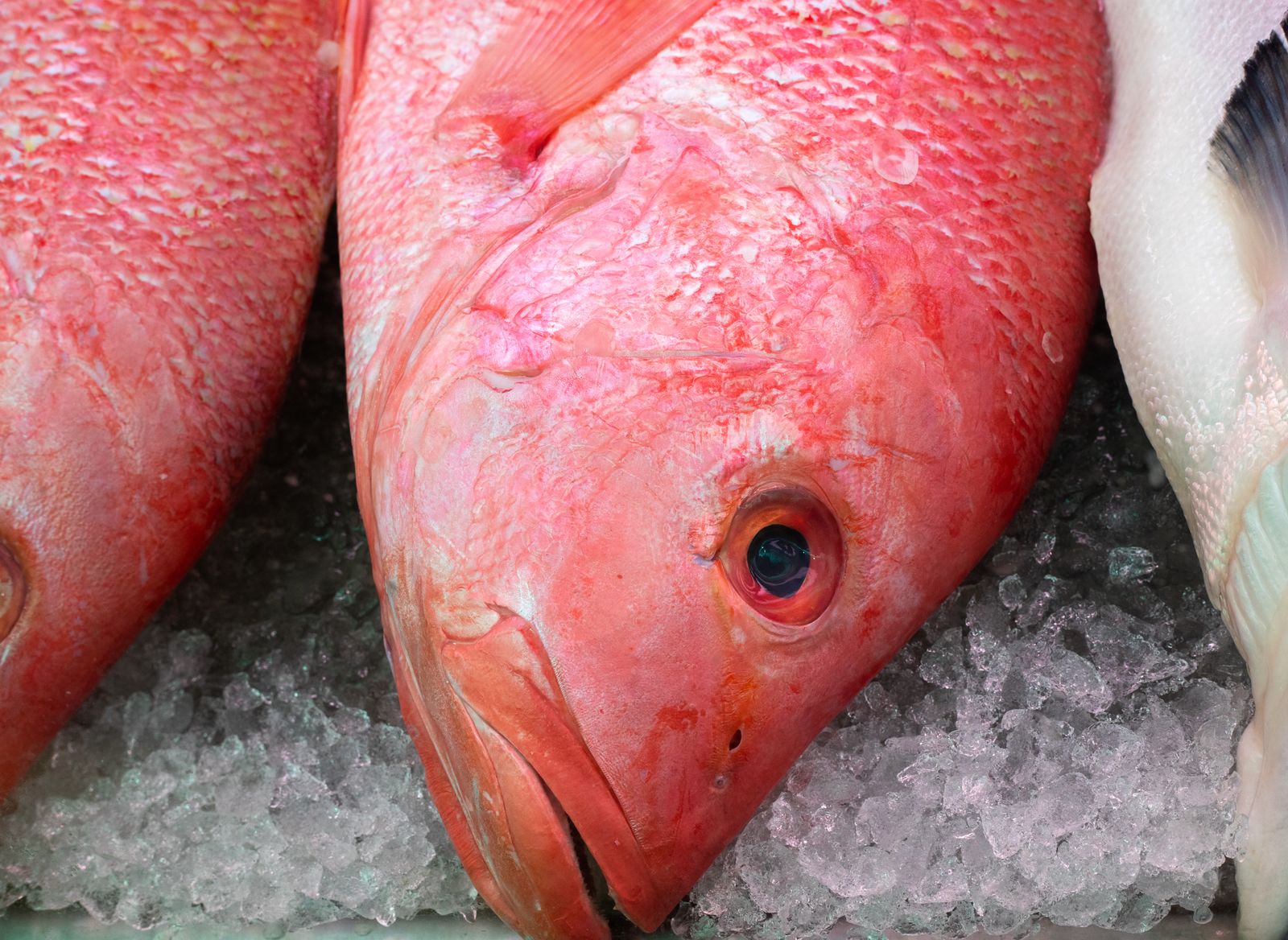
Hosts include various snapper species in the eastern Pacific, particularly around the Gulf of California. Warm water and shallow reef habitat suit both parasite and host. But Cymothoa exigua and its close relatives have been recorded in a widening list of species: red snapper, Atlantic croaker, sea bream, sea bass, drum. The Texas Parks and Wildlife sighting at Galveston Island involved an Atlantic croaker, glibly described by the park’s staff as looking like a “Martian” when they opened its mouth. As NPR reported at the time, alongside the croaker the louse commonly turns up in sea trout and several snapper species.
Occasionally the parasite turns up somewhere it should not. In one well-known case, a Tesco customer in the United Kingdom found one inside a sea bass he had bought for dinner, describing it as resembling something from a horror film. More recently, inspectors at the Suffolk Coastal Port Health Authority rejected an imported consignment of sea bream at the Port of Felixstowe after finding most of the fish infested with dead isopods. The importer sent the box back to its country of origin.
Port health officials said the discovery came from a routine check, and that after examining additional cartons, the extent of infestation led them to deny the consignment’s entry into the UK.
Dead isopods are not a health risk to people who eat the fish. Live ones can bite if handled carelessly, which is why fishermen who find one lodged in a fish’s mouth are usually advised to leave it where it is.
A parasite goes viral, and then gets a new name
Cymothoa exigua is the most famous member of its family, and in early 2025 that fame became semi-official: The Guardian championed the tongue-eating louse as a contender in its 2025 Invertebrate of the Year series, calling it one of the natural world’s most inventive parasites.
But it is not the only tongue-replacer with a claim on public attention. A related South African species carries its notoriety in its name. During doctoral fieldwork on the South African coast, parasitologist Nico Smit opened the mouth of a Cape seabream, found one of these isopods staring back, and photographed it. The image spread across social feeds before the animal had a formal scientific name. When the species was finally described, it was called Ceratothoa famosa, from the Latin for famous, a nod to the fact that the parasite had become well known before science caught up with it.
The parasite’s two dark eyes, staring back through the fish’s open jaws, make it look uncannily like a small alien wearing the fish as a costume. That is essentially what it is.
Why evolution built this
There is a temptation to read cruelty into the arrangement, but evolution is indifferent to that reading. A parasite that kills its host quickly loses its home. A parasite that keeps its host alive, feeding, and swimming around a reef gets to reproduce for years. The tongue-replacement strategy is, in cold selection terms, a very good deal for the isopod. It gets a sheltered spot with a constant flow of oxygenated water across its gills, protection from most predators, and easy access to blood and mucus for food.
The fish gets a roommate.
The fish’s continued survival is not accidental. The isopod’s body plan happens to fit the space almost perfectly, and the fish’s feeding behavior adjusts to work around it. Selection pressure over millions of years has shaped a parasite that removes an organ and then slots into its role, because parasites that did this less gracefully, killing the host outright or failing to hold on, left fewer descendants.
The result is a biological arrangement that reads like something a horror-film writer would reject as too on the nose.
How the parasite reproduces on the job
The females do not leave. Once attached to the tongue stump, they stay for the rest of the fish’s life, and reproduction happens in place. Juvenile males still clinging to the gills of the same fish crawl forward and mate with the mature female sitting in the mouth, a setup Mental Floss described in its profile of the species.
Fertilized eggs are brooded in a pouch on the female’s underside until they hatch. The tiny males are then released into the water, where they must find a new fish before their yolk reserves run out. Most die. The few that succeed climb onto a fresh set of gills and start the cycle over.
A single infected snapper can therefore host a mature female in its mouth and several immature males on its gills, all at once, all descended from the same lineage, all quietly turning the fish into a floating breeding chamber.
A very small corner of a very strange ocean
The tongue-eating louse is one entry in a much longer catalogue of parasites that have made a living inside other animals by rewriting the rules of anatomy. There are flatworms that turn snail eye-stalks into pulsing lures for birds, fungi that steer ants to bite down on a leaf vein before sprouting from their heads, wasps that reprogram spiders into building custom nurseries. What makes Cymothoa exigua different is the completeness of the trade. The organ is removed. The parasite takes over its function. The host keeps eating.
The deep ocean tends to reward strange strategies. Energy Daily has previously looked at the Greenland shark, which lives past 400 years while barely moving and largely blind, another animal whose biology reads as impossible until it is measured. The tongue-eating louse operates on the opposite timescale but in the same register: an evolutionary solution so specific it looks designed.
What happens when the fish finally dies
When the host fish eventually dies, from old age, disease, or being eaten, the female isopod dies with it, or shortly after. She cannot survive independently for long. Her legs are built for gripping tongue muscle, not for swimming or hunting. She is, in a real sense, no longer a free-living animal. She has become part of a fish.
The isopods pulled from that Suffolk sea bream shipment had all died in transit, still clamped to the mouths of their hosts weeks after those hosts had been caught and boxed. Inspectors photographed a few of them before the consignment was sent back. In the pictures, the parasites are still oriented as they were in life, dark eyes forward, legs braced against the bony stump where a tongue used to be, holding position on a job that no longer exists.