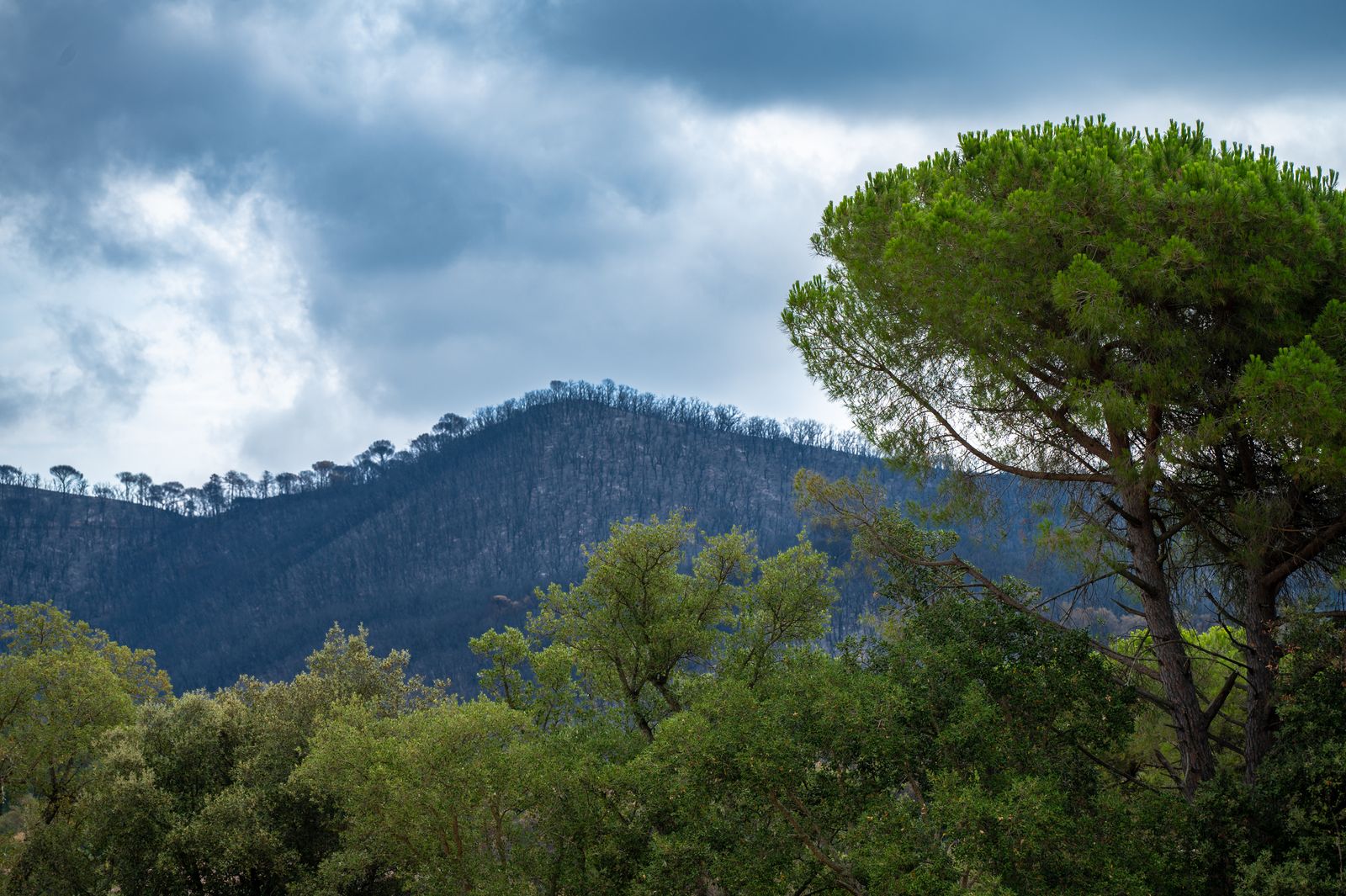
South Korea’s forests now cover about 63% of the country’s land area, roughly two-thirds of a peninsula that in 1953 was denuded by colonial logging, wartime bombardment, and desperate fuel-gathering that left hillsides above Seoul as bare rock and gullied soil. A four-decade national reforestation programme, launched in earnest under a 1973 ten-year plan, planted roughly 11 billion trees across mountainsides that had lost most of their topsoil.
The mechanism was blunt and centralised: village-level tree-planting quotas, a nationwide ban on hillside grazing and fuelwood cutting, a switch to coal briquettes for home heating that removed the daily pressure on forests, and species selection heavy on fast-growing pines, larches, and nitrogen-fixing black locust to hold the soil. By 1982 the first ten-year plan was declared complete, its planting target met years ahead of schedule. By that same era the UN Food and Agriculture Organization was already citing South Korea as the only country to pair successful national forest greening with rapid economic growth after the devastation of the mid-20th century.
Hills that used to be rock
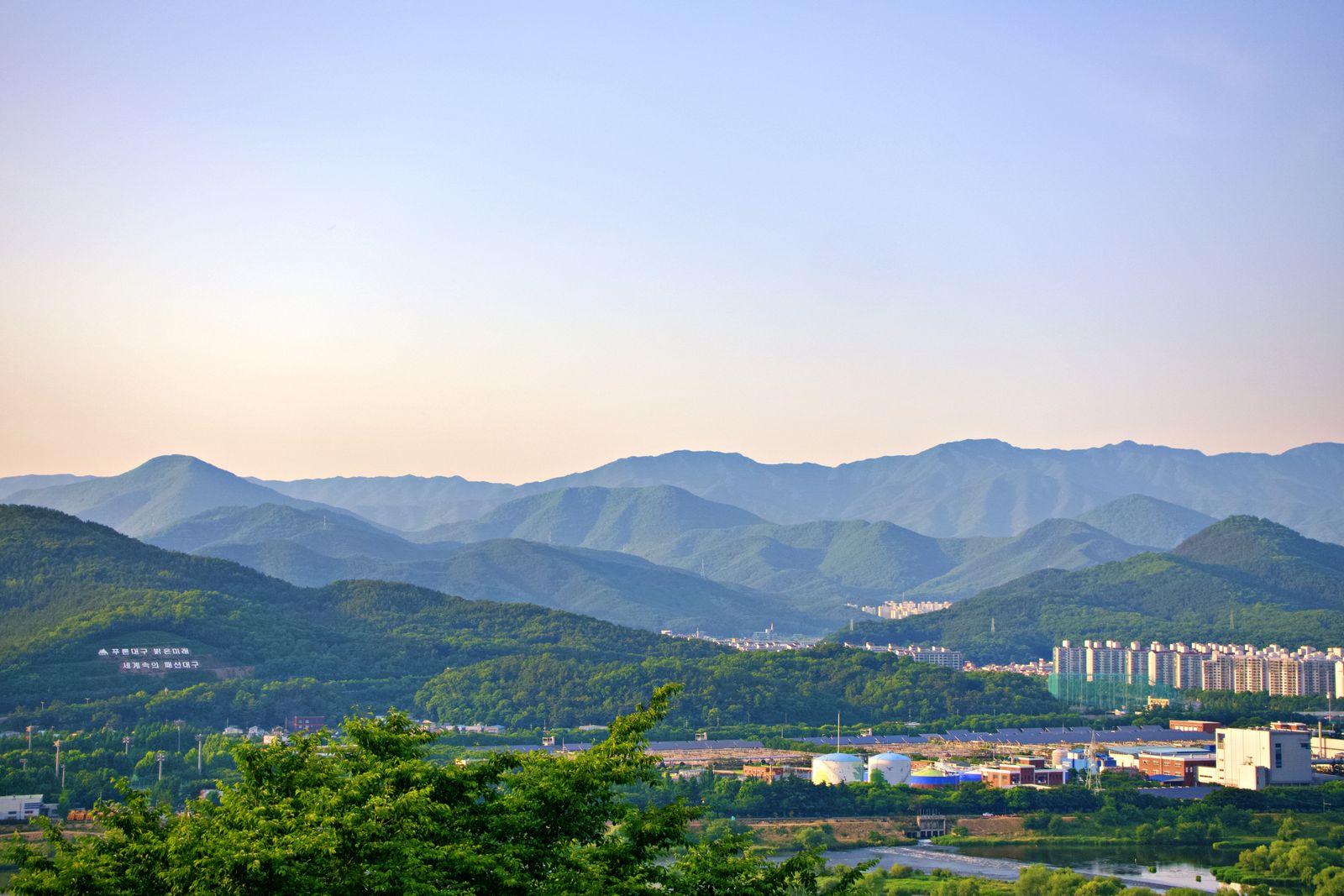
Photographs from the late 1940s and early 1950s show the mountains around Seoul, Daegu, and Busan looking like the skin of an old potato: scoured, orange, streaked with erosion channels. Japanese colonial forestry between 1910 and 1945 had stripped an estimated half of the country’s standing timber. The Korean War then added three years of shelling, defoliation, and refugee fuel-gathering on top of that.
By 1955, the growing stock per hectare in South Korean forests was estimated at around 5 to 6 cubic metres. For comparison, Japan’s forests at the same time held roughly ten times that. A hectare of Korean hillside carried less wood than a suburban backyard.
Rain hit exposed slopes and ran off in sheets. Reservoirs silted up. Rice paddies downstream flooded in summer and cracked dry in spring because there was no forest canopy holding water in the upper watersheds. The country was, in the most literal sense, bleeding soil into the Yellow Sea.
The 1973 plan and the coal briquette
President Park Chung-hee’s government launched the First Ten-Year Forest Rehabilitation Plan in 1973 with a target of planting one million hectares. The plan bundled reforestation into the Saemaul Undong village movement, meaning every rural community had a tree-planting obligation tied to state development funding. April 5 became Sikmogil, or Tree Planting Day, a national holiday when schoolchildren, soldiers, and office workers climbed hills with seedlings.
The quieter half of the policy mattered more. A parallel push replaced firewood with anthracite coal briquettes, the yeontan, as the standard household fuel. Once rural families stopped sending children up the mountain every afternoon to gather sticks, the hills got a chance to grow back. Grazing bans and strict penalties for illegal cutting completed the enclosure.
Species choice was pragmatic rather than ecological. Pinus rigida (pitch pine, imported from North America), Larix kaempferi (Japanese larch), and Robinia pseudoacacia (black locust) went in by the hundreds of millions because they grew fast on poor soil, held slopes, and, in the case of black locust, fixed nitrogen back into exhausted ground. Native species like Korean red pine and various oaks were planted too, but the early decades leaned heavily on whatever would survive.
What 63% forest cover actually looks like
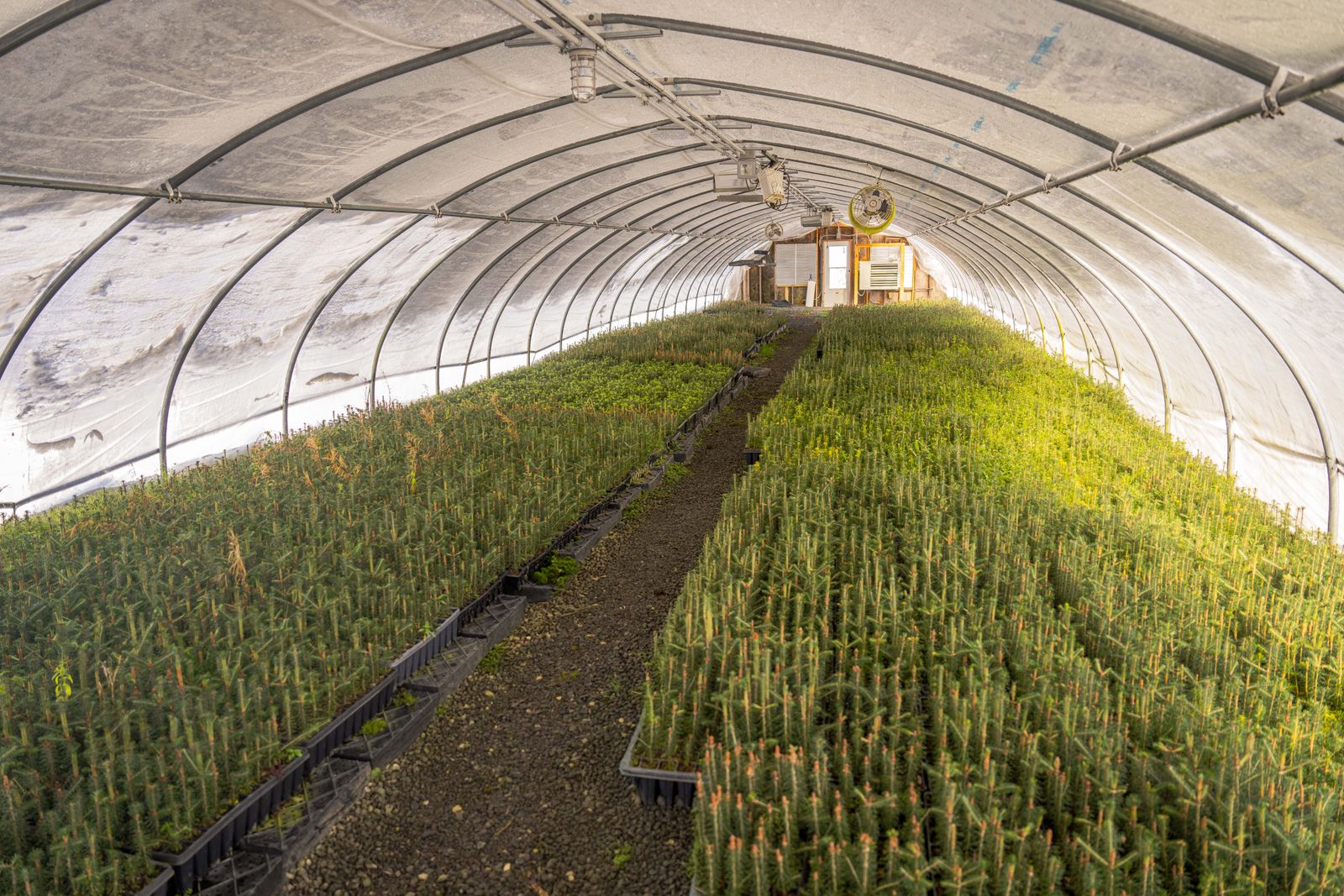
The result today is a country where forest is the default land cover outside of cities and rice plains. Drive an hour from any Korean metropolis and the ridgelines are dark green in summer, rust-and-gold in autumn, and quilted with the geometric patterns of plantation blocks planted in the same year to the same species. The growing stock has climbed from that postwar 5 to 6 cubic metres per hectare to roughly 165 cubic metres per hectare by the early 2020s, a nearly thirtyfold increase in standing wood volume.
South Korea’s forests now absorb around 40 million tonnes of CO2 equivalent per year, offsetting a meaningful slice of the country’s industrial emissions. The Nakdong and Han river basins run cleaner. Landslide frequency on reforested slopes has dropped sharply compared to the 1960s baseline.
The wonder here is compressed time. Forty years is nothing in forest terms (a mature temperate hardwood forest can take 150 years to develop full structural complexity), but Korea did it fast enough that people who remember the bare hills as children are now retirees walking under closed canopy on the same slopes.
The catch scientists are now flagging
Recent ecological work has started to complicate the celebration. Research mapping where tree-planting delivers real biodiversity and carbon gains versus where it displaces native ecosystems has found that temperate coniferous forest can score high on habitat suitability, but monoculture plantations of non-native conifers routinely fail to deliver the biodiversity payoff of a naturally regenerated mixed forest.
Large stretches of Korea’s reforested hills are still, functionally, plantations. Rows of same-age pitch pine or larch, planted in the 1970s, now stand as tall narrow trunks with sparse understorey and thin invertebrate communities. The BiodiversiTREE experiment has shown that mixed-species plots can grow significantly larger and support more insects, spiders and birds than single-species plantings of the same trees.
Applied to Korea, that means the country got the carbon and the erosion control, but the biodiversity ledger is more uneven than the green satellite maps suggest. Pine wilt disease, driven by the pinewood nematode, has been chewing through pitch pine and Korean red pine stands since the late 1980s, a textbook monoculture vulnerability.
Water tells a different story
Greening a peninsula also changes its hydrology in ways that are not entirely benign. Modelling of China’s three decades of large-scale afforestation and vegetation expansion found that the added greenery drove country-scale soil moisture into measurable decline, a signal of regional water deficit, because denser forest transpires water back into the atmosphere faster than the grass or scrub it replaced.
Korea’s forested watersheds regulate flow better than bare slopes did, with lower summer flood peaks and steadier winter base flows, but the total water yield is smaller. In a country that now runs some of the most water-intensive semiconductor fabs on Earth, that trade-off matters.
Why nobody else has fully copied it
The Korean model gets cited constantly in international restoration circles, but it has proven hard to replicate. Turkey’s 2019 attempt to plant 11 million saplings in a single day lost close to 90% of them within three months to drought and neglect. China’s Three-North Shelterbelt, the so-called Great Green Wall, has planted billions of trees since 1978 but with mixed survival and repeated criticism that large monoculture plantings in dryland biomes can degrade rather than restore ecosystems.
What Korea had, and what most countries running big planting campaigns don’t, was the combination of authoritarian enforcement capacity in the 1970s and 80s, a rapidly urbanising population that stopped needing the forest for fuel, and a small enough land area, roughly 100,000 square kilometres, for a national programme to actually blanket. Grazing bans were enforced. Illegal cutting was prosecuted. Village leaders lost their positions if their assigned hectares failed.
Recent studies of similar large-scale reforestation efforts elsewhere, including analysis that narrowed suitable global reforestation land to about 195 million hectares once biodiversity and human land needs were factored in, keep landing on the same point: the biophysical potential is enormous, but the social and institutional preconditions for delivering forest, not just planted seedlings, are rare.
The next Korean forest
The Korea Forest Service’s more recent plans have shifted toward converting even-aged monoculture stands into mixed native forest, thinning pitch pine plots to let oak and maple regenerate underneath, and treating the older plantations as scaffolding for the next stage of ecological succession rather than as the final product. Recent research tracking the biodiversity outcomes of two decades of Chinese forest restoration has reached broadly similar conclusions about the value of shifting from plantation to mixed native cover.
The country that started with bare rock in 1953 now has the harder second-generation problem: how to turn a plantation into a forest. Deer browsing, invasive understorey species, and pest outbreaks all complicate the shift, echoing findings from a 2026 University of Stirling study on Scotland’s Highland woodlands showing that reducing deer density is a prerequisite for natural forest regeneration.
Energy Daily has covered how physical systems accumulate slow returns over decades in a recent explainer on Greenland sharks that live past 400 years by moving almost imperceptibly slowly. Forests operate on a similar clock. A pitch pine planted by a Korean schoolchild in 1975 is now a fifty-year-old tree with a trunk thick enough to hug. The oak seedling germinating underneath it, in the shade, in soil that finally has a decent duff layer for the first time in a century, is the actual Korean forest, the one that will still be there in 2125, long after the plantation scaffolding has aged out.
Stand on a ridge above Chuncheon on a September afternoon and the mountains roll away in overlapping green folds to the horizon. Seventy years ago the same view was bare orange rock. The trees got there because eleven billion of them were pushed into the ground by hand, and because for forty years nobody was allowed to cut them down.