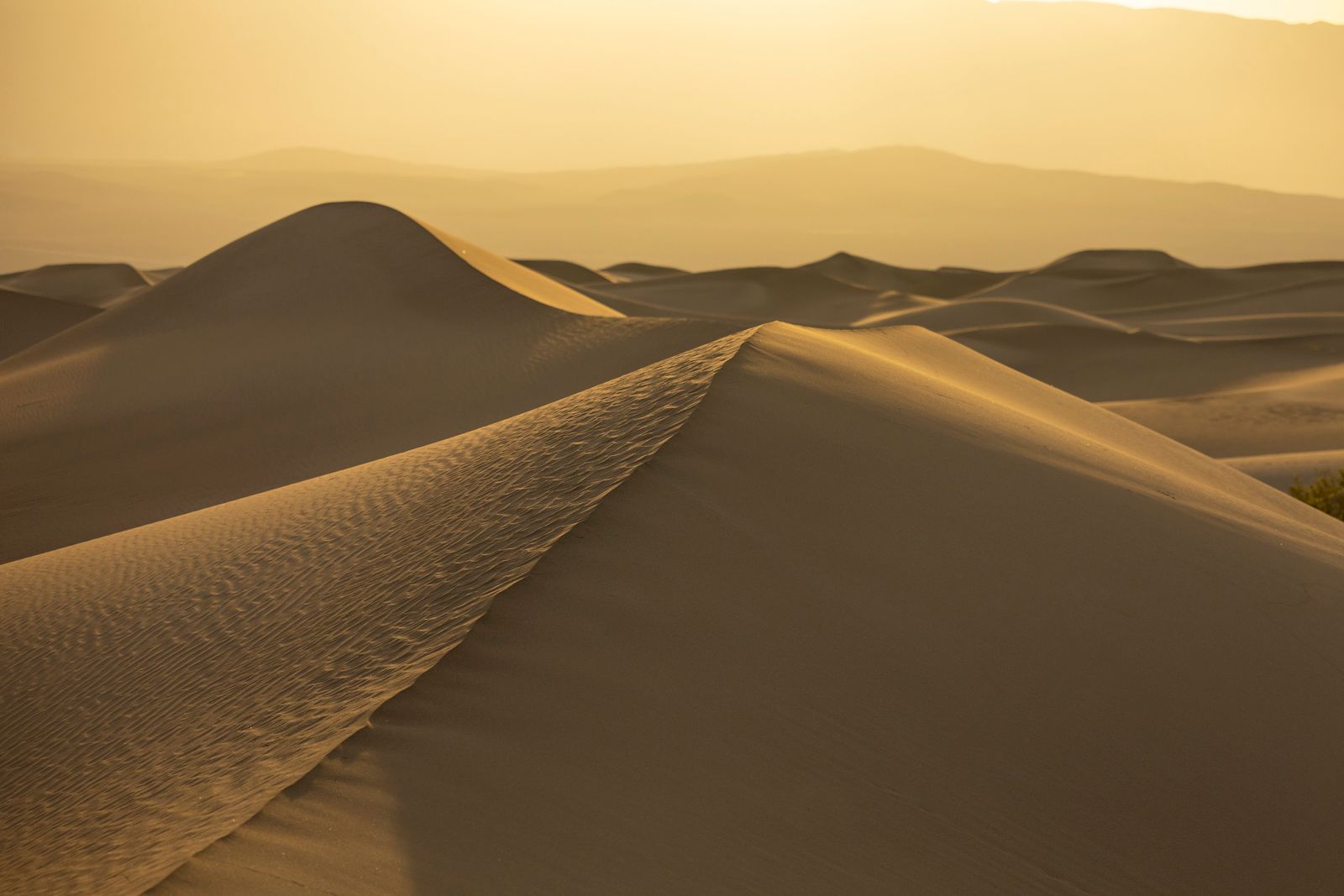
Saudi Arabia sits on the largest continuous sand sea on Earth, the Rub’ al Khali, an ocean of dunes roughly the size of France, and still puts sand on ships from Australia to pour into its concrete. In 2023, according to trade data reported by Autonocion, the kingdom bought about $138,600 worth of Australian construction sand — roughly the price of a mid-range pickup truck, hauled across the Indian Ocean because the grains under Saudi feet are the wrong shape to hold a building up.
The problem is not the amount of sand. It is the geometry of each grain.
Wind polishes. Water breaks.
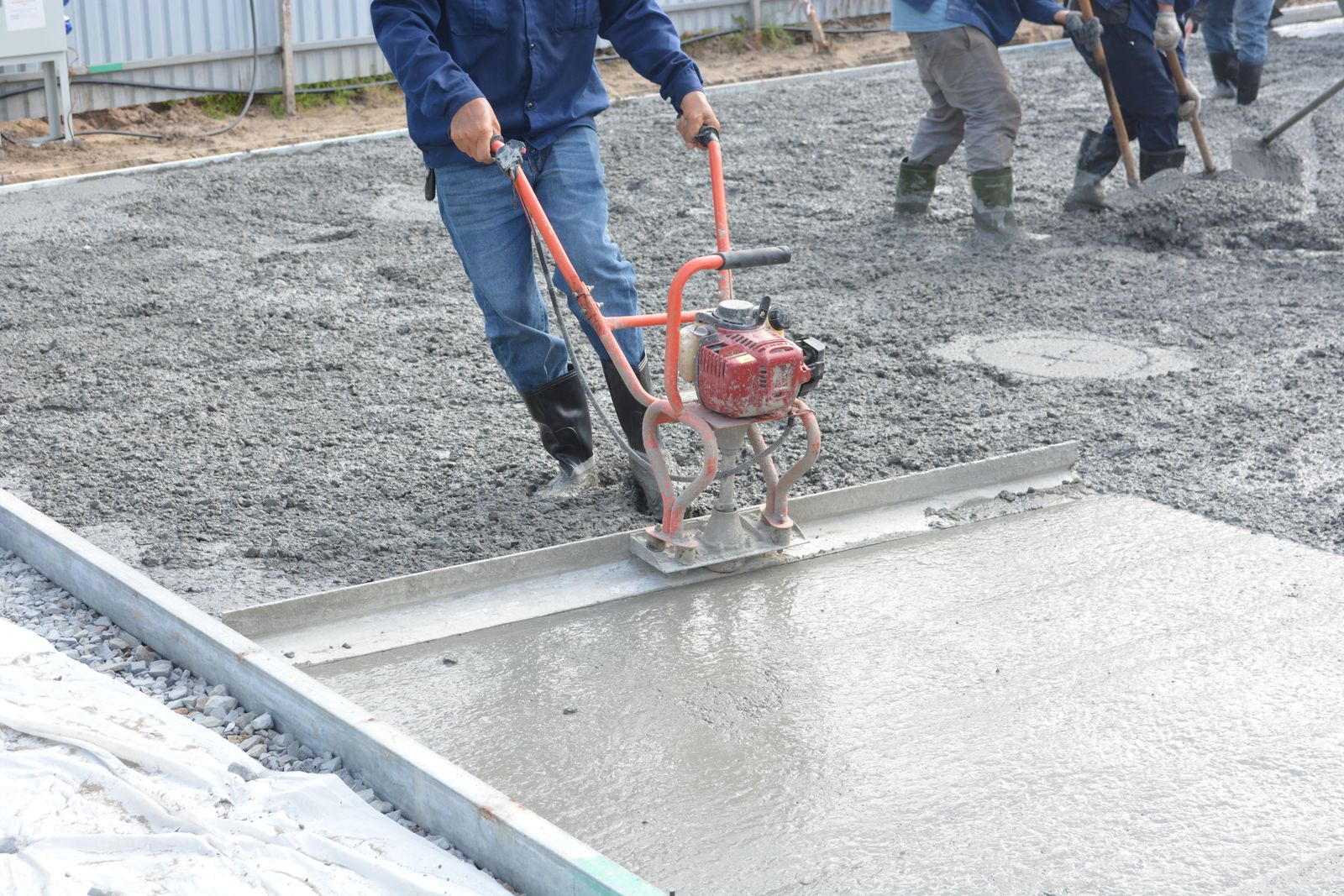
Concrete is mostly aggregate — sand and gravel — bound by a thin film of cement paste. For that paste to hold, the grains have to lock against one another edge to edge, biting into the cement and into each other like pieces of a rough jigsaw. River sand and crushed quarry sand do this well because they are geologically young: freshly broken off larger rock, jagged, angular, sharp-faced.
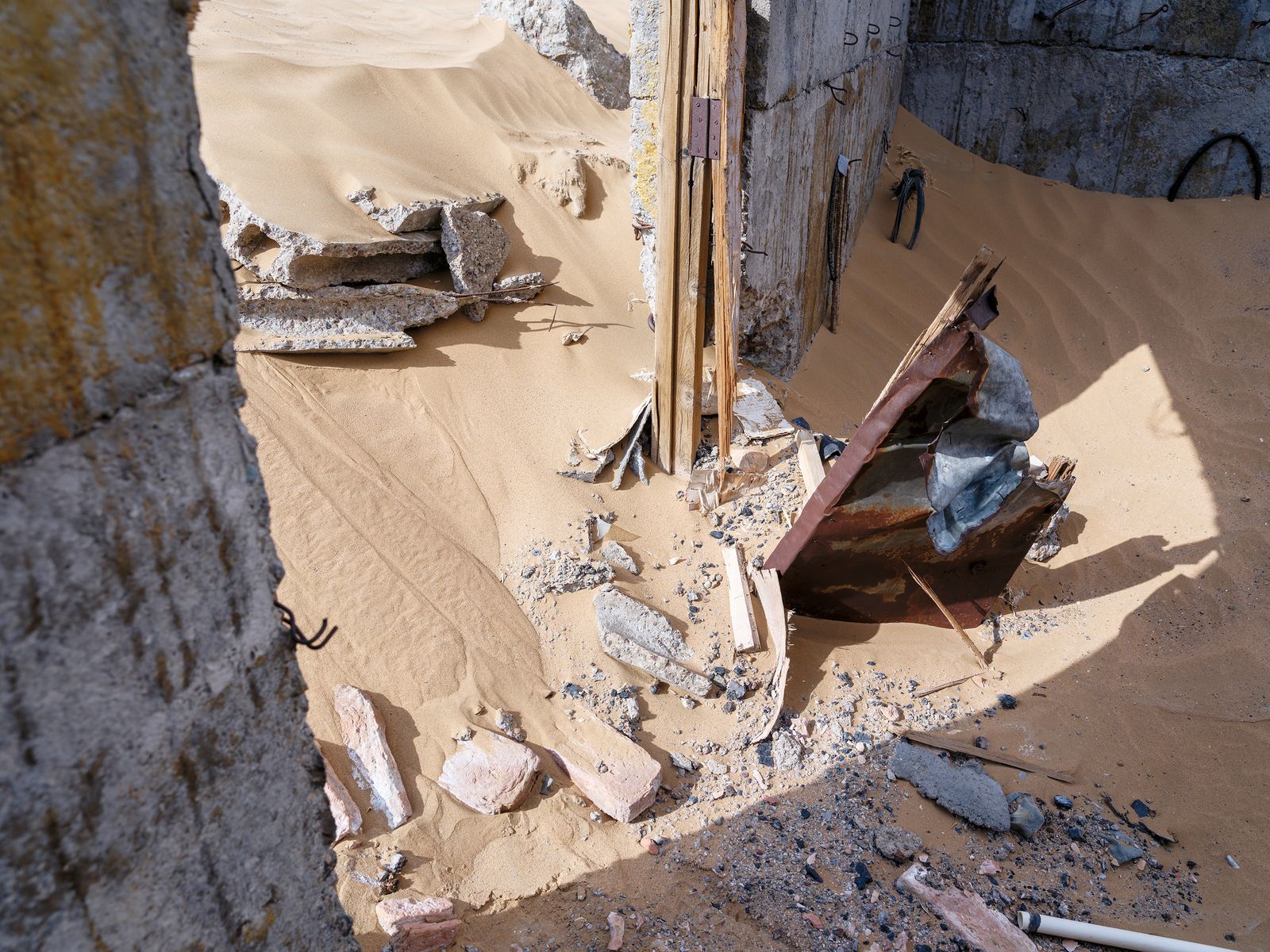
Desert sand does the opposite job. Wind does not fracture grains; it buffs them. Over thousands of years of rolling and bouncing across dunes, each grain wears down into a smooth, near-spherical pellet. Drop those into a wet concrete mix and they behave like ball bearings, sliding past one another instead of interlocking. The cured block ends up riddled with microscopic voids and weak seams.
You can build a garden wall with it. You cannot build a supertall tower.
The Empty Quarter, and why it is useless
The Rub’ al Khali covers roughly 650,000 square kilometres of the southern Arabian Peninsula. Its dunes, some more than 250 metres high, sit within trucking distance of every major construction site in the kingdom. And yet, as World Bank WITS trade data reviewed by OkDiario show, Saudi Arabia imported about $1.22 million in non-metal-bearing natural sands in 2023 — the category that includes the roughly $138,600 from Australia. In a separate category, the kingdom brought in about $5.23 million in silica and quartz sands, sourced mainly from China, Belgium, the United States, India and the United Arab Emirates.
Salt is part of the story too. Desert and beach grains carry enough chloride to slowly corrode the steel reinforcement inside concrete, which is a slow-motion disaster for anything load-bearing. Engineers have spent years trying to make dune sand behave. A team at Imperial College London developed Finite, a concrete alternative made from desert sand. There are patents for crushing and re-fracturing dune grains under enormous pressure just to give them edges again. None of it has displaced the cheapest fix on the table, which is to put good sand on a boat.
The paradox in dollars
The dollar figures on the Saudi side are almost comically small. That $138,600 line item from Australia is not a fortune — it is the point that a line item exists at all. A country sitting on one of the largest sand deposits on the planet has a budget code for sand shipped from Perth.
Australia ranks as the world’s second-largest sand exporter behind only the United States, shipping roughly $273 million worth in 2023 by the Observatory of Economic Complexity’s accounting. Ports like Jebel Ali in Dubai and Dammam in Saudi Arabia handle graded construction and silica sand quietly, in bulk carriers that look no different from the ones bringing in cars and electronics. Almost nobody notices.
Multiply that trickle across every glass tower rising in Riyadh, every dredged island off Jeddah, every kilometre of highway feeding the Vision 2030 megaprojects, and the trickle becomes the visible edge of a very large dependency.
Palm Jumeirah and the Burj
The clearest illustration is not in Saudi Arabia but next door. The Palm Jumeirah, the palm-tree-shaped island finished off the Dubai coast in 2006, was built out of roughly 94 million cubic metres of sand and rock. That sand did not come from the desert a few miles inland. It was dredged from specific patches of the Persian Gulf seabed where the grain size was right, placed by GPS-guided vessels using a technique called rainbowing — spraying sand in an arc through the air onto the growing island. Dutch and Belgian dredging firms ran the operation around the clock for years.
The Burj Khalifa tells the same story going up. The tower used roughly 330,000 cubic metres of concrete, and the sand in that concrete came from outside the UAE because the local dunes could not deliver the strength. The paradox of desert cities importing the material they appear to be standing on is now baked into every skyline in the Gulf.
50 billion tonnes a year
Zoom out and the Gulf’s predicament is a sharper version of a problem the whole planet shares. Humans now pull about 50 billion tonnes of sand and gravel out of the Earth every year, making sand and gravel the most-extracted solid materials on Earth and, by UN accounting, the second-most-exploited natural resource after water. Demand for sand used in buildings alone is projected to climb by as much as 45 percent by 2060.
Nature replaces sand through erosion over geological time, far slower than construction crews dig it out. The UN Environment Programme has a blunt name for the difference between what is used and what can be replaced: the sand gap. That gap now reaches from Cambodian riverbeds to Sicilian beaches, with organised sand-mining operations documented in India and West Africa.
Pascal Peduzzi, who directs UNEP’s GRID-Geneva, has described sand as crucial to development in the agency’s Sand and Sustainability report. The line lands harder when you remember that the same grains propping up Riyadh’s next tower may be missing from a delta in Southeast Asia.
Two kinds of sand
UNEP draws a line between two lives sand can lead. Once pulled up and locked into concrete, asphalt or glass, sand is removed from natural systems for good. Left in rivers, deltas and coastlines, it continues to filter water, hold shorelines in place, and buffer storm surges.
The two uses compete. Dredging the living kind carries costs that never show up on a construction invoice. UNEP’s 2026 report found that roughly half of dredging companies are operating within Marine Protected Areas, accounting for about 15 percent of the volume dredged. The environmental bill for a Gulf skyline often gets paid by a coastline several thousand kilometres away.
Vision 2030 is a sand story
Saudi Arabia’s ambitions are not slowing the appetite. NEOM, the Red Sea Project, Qiddiya, the Diriyah Gate redevelopment — each is one of the largest construction sites on the planet, and each is hungry for the angular, water-eroded sand the region does not have. The Red Sea Project’s plan to develop a large archipelago of islands along the coast will require dredged marine aggregate on a scale that rivals the great Gulf reclamation schemes.
The more ambitious the skyline, the longer the supply line behind it. THE LINE, NEOM’s proposed 170-kilometre mirrored city, would be one of the most concrete-intensive projects in human history if built anywhere near its original specification. Every cubic metre of that concrete needs grains with corners.
Why the dunes formed this way
The Arabian Peninsula was not always this dry. Research published in Nature has documented recurrent humid phases across Arabia over the past 8 million years, with rivers, lakes and grasslands appearing and disappearing on cycles tied to orbital changes. During dry stretches — including the last several thousand years — wind takes over as the dominant force shaping the surface, and the grains it moves get progressively rounder.
The Empty Quarter’s sand is the end product of that process: sediment that has been reworked so many times by wind that its edges have been worn down to the atomic. The same grains that make the dunes photograph beautifully at sunset are the grains that will not bond to cement.
Alternatives, and their limits
There are ways out. Manufactured sand — crushed rock milled into angular fragments — behaves more like the river material concrete wants, and Saudi Arabia has expanding domestic capacity to produce it. Recycled concrete from demolished buildings can be crushed and reused. UNEP has pushed both as part of a more circular approach to construction aggregate.
None of it is a switch that can be flipped overnight. Standards, processing plants, quality controls and hauling networks all have to line up, and the cheapest option in a sand-hungry economy is still a bulk carrier from a well-run quarry abroad. For now, the ships keep coming.
The paradox that is not a paradox
Saudi Arabia’s sand imports get passed around online as a fun bit of trivia, the kind of fact that sounds invented. It stops being a paradox the moment you understand how sand actually forms. Wind makes beautiful dunes and terrible concrete. Water makes ugly gravel and skylines.
The same material problem runs under every megaproject. The aggregate beneath a wind turbine’s concrete foundation matters the same way it matters under a Gulf tower. Every megaproject is, somewhere in its bill of materials, a sand story.
Trade data suggest the Gulf will keep shipping in sand from rivers and quarries half a world away. The global tally will keep climbing past 50 billion tonnes a year. And the most ordinary material imaginable — the stuff kids pour out of their shoes at the beach — will keep quietly turning into one of the stranger supply problems of the century, one polished grain at a time.