20-20-20. The European Union's energy and climate policies have revolved around these figures for years. By the year 2020, 20 percent of our energy will come from renewable sources, reducing greenhouse gases by at least 20 percent and increasing energy efficiency by 20 Percent. All 27 member states are required to achieve these objectives.
But now, Energy Commissioner Gunther Oettinger, has put forward an energy strategy for the entire EU. What are the most important plans for the future of energy supplies?
"Over the next 10 years, the energy industry will need investment of about 1000 billion Euros," the strategy paper states. This capital will go towards modernising existing power plants and infrastructures, and building new plants as well as electricity and gas networks.
We also need to create more incentives to increase energy efficiency, for example, in home insulation and transport. Energy efficiency should become a lucrative business in its own right, according to the report.
200 billion for electricity and gas networks
Last week, Oettinger followed up on the strategy paper with an energy infrastructure package outlining more concrete plans. Around 200 billion Euro would be needed to rebuild electricity and gas networks alone. Only then can we achieve the goal of creating a functional domestic energy market across the entire EU.
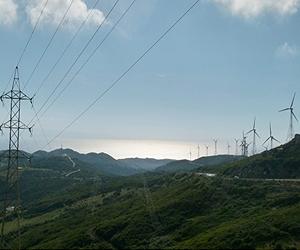
Oettinger says one half of these costs could be covered by the economy and the other half by public funds. One priority is an offshore power network in the North Sea and Baltic Sea to deliver wind power to Central Europe. Another key element is to extend power transmission lines in southwestern Europe to enable the flow of solar power from Spain, over the Pyrenees to France, for example.
Besides linking the network between the Baltic States and Central Europe, the extension of power networks in Southern Europe needs urgent attention. Brussels could lend support by acting to speed up the approval process as well as improving the prospect of financial help.
Gas will also take on a more important role in the European energy mix of the future, and, as such, gas pipeline extensions enjoy a high ranking in the list of priorities. The report says we must improve the connection with the southern corridor to supply gas directly from the Caspian Sea to Europe. These North-South lines should help to avoid regional shortages in gas supplies to Western Europe.
Reactions to the infrastructure plan
As expected, response to the energy strategy and infrastructure package has been mixed. The Green contingent in the European Parliament welcomed the extension of offshore power networks, while Herbert Reul (CDU), Chairman of the European Parliament's Energy Committee, is sending out warning messages about increasing costs, which will ultimately affect consumers.
Representatives of the German energy industry generally welcomed the 'comprehensive approach to European energy policy'.
It is not yet clear which aspects of the policy will actually be implemented. But the path to binding laws and regulations will become clearer after 4 February 2011, when the European Heads of State and Government will meet at the European Energy Summit.
Share This Article With Planet Earth