
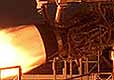
The Fastrac rocket engine has achieved a major milestone in preparation for the first powered flight of NASA¿s X-34 technology demonstrator.
The engine was tested at full power for 155 seconds, the length of time the engine will be required to perform during an X-34 flight. Last month¿s full-duration, hot-fire test occurred less than three years after engineers at NASA¿s Marshall Space Flight Center in Huntsville, Ala., initiated the concept design of the engine – a much faster-than-usual design cycle.
The test demonstrated endurance of Fastrac components working together as a unit for the duration of Fastrac¿s requirement on an X-34 mission. Full-engine testing is conducted at NASA¿s Stennis Space Center, Miss., where about 60 more Fastrac tests are planned during the next year.
Fastrac is a new, 60,000-pound-thrust engine designed to boost small research payloads. Each Fastrac engine will initially cost approximately $1.2 million – about one-fifth of the cost of similar engines.
Fastrac is claimed to be less expensive than similar engines because of an innovative design approach that uses commercial, off-the-shelf parts and fewer of them. Common manufacturing methods are used, so building the engine is relatively easy and not as labor-intensive as manufacturing typical rocket engines. A mixture of liquid oxygen and kerosene fuels the engine.
