
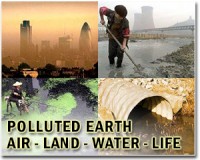
Two steel plants in central Vietnam were ordered to suspend production, according to an official statement Thursday, following reports of protests by residents complaining of polluted air and water from the factories.
The temporary suspensions come amid mounting anxiety over the environment in Vietnam where a massive toxic dump by a separate steel plant in 2016 killed masses of fish along the central coast in one of the country's worst-ever environmental disasters.
Residents near the steel firms on the outskirts of the bustling city of Danang said local officials promised in 2016 that they would be relocated, according to state media.
Photos on state-run media earlier this week showed large crowds gathered near the plants, reportedly protesting the delayed relocation process and ongoing pollution woes.
Danang city officials said the Vietnamese-owned Dana Y and Dana Uc Steel corporations were "asked to stop all production activities that cause environmental pollution", according to a statement Thursday.
It did not say when production is expected to resume.
The statement added that local officials agreed to "finalise a solution" regarding the relocations, while warning residents not to violate laws or disrupt "security and social order".
Local residents previously protested over pollution complaints in 2016, which also prompted a temporary suspension and the government's promise to move their homes, according to state-run VNExpress.
Villagers complained this week of contaminated water, an open landfill, dusty air and noise pollution, according to the news site.
The incident follows a huge toxic spill in April 2016 by Taiwanese steel firm Formosa which decimated livelihoods in fishing villages along the central coast and prompted rare protests across the country.
Formosa was ordered to pay $500 million to the Vietnamese government over the disaster, though many fishermen tried to sue the government after the payment was issued, claiming they were not compensated enough or anything at all.
Malaysia to press EU on planned palm oil ban in biofuels
Singapore (AFP) March 1, 2018 –
Malaysia will press the European Union not to ban palm oil in biofuels during talks this week, the country's trade minister said Thursday, warning the move would hit the rural poor.
The European Parliament earlier this year voted in favour of a draft law on renewable energy that calls for the use of palm oil in biofuels to be banned from 2021, amid mounting worries about its impact on the environment.
Malaysia and Indonesia will be hard hit as they are the world's top exporters of palm oil.
Malaysian Trade Minister Mustapa Mohamed said he will raise the issue when he meets with EU Trade Commissioner Cecilia Malmstroem on the sidelines of an Association of Southeast Asian Nations (ASEAN) trade ministers' meeting in Singapore.
The two-day meeting began Thursday and includes talks with Malmstroem, who is heading an EU delegation. ASEAN is a regional bloc of 10 Southeast Asian nations.
"This is a subject that is very important to us. Of course, I will raise the subject with her when I see her later," Mustapa told reporters.
"We've been in communication and they've been providing assurances that this is not final yet," he said, adding that the European Parliament vote is not yet binding.
He said the livelihoods of more than 650,000 smallholders living in rural Malaysia would be affected by any ban.
"You cannot discriminate against the poor people of Malaysia and Indonesia," he said.
Palm oil, also a major ingredient in products from food to cosmetics, has long been controversial as environmentalists say it drives deforestation, with huge swathes of rainforest logged in recent decades to make way for plantations.
The use of the commodity in food and cosmetics had already dropped in Europe, partly due to pressure from green groups on major corporations, but has been increasing in biofuels.
