
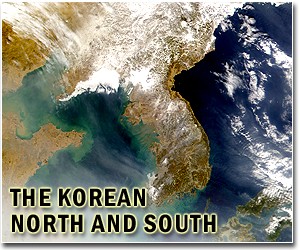
The United States said Tuesday it was too early to consider a military response to North Korea's attack on a South Korean island, while President Barack Obama was "outraged" by the deadly assault.
Obama was awakened before dawn with news of one of the worst border crises in 60 years and the White House immediately demanded Pyongyang respect an Armistice agreement that ended the 1950-53 Korean war.
The US leader, who visited Seoul this month, was expected to speak to South Korea's President Lee Myung-Bak shortly.
US envoy on North Korea Stephen Bosworth, who was in Beijing, meanwhile said the United States and key regional player China agreed on the need for restraint, after he discussed the Yellow Sea incident with Chinese officials.
The Pentagon was closely monitoring the latest flashpoint with the nuclear-armed Stalinist state, and Defense Secretary Robert Gates spoke by phone with South Korean Defense Minister Kim Tae-Young, officials said.
"At this point it's premature to say that we're considering any action," spokesman Colonel Dave Lapan told reporters.
He said no additional US forces had been deployed to the region as a result of the North Korean artillery barrage.
"We're still monitoring the situation and talking with our allies," Lapan said, adding that Washington was "mindful" of which actions might exacerbate or cool tensions on the peninsula.
Obama, woken by his national security advisor Tom Donilon at 3:55 am (0855 GMT) as the crisis broke, left as planned on a trip with Vice President Joe Biden to a Chrysler auto plant in the state of Indiana.
White House deputy spokesman Bill Burton told reporters on Air Force One that though Obama would speak with Lee, there were currently no plans for him to make an on-camera statement.
"The president is outraged by this action. We stand shoulder to shoulder with South Korea," Burton said.
In an early morning statement, White House press spokesman Robert Gibbs said Washington was in close and continuing contact with its ally South Korea after the attack on Yeonpyeong island, which killed two South Korean marines.
"The United States strongly condemns this attack and calls on North Korea to halt its belligerent action and to fully abide by the terms of the Armistice Agreement," Gibbs said.
"The United States strongly condemns this attack and calls on North Korea to halt its belligerent action and to fully abide by the terms of the Armistice Agreement."
Officials appeared to be taking care not to adopt any actions that could further inflame the situation, or reward Pyongyang's latest provocation, following a long showdown over its nuclear program.
Mindful of difficulties in dealing with North Korea's volatile leadership amid an apparent political succession, Pentagon press secretary Geoff Morrell told MSNBC the Pyongyang regime was "extremely unpredictable."
"They do things you could not possibly have predicted in a rational world," Morrell said.
Bosworth meanwhile said the shelling came up "in my conversation with the Chinese and we both share the view that such conflict is very undesirable and expressed firmly the desire that restraint be exercised."
China is seen as the only state which has any influence on Pyongyang, and Washington has in the past exerted behind-the-scenes pressure on Beijing to press North Korea to avoid inflammatory actions.
At the United Nations in New York, the British president of the Security Council Mark Lyall Grant said there would be no emergency Security Council meeting on North Korea on Tuesday.
Earlier, a French diplomat said such a session was being organized.
Fears that the North Korean assault could turn into a full-blown showdown across the world's last Cold War flashpoint depressed US markets, as stocks, already hit by fears over Ireland's plight, slumped.
The blue-chip Dow Jones Industrial Average slipped 1.4 percent by 1740 GMT, while the S&P 500 index, a broader measure of the market, lost 1.5 percent.
The incident also provoked a rare moment of unity between Obama and his Republican foes in Congress.
"North Korea is an unstable, aggressive regime, and I join the president in condemning its hostile action today," said Republican speaker John Boehner.
Republican Senate leader Mitch McConnell joined Obama in condemning the "latest in a long string of hostile actions."
Share This Article With Planet Earth
