
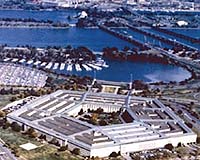
A pair of top US senators introduced compromise legislation for next year's Pentagon budget on Wednesday, largely in line with White House recommendations, such as culling costly new F-22 Raptors.
Democrat Carl Levin, chairman of the Senate Armed Services Committee, and the top Republican on his panel, John McCain, unveiled their bill to mostly approve a more than 680-billion-dollar budget requested by Defense Secretary Robert Gates.
Levin said the text included terminating "troubled programs," such as money for the F-22 stealth fighters, in order "to apply the savings for higher priority activities of the department."
President Barack Obama won a defense budget victory in July when lawmakers sided with the administration in agreeing to halt the production of new F-22 stealth fighters after a presidential veto threat.
Gates had fought to cap production at 187 aircraft, meaning only four more would be built. But many Republicans balked at the administration's plans.
But US congressional negotiators, including Levin, had earlier ignored a White House veto threat and agreed to allocate 560 million dollars to fund an alternative engine for the F-35 fighter jet, according to sources close to the talks.
"We stood as long as we could for the Senate position, which was no second engine. But at the end of the day this was a top House issue, and we're either going to have a bill or delay or not have a bill," Levin told reporters.
Obama and Gates have opposed building a second F-35 Joint Strike Fighter (JSF) engine built by General Electric and British manufacturer Rolls-Royce, saying it would be too costly.
The compromise legislation, Levin said, would also raise military pay by 3.4 percent — half a percentage point higher than Pentagon recommendations — and assign 6.7 billion dollars for mine-resistant armored vehicles known as MRAPs, which is 1.2 billion dollars more than the administration had proposed.
Another 7.5 billion dollars was inked for training and equipping the Afghan police and army.
But Levin noted that "there's a couple things in the conference report that do not reflect the secretary of Defense's budget recommendations."
On the military commissions system for prosecuting terror suspects held at the Guantanamo Bay prison camp, he said the bill would replace procedures enacted in 2006 to preclude the use of coerced testimony.
The proposed budget would also "limit the use of hearsay testimony… provide defendants with fairer access to witnesses and to documentary evidence… (and) require that defendants be provided with appropriate representation and adequate resources," Levin said.
McCain, who lost his 2008 bid for the White House to Obama, said the armed forces "deserve legislation that provides them with the equipment, the training and the ability to carry out the tasks we assign them to defend our nation's security.
"I think that this legislation achieves most of that goal," he said.
Share This Article With Planet Earth
