
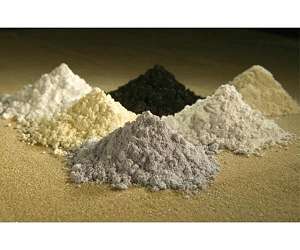
US Secretary of State Hillary Clinton said Saturday that US-Australian security talks will explore alternatives to China for supplies of key rare earth minerals used in high-tech weaponry.
During a visit to Melbourne for the annual talks, Clinton also said she hoped to discuss with her Australian counterpart Kevin Rudd ways to support China's rise while encouraging it to play by international rules.
"He has been extremely helpful to the United States in our efforts to build a positive, cooperative and comprehensive relationship with China as it rises on the global stage," she said at a press conference with Rudd, a China expert.
Clinton and Rudd are due to take part in the security talks here Monday amid anxiety across the Asia-Pacific region over how China aggressively pursues its territorial claims and uses its growing economic clout.
China's rare-earth exports and its control of 95 percent of the global market in the commodities became a hot topic after Tokyo accused Beijing of restricting shipments to Japanese firms amid a territorial dispute.
The minerals are used in high-tech products ranging from guided missiles and radars to flat-screen televisions, lasers and hybrid cars.
Beijing has denied imposing any embargo, but a Japanese trade ministry survey found that all 31 Japanese companies handling rare earths had reported disruption to shipments.
During a regional summit in Hanoi a week ago, Clinton said that Chinese Foreign Minister Yang Jiechi told her that China has no intention of withholding rare earth minerals from the market.
But she has since said the west should not be so dependent on China for the metals.
The chief US diplomat said the issue of rare earths supplies "does have direct military and defence pertinence," so it will be raised at the security talks here known as AUSMIN.
"Australia already does produce such elements, and I'm aware also that the United States also has the potential for producing more, as do other nations," she told reporters gathered at a luxury hotel in Melbourne.
She said other topics to be discussed at the security talks are US-led efforts to stabilise Afghanistan, cyber security, counter-terrorism, the peaceful use of outer space.
The war in Afghanistan has bipartisan political support in Australia, which has some 1,550 troops in the country, but the government is facing increasing public pressure as the war stretches on amid mounting casualties.
Australian media reports said Canberra will agree to ramp up its military cooperation with the US, including more joint exercises and more visits by US personnel, allowing Washington to expand its military presence in the Asia-Pacific region.
Sources told The Australian newspaper that the deal would not mean new US bases in Australia, but greater access for US personnel to Australian defence facilities. It would also allow the US to store equipment and supplies in Australia.
The agreement would include a plan to "map" objects in space over the southern hemisphere, an issue of increasing interest after North Korea began test missile launches on a southern trajectory, sources told the paper.
Rudd neither confirmed nor denied the reports.
"We in Australia, as I have said many times before welcome the United States making greater use of our ports, of our facilities, …of our test-firing ranges. That's what alliances are all about," Rudd said.
In a joint statement issued on Saturday, the two sides said Australia and the United States will also "collaborate closely with Papua New Guinea" on efforts to fight violence against women and HIV-AIDS.
Australia is the final country on an Asia Pacific tour that has taken Clinton to New Zealand, Papua New Guinea, Malaysia, Cambodia, China and Vietnam. She is due to return to Washington on Monday via American Samoa.
Share This Article With Planet Earth
