
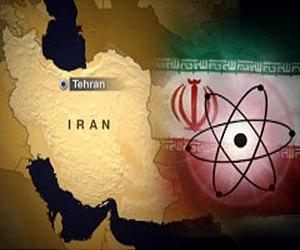
Sanctions may be hurting Iran but they are unlikely to force the Islamic Republic to change course on its nuclear program, Turkish Deputy Prime Minister Ali Babacan said here Wednesday.
"I think it's a reality that the sanctions are putting more and more pressure on the Iranian economy," Babacan told reporters in Washington.
"But is it getting any possible results about making the Iranians take steps that the P5-plus-1 expect? I have big doubts about it," Babacan added.
He was referring to the permanent five members of the UN Security Council — the United States, Russia, China, Britain and France — plus Germany.
The group was behind a fourth round of UN Security Council sanctions, which were adopted in June as part of efforts to make Iran return to the negotiating table and come clean on its uranium enrichment program.
The West suspects the program masks a drive to build a nuclear bomb. Iran insists its program is entirely peaceful.
"As a neighbor and as a country which has lived with Iranians, not together but side by side for centuries, it is very difficult to expect them to move just because they're under pressure," Babacan said.
"The more pressure, the more it may be difficult for them to move," he added.
Stuart Levey, US undersecretary of the Treasury for terrorism and financial intelligence, was to hold two days of talks in Ankara with Turkish government and banking officials in a bid to strengthen cooperation on sanctions against Iran.
Turkey, a non-permanent member of the Security Council, had voted against the June sanctions in a bid to give a chance to diplomatic efforts for a peaceful resolution of the Iranian nuclear standoff.
In a newspaper interview earlier this year, Turkish Finance Minister Mehmet Simsek said that Ankara would abide by UN sanctions on Iran. But he ruled out following tougher measures imposed by the United States and the European Union.
earlier related report
US envoy in Turkey to press Iran sanctions
Ankara (AFP) Oct 20, 2010 –
A top US envoy will hold two days of talks with Turkish government and banking officials in a bid to strengthen cooperation on sanctions against Iran, the US embassy said Wednesday.
Stuart Levey, US undersecretary of the Treasury for terrorism and financial intelligence, was to meet in Istanbul Wednesday with banking sector leaders and representatives of private industry, the embassy said in a statement.
He will then fly to Ankara Thursday to meet senior officials from the foreign ministry, the finance mininstry, the banking sector watchdog and the financial crimes investigation board.
The talks will focus on the implementation of a fourth round of sanctions imposed by the UN Security Council in June on Iran over its controversial nuclear programme and on ways to "guard against Iranian abuse of the financial system", the statement said.
Turkey, a non-permanent member of the Security Council, had voted against the latest sanctions in a bid to give a chance to diplomatic efforts for a peaceful resolution of the Iranian nuclear standoff.
In a newspaper interview earlier this year, Turkish Finance Minister Mehmet Simsek said that Ankara would abide by UN sanctions on neighbouring Iran. But he ruled out following tougher measures imposed by the United States and the European Union.
In September, Prime Minister Recep Tayyip Erdogan said Ankara wanted a preferential trade agreement with Tehran which would allow the two neighbours to triple their trade in five years.
Turkey's improving ties with Iran, coupled by a deep crisis in relations with one-time ally Israel, have sparked concern that Erdogan's Islamist-rooted government is taking NATO's sole majority Muslim member away from the West.
Share This Article With Planet Earth
