
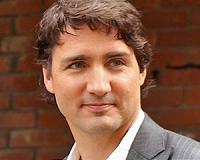
Canadian Prime Minister Justin Trudeau on Friday accused China of ignoring a former Canadian envoy's "diplomatic immunity" when it detained him last month along with a compatriot.
Michael Kovrig was arrested on December 10 in China, after taking a leave from his diplomatic posting to work for the International Crisis Group (ICG) think tank.
China detained former diplomat Michael Kovrig and businessman Michael Spavor last month, accusing them both of activities that "endanger China's security" — a phrase often used by Beijing when alleging espionage.
Their detentions are thought to be in retaliation for Canada's arrest on a US request of Huawei vice president Meng Wanzhou, who is accused of violating Iran sanctions.
"It is unfortunate that China has arbitrarily and unfairly detained two Canadian citizens, and indeed in one of the cases is not respecting diplomatic immunity," said Trudeau.
"This is something that we are engaged right now both with Chinese officials and with our partners around the world where there is a concern for the need for all countries to do like Canada and to respect the rule of law and the independence of our judicial processes."
It was the first public comment on Kovrig's status. Officials previously said he was on an unpaid leave from his Canadian government job.
According to the Vienna Convention, persons carrying a diplomatic passport enjoy immunity when they are abroad. Trudeau's statement therefore suggests that Kovrig carried such a passport while on sabbatical, which is possible if authorized by Canada's foreign ministry.
Ottawa has called — backed by Australia, Britain, France, Germany, the European Union and the United States — for the Canadians' immediate release.
On Thurday, the Netherlands, Latvia, Lithuania, and Estonia also added their voices of support for Canada.
China's Ambassador to Canada Lu Shaye, in a letter to a Canadian newspaper on Wednesday, accused Ottawa and its allies of applying a "double standard" in criticizing the detentions of Kovrig and Spavor while defending Meng's arrest, attributing this to "Western egotism and white supremacy."
China seeks consular access for Huawei employee arrested in Poland: state media
Beijing (AFP) Jan 12, 2019 –
China is seeking consular access for Huawei employee Wang Weijing who was arrested in Poland over espionage allegations, state media reported on Saturday.
Citing China's foreign ministry of affairs, state broadcaster CCTV said Beijing is "closely following" the detention of Wang Weijing and has asked to arrange a consular visit "as soon as possible".
The Chinese embassy in Poland has also asked Warsaw to "effectively ensure the legitimate rights and interests, and humanitarian and safe treatment of the person involved."
A Polish man was also arrested for alleged espionage along with Wang on Tuesday. Both men are suspected of having "worked for Chinese services and to the detriment of Poland," said Polish special services spokesman Stanislaw Zaryn.
He said their apartments and workplaces were searched, adding that the Polish suspect had worked "for several state institutions".
The arrest of Wang is the latest setback for Huawei.
The firm's chief financial officer Meng Wanzhou, was arrested in Canada last month on request from the United States, who have accused her of violating Iranian sanctions.
Following her arrest two Canadians were detained in China on grounds of national security, in what has largely been seen as retaliation for the case.
The incident has also sparked a surge of patriotism in China with companies encouraging staff to buy Huawei smartphones — and several companies even offering employee subsidies to buy phones from the home-grown company.
Huawei in December said it expects to see a 21 percent rise in revenue for 2018 despite what it called "unfair treatment" around the world, as several countries have banned Huawei telecommunications technology.
Last month, Britain's largest mobile provider BT said that it would remove Huawei equipment from its cellular network after the foreign intelligence service called the company a security risk.
Australia and New Zealand have also enacted similar bans, leaving Canada the only country in the "Five Eyes" intelligence network not to take steps against the Chinese firm.
