
Space is a mysterious place where many have not ventured to. Even though it is beyond Earth and humans have not inhabited there, we still need to strive to maintain its beauty and natural environment.
Considering many people haven't visited Space and it is pretty much untouched, there are many satellites, debris and parts of rocket that orbit our Earth.
But who does this Space junk actually belong to?
Well, data from Space Track has allowed RS Components to analyse just how many bits of debris are currently orbiting Earth and which country they belong to.
In total, there are over 12,000 items in orbit – this just includes items created by humans. Initially, space debris was referred to as the natural debris found in the solar system such as comets, asteroids and fragments off meteoroids. But since Space shuttles are becoming more of a regular occurrence in Space now, the most notable pieces of debris are now from satellites.
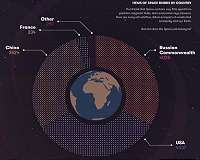
The US has the most amount of debris in Space, with over 4,000 (4,037) items, closely followed by the Russian Commonwealth with 4,035 pieces orbiting.
Despite China being one of the biggest countries in the world, it doesn't mean they dominate the aeronautic and Space industry. They have just over 3,500 (3, 524) items of Space debris circulating Earth.
Countries such as France have a lot fewer items of debris (334) in orbit. The countries which have fewer than 100 items in orbit include India (81), Japan (52), the People's Republic of China and Brazil (52), Canada (5) and the UK (1).
Recent research and development show that 'hunter-killer' satellites are on the way to help reduce and kill thousands of bits of debris orbiting the Earth. Despite the junk being potentially catastrophic to Space. All of these objects travel at orbital velocity, nearly 8 km per second and have the capacity to damage live functioning satellites, so need to be removed from Space as quickly and efficiently as possible.
The University of Surrey has recently created a way to remove debris from Space and make sure it is a success – they are doing this by testing the efficacy of several technologies used in the RemoveDEBRIS at a low Earth orbit, therefore, if the clean-up were to go wrong, it wouldn't add more junk to Space.
Take a look at the infographic by RS Components here to see just how much junk is orbiting our Earth and who it belongs to.
