
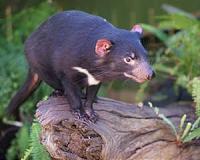
In an effort to reestablish bandicoots in Victoria, Australia, researchers are infusing bandicoot breeding programs with fresh bandicoot DNA from Tasmania.
Genetic diversity is essential to isolated populations of endangered species. Eastern barred bandicoots are worse than isolated in Victoria, they're relegated to life in captivity.
The only surviving specimens in Australia's southeastern state are part of a special breeding program. They live within three fenced enclosures and on one small island.
Once common throughout Victoria, the state's bandicoots were pushed to the brink of extinction by foxes and other threats. Now, scientists are breeding the bandicoots to be reintroduced to regions that have been rid of the invasive fox population.
To ensure new generations of bandicoots don't suffer from inbreeding, researchers have been breeding the remaining Victorian bandicoots with specimens transported from Tasmania.
"The added genetic diversity is also important for giving the bandicoots a chance to adapt to future challenges, like climate change," Andrew Week, a researcher at the Threatened Species Recovery Hub, said in a news release.
The initial breeding experiments have yielded nine successful litters. Surprisingly, the mixed-parent litters produced a larger number of infant bandicoots than litters produced by two Victorian parents.
"We are carefully monitoring the health of all of the animals, and will also study whether the hybrid offspring show any other differences, like being bigger and having better survival of their young," said Annette Rypalski, manager at the Mount Rothwell Conservation and Research Centre. "The first hybrid offspring are now almost three months old and we are about to release them into one of our dedicated five hectare semi-wild enclosures."
Mount Rothwell is home to 420 hectares of fenced habitat, where a number of Australia's endangered species can live freely and avoid the predation of foxes and rabbits.
Bacteria passed from mom to offspring is most beneficial, study shows
New research shows bacteria passed directly across generations, from mom to offspring, are more essential than bacteria acquired from the environment.
The study, published this week in the journal Nature Communications, offers scientists a better understanding of bacterial symbiosis.
Only a small percentage of bacteria is harmful. Most strains and species are harmless. Some bacte … read more
