
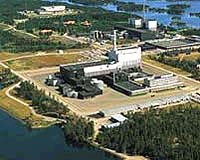
Sweden's nuclear power watchdog on Thursday said safety measures at three of the country's nuclear reactors, shut down after a safety alert in July, needed to be tightened before they could re-enter service. "The three (reactors) need to meet a list of measures before we give them official approval to resume operations," Swedish nuclear power inspectorate (SKI) spokeswoman Maria Svensson told AFP.
The three are the Forsmark 1 and Forsmark 2 reactors and the Oskarshamn 1 reactor.
No date was set by the agency for the improvements, but the power stations must adopt the changes before seeking clearance from SKI.
Svensson's comments came after SKI published a list of safety measures that it said needed to be tightened before the reactors could resume production.
Forsmark 1 was shut down on July 25 after a short-circuit caused a blackout. Two of four backup diesel generators failed to start automatically, revealing other faults in the power station's electrical system.
SKI was forced to halt operations at three other of the country's 10 reactors after the incident at Forsmark.
Forsmark personnel reacted correctly in "a unique situation," according to SKI.
The fourth reactor closed down after the scare, Oskarshamn 2, had made required changes to operating procedures, and was free to resume electricity production, Svensson said.
SKI said the incident was a level-two incident on a scale from zero to seven.
In conjunction with SKI's announcement on Thursday, the Swedish government said it intended to host an international conference on nuclear safety.
"The aim of the conference will be to exchange Swedish and international experience in nuclear power in the hope of reducing the risk of incidents such as the one at Forsmark," Swedish environment ministry spokeswoman Lena Berglund told AFP.
"All countries with an interest in nuclear power could be invited, both in Europe and from further afield," Berglund added.
Sweden has closed two of its original 12 nuclear reactors since 1999 as part of a plan to phase out nuclear power over the next 30 years, or when the reactors' lifespan expires.
Nuclear power accounts for nearly half of Sweden's electricity production.
Source: Agence France-Presse
