
While it could take more than a decade to develop, state-owned Swedish mining company LKAB said Thursday it uncovered Europe's largest known deposit of rare-earth elements, elements that are central components for the energy transition.
Rare-earth elements such as lithium are essential for the batteries that power electric vehicles and other low-carbon technologies, though most of that is found outside of the Western, developed economies.
LKAB said it found a deposit in the Kiruna area of Sweden, above the Arctic Circle, that contains more than 1 million tons of rare-earth elements.
"This is the largest known deposit of rare-earth elements in our part of the world, and it could become a significant building block for producing the critical raw materials that are absolutely crucial to enable the green transition," Jan Mostrom, president and CEO of LKAB, said.
Without sufficient supplies and without mines to extract these minerals, the energy transition would grind to a halt. The European Commission, for example, estimates the bloc will need to see a five-fold increase in rare-earth element supply to meet the expected increase in electric vehicles and wind turbines.
China, however, "completely dominates the market," LKAB said, and the discovery in Europe will go a long way toward reducing the dependency on any single supplier, a problem the European Union is already working to address by looking for oil and gas suppliers other than Russia.
Dependency was an issue raised Thursday by Fatih Birol, the head of the International Energy Agency. The IEA estimates that the Democratic Republic of Congo currently produces 70% of the world's cobalt, used in lithium-ion batteries, while Australia, Chile and China account for 90% of the total global production of lithium.
There are no rare-earth mines in operation in Europe. LKAB said it's already started some preliminary work to tap the Kiruna deposit, dubbed Per Geijer, but permitting and developmental processes are slow.
"If we look at how other permit processes have worked within our industry, it will be at least 10-15 years before we can actually begin mining and deliver raw materials to the market," Mostrom said.
Rare earths: Vital elements in a high-tech world
Paris (AFP) Jan 12, 2023 –
A Swedish mining group said Thursday that it had discovered Europe's largest known deposit of rare earth elements, rekindling hopes that more sources for the key metals will be found outside the powerhouse producer China.
The metals are crucial for electronics such as smartphones, computers and batteries as well as the cutting-edge technologies that could reduce reliance on fossil fuels.
– Are they really rare? –
Not really. With names like scandium, cerium, dysprosium and thulium, rare earths are a group of 17 heavy metals that are actually abundant in the Earth's crust across the globe.
Before the Swedish find, the United States Geological Survey had estimated there are 120 million tonnes of deposits worldwide, including 44 million in China — by far the world's largest producer currently.
A further 22 million tonnes are estimated in both Brazil and Vietnam, while Russia has 21 million and India seven million.
But mining the metals requires heavy chemical use that results in huge amounts of toxic waste and has caused several environmental disasters, making many countries wary of shouldering the heavy financial costs for production.
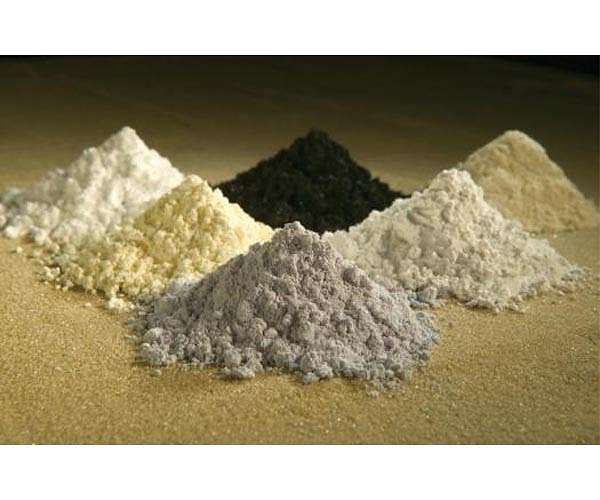
They are often found in minute ore concentrations, meaning large amounts of rock must be processed to produce the refined product, often in powder form.
– Why are they special? –
Each of the 17 rare earths are used in industry and can be found in a wide variety of both everyday and high-tech devices, from light bulbs to guided missiles.
Europium is crucial for television screens, cerium is used for polishing glass and refining oil, lanthanum makes a car's catalytic converters operate — the list in the modern economy is virtually endless.
And all have unique properties that are more or less irreplaceable or can be substituted only at prohibitive costs.
Neodymium and dysprosium, for example, allow the fabrication of almost permanent, super-strong magnets that require little maintenance, making viable the placement of ocean wind turbines to generate electricity far from the coastline.
Demand is set to soar even further: To meet its goal of replacing hydrocarbons and reaching carbon neutrality by 2050, the European Union will need 26 times more rare earths than currently, according to a study for the Eurometaux producers' association.
– China's lead –
For decades, Beijing has made the most of its reserves by investing massively in refinery operations — often without the strict environmental oversight required in Western countries.
China has also filed a huge number of patents on rare earth production, an obstacle to companies in other countries hoping to launch large-scale processing.
As a result, many firms find it cheaper to ship their ore to China for refining, further reinforcing the world's reliance.
The European Union gets 98 percent of its supply from China, the European Commission said in 2020, while the United States imports around 80 percent of its rare earths from China.
Amid growing geopolitical tensions between the West and Beijing, officials on both sides of the Atlantic are pushing for more rare earth production as well as new recycling technologies — though few analysts expect a significant reduction on Chinese production anytime soon.
At the height of a US-China trade dispute in 2019, Chinese state media suggested that rare earth exports to the US could be cut in retaliation for American measures, sparking fear among a range of manufacturers.
Japan saw first-hand the pain of a Chinese cut-off in 2010, when Beijing halted rare earth exports over a territorial conflict.
Since then, Tokyo has pushed hard to diversify supplies, signing deals with the Australian group Lynas for production from Malaysia, and ramping up its recycling capabilities.
