
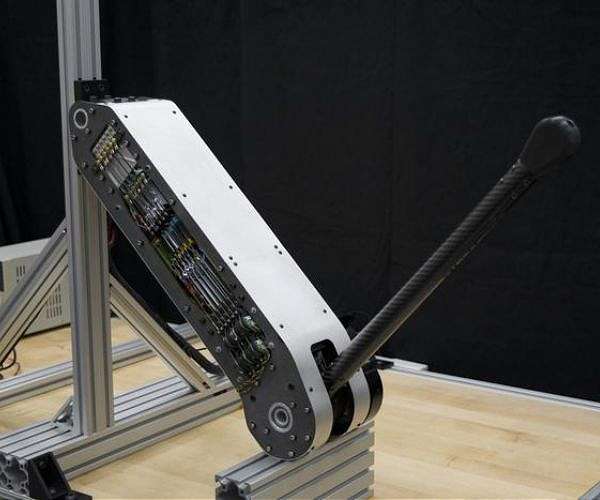
In a study, Stanford University researchers have introduced an innovative actuator design that dramatically enhances the efficiency of electric motors in robots, potentially transforming the landscape of robotics and prosthetics. Published in Science Robotics on March 20, this new actuator significantly reduces energy consumption by integrating springs and clutches, allowing for dynamic, complex movements with minimal electrical power.
"Traditional electric motors are optimized for constant, unvarying tasks. This inefficiency becomes glaring in applications requiring varied, dynamic actions. Our solution circumvents these energy losses, maintaining electric motors' desirable attributes while drastically improving efficiency," stated Steve Collins, an associate professor of mechanical engineering at Stanford and the study's senior author.
The innovative actuator operates by leveraging the natural force of springs, which exert power without consuming energy. It employs electroadhesive clutches to rapidly and efficiently control the engagement and disengagement of springs, aiding or storing energy for motor tasks without the continuous power drain typically associated with electric motors.
Erez Krimsky, the paper's lead author, who recently earned his PhD in Collins' lab, elaborated on the actuator's design, "With our actuator's unique capability to quickly switch its configuration using clutched springs, we unlock new potentials in robotic movement and efficiency."
In testing, the augmented motor demonstrated a minimum 50% reduction in power usage across various motion challenges, with optimal performance seeing a staggering 97% decrease in energy consumption compared to standard electric motors. This leap in efficiency promises longer operational times for robots and assistive devices, expanding their potential applications in hazardous environments, complex tasks, and user support without frequent recharging.
Looking ahead, the team is focused on refining the actuator's control algorithms to reduce the preparation time for new tasks, aiming for a system that adapts and learns from experience to optimize performance through artificial intelligence.
"This is not just about making more efficient robots. It's about redefining what is possible in robotic assistance and exploration. The implications for prosthetics and exoskeletons are particularly exciting, offering the promise of devices that are more practical and impactful for their users," Krimsky noted.
The researchers are optimistic about the technology's readiness for commercial development, envisioning the establishment of a startup to bring these advanced actuators to market, heralding a new era in robotic capabilities.
Research Report:Elastic Energy-Recycling Actuators for Efficient Robots
