
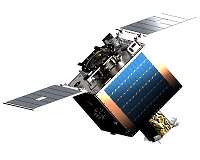
Surrey Satellite Technology Ltd (SSTL) has shipped two small satellites, CARBONITE-2 and LEO-1, to India in preparation for a late December launch on ISRO's Polar Satellite Launch Vehicle (PSLV) from the Sriharikota launch site.
LEO-1 will be one of two Telesat Phase 1 satellites planned for launch this year that will allow Telesat to start testing key performance parameters of its next generation global LEO constellation.
The satellite has a launch mass of 168kg and will be launched into an initial sun-synchronous orbit. After launch SSTL will complete commissioning of the spacecraft and will perform orbit-raising manoeuvres to achieve the final planned orbit. Command of the spacecraft will then be handed over to Telesat for in-orbit operations using the Ka-band payload.
CARBONITE-2, is a technology demonstration mission owned and operated by SSTL that will demonstrate a low cost video-from-orbit space solution using COTS technologies.
The 100kg spacecraft flies a commercial-off-the-shelf (COTS) telescope and HD video both of which have been adapted for a space environment and integrated into a custom built framework. The imaging system is designed to deliver 1m GSD images and colour HD video clips with a swath width of 5km.
On 21 November 2017 British company Earth-i signed a contract with SSTL to supply 5 CARBONITE series satellites for a new full-colour video imaging constellation planned for launch in 2019.
CARBONITE-2 is a follow-on mission to CARBONITE-1, launched in 2015. The CARBONITE series of platforms are designed for rapid re-visit constellations providing high resolution images, 3-D imaging and video from space.
SSTL is a leading supplier of LEO missions to commercial operators: previous missions include Beijing-1, the 5 satellite RapidEye constellation, Deimos-1, exactView-1, KazEOSAT-2 and the 3 satellite TripleSat constellation.
Aerojet Rocketdyne supports ULA Delta II launch of JPSS-1
Aerojet Rocketdyne, Inc., a subsidiary of Aerojet Rocketdyne Holdings, Inc. (NYSE:AJRD), helped propel the United Launch Alliance Delta II rocket, carrying the Ball Aerospace-built JPSS-1 satellite, the first of the new JPSS (Joint Polar Satellite System) constellation, into orbit for the National Oceanic and Atmospheric Administration (NOAA) and NASA.
The mission will provide sophisticate … read more
