
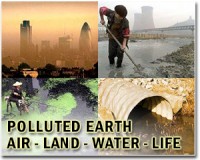
Sri Lanka customs Tuesday ordered the return of container loads of hazardous mortuary and clinical waste illegally imported into the island from Britain under the cover of metal recycling.
Customs officials said the racket dating back to 2017 was uncovered after the Colombo port complained last week that an importer had abandoned 111 containers which were emanating a huge stink.
A total of 241 containers had been imported since 2017 and 130 of them had been taken to a free-trade zone ostensibly for recycling and re-export, customs spokesman Sunil Jayaratne told AFP.
"We are taking immediate action to order the re-export of the 111 containers abandoned at the port," Jayaratne said.
"The other 130 which had already been cleared from the port will be dealt under environmental and other laws."
He said the 130 containers were stuffed with used mattresses and plastic and clinical waste imported in violation of international laws governing the shipping of hazardous material.
A Sri Lankan businessman who imported the containers would be liable for criminal prosecution if he failed to re-export them to Britain, from where they originated, Jayaratne said.
An official at the finance ministry, which is responsible for the customs department, said it would take up the issue with British authorities for exporting hazardous cargo without first checking if Sri Lanka was willing to accept it.
"This is a well-organised racket that has been going on since 2017," said the official, speaking anonymously because he was not authorised to talk to the media.
The 111 containers are believed to contain mortuary waste including human organs and had been unloaded and exposed to the elements for the past two years.
The 130 containers taken to a free-trade zone near Colombo International Airport were contaminating water and polluting the air in the area, he said.
Sri Lanka's pushback on imported trash came as Indonesia and the Philippines returned shipments of foreign rubbish to their originating ports.
Indonesia announced two weeks ago it was sending more than 210 tonnes of garbage back to Australia and Canada has agreed to accept 69 containers of rubbish it had shipped to the Philippines between 2013 and 2014.
Insects replace pesticides in Spain's 'Sea of Plastic'
Dalías, Spain (AFP) July 24, 2019 –
"They work for me night and day," smiles Antonio Zamora, standing in his greenhouse. His minuscule employees are bugs that feed on the parasites threatening his peppers.
Zamora, like most of his colleagues, no longer sprays his crops with pesticides, instead hanging small bags of mites on the plants, leaving them to attack parasites while sparing his produce.
He owns two hectares (five acres) in the so-called "Sea of Plastic", some 30,000 hectares of greenhouses in southeastern Spain's Almeria province, where much of Europe's fruits and vegetables are grown.
The sparkling mosaic of white plastic bordering the Mediterranean — which is visible from space — produces tomatoes, cucumbers, courgettes, peppers and aubergines all year round to supply Europe's supermarkets.
Last year 2.5 million tonnes of produce was exported from Almeria, half of Spain's total vegetable exports.
Like Zamora, virtually all pepper growers in Almeria have replaced insecticides with so-called "biological control" using insects.
About 60 percent of tomato growers have done the same, along with a quarter of courgette producers, according to the producers' association Coexphal.
Consumption of insecticides in Almeria — where agriculture employs some 120,000 people and accounts for 20 percent of economic output — has dropped by 40 percent since 2007, according to local authorities.
– A trillion insects –
The use of insecticides surged in the 1960s, but farmers have adopted new methods under pressure from consumer groups as well as the fact that their crops have become increasingly resistant to the chemicals.
"We have had to change course. The use of pesticides became excessive," said Jan van der Blom, an expert in biocontrol at Coexphal.
Encarnacion Samblas of environmental group Ecologists in Action described the change as a "very positive step".
"In many cases the reduction in the use of chemical products has been drastic, and the substances that are still in use are softer," she said.
French agricultural cooperative InVivo, which has yearly sales of 5.5 billion euros ($6.2 billion), recently opened a "biofactory", Bioline Iberia, in the heart of the Sea of Plastic.
Inside hermetically closed rooms with tightly controlled temperature and humidity levels, employees raise four species of mites to be sold in the region as well as in Portugal and Morocco.
The company projects production of a trillion insects this year.
Several other factories of the same type have sprung up in recent years around the Sea of Plastic, and roughly 30 firms sell insects, at steadily decreasing prices.
"Spain can be considered the largest area in Europe and perhaps the world in terms of the use of biological control," said Bioline Iberia director Federico Garcia.
– Chemicals still prevalent –
But the road to truly green farming remains long, said Samblas of Ecologists in Action, noting that many farmers still use fungicides and various other substances to disinfect soils.
"Farmers continue to use chemicals in a not very rational way, because they are recommended, they are sold to them. Often they use them as a routine, without really knowing why," she said.
Even "organic" greenhouses — with 2,000 hectares certified as such or seeking the label — often pay little heed to biodiversity or fail to take proper care of the soil, the ecologist said.
She noted that European regulations on these issues are lacking.
An increase in the amount of land used for farming has put pressure on water resources in an arid region, Samblas added.
Agronomist Jose Manuel Torres warned that year-round farming methods favour the growth of parasites, arguing that the region should halt production during the summer.
Samblas noted another problem: old greenhouse plastics often find their way into the Mediterranean.
