
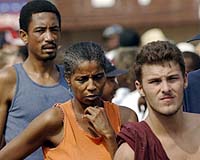
The fight in Washington over providing Medicaid coverage for victims of Hurricane Katrina is delaying health benefits for some storm evacuees, a Louisiana state official said Monday.
Thousands of poor Louisiana storm victims who have applied for emergency Medicaid benefits either have been denied or had their applications put on hold, Ruth Kennedy, the state's deputy Medicaid director, told reporters at a Capitol Hill briefing.
Kennedy said 56 percent of an estimated 10,500 persons applying for Medicaid have not been able to secure coverage because current Medicaid rules bar childless adults.
"At this point we have no choice but to deny those applications if we process them," she said.
Kennedy complained that persons denied coverage included patients scheduled for surgery follow-ups before the storm and a 32-year-old uninsured man who ruptured his Achilles tendon while unloading relief supplies.
Meanwhile, the Senate has spent more than two weeks wrangling over a $9 billion package designed to expand Medicaid benefits for poor storm evacuees for up to 10 months. The bipartisan bill at first appeared headed for easy passage but ran into opposition from the White House and a handful of lawmakers concerned about its cost.
Senate Majority Leader Bill Frist, R-Tenn., signaled support for the bill when it was introduced but has not put in motion procedural moves that could get around potential objections by garnering the support of 59 of his colleagues.
"We are trying to bring it up on the floor," Frist spokeswoman Amy Call told United Press International.
Bush administration officials instead have backed a program allowing states hosting evacuees to apply for waivers individually, making it easier to sign up beneficiaries.
The Senate bill extends benefits to all storm evacuees living below the federal poverty line and gives greater access to children, pregnant women and disabled persons. The administration plan keeps the childless-adult exclusion in place but uses state uncompensated-care accounts to pay for some expanded coverage.
Seven states and the District of Columbia already have secured waivers under the administration's program, but three jurisdictions – Florida, Idaho and the District of Columbia – do not offer such accounts, said Edwin Park, senior health policy analyst at the Center for Budget and Policy Priorities.
Sen. Charles Grassley, R-Iowa, the bill's chief sponsor, told UPI last Friday he may try to make the bill part of overall budget negotiations later this fall if senators cannot soon agree.
"That would mean a delay of two months in being able to address the problem," warned Robert Greenstein, CBPP's executive director.
