
While LED technology continues to evolve, much of the new focus has shifted from producing a more luminous bulb to how to better harness the light. It appears that the capability for ultimate control may soon be right around the corner.
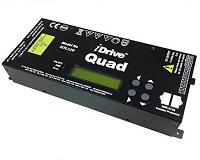
UK-based Integrated System Technologies (IST) is one of the puppeteers in the light show. Its iDrive LED driver modules allow for nimble control over LED power, current and voltage, opening up a plethora of applications for white, variable white and color lighting fixtures in architectural, entertainment, retail, commercial and domestic use.
LEDs themselves are certainly not new; energy-conscious Japan sports one of the highest penetration rates anywhere (seen at 70% nationwide by 2020). But control mechanisms remain crude; in many locations, one switch controls one fixture, or luminaire, in either 'on' or 'off' state, totally ignorant of the lighting needs of the environment, such as power consumption, specific brightness, color, and number persons present – all of which can have a large impact on monetary, material, and human costs.
"We're still in the early stages of the 'smart lighting' rollout," says IST founder and technical director Geoff Archenhold at a recent LED trade fair in Tokyo. "Most manufacturers, when faced with more lights to control, simply throw more electronics at them, creating more size, cost, and heat, while reducing efficiency and product lifespan. "Properly done, 'less is more' should be the solution."
IST's line of iDrives uses single processors to control the electronics, resulting in less equipment that can be more accessibly installed. Most important is that they are software-based, allowing upgrades to be downloaded in the field, obviating the need for the customer to buy new hardware.
The software allows for the iDrive to exert fine-tuned control over power output, current, and voltage up to 50,000 times per second, and determine if luminaires are too warm, too bright, too dim, or even necessary at all. Cost savings can be as high as 70% above the savings of switching from incandescent or fluorescent lights, says Mr. Archenhold.
While heralded for their low power consumption and long lives, LEDs are not without their drawbacks on human health and work habits. Lower power LEDs can induce a flicker effect that causes eyestrain and headaches. The fact that most LEDs have a disproportionate amount of of optical power in the blue part of the spectrum (~450nm) is also a concern.
ANSES, the French Agency for Food, Environmental and Occupational Health and Safety noted in a study that exposure to blue light over long periods is harmful and dangerous for the retina as a result of cellular oxidative stress, raising potential health concerns, especially for children. It also cites risk from glare.
But these kinds of risks can also be mitigated by controls that intelligently switch out to softer, lower-intensity reddish light, and by keeping the flicker speed at around 5000 Hz, well above the refresh rate of the human eye, says Mr. Archenhold.
The greatest potential of LEDs may lie ahead. Industry research is increasingly aimed at using LEDs as a medium to deliver networked, mobile, high-speed communication in a similar manner to Wi-Fi. This "Li-Fi" technology harnesses the high LED flicker rate, but isn't bound by the limits of the RF (radio frequency) spectrum.
The visible light spectrum is 10,000 times larger than that of RF, meaning no congestion, and data rates are already many times faster than broadband. Together with the low cost, zero electromagnetic interference and security from hacking, projections hold for explosive growth in this field.
The Li-Fi market size was valued at $630 million in 2015, and is likely to grow at a compounded annual rate of 80.8% from 2016 to 2023, according to a Global Market Insights (GMI) report.
"A short range, and the need for the lights to be on in order to work are issues, but only minor ones," says Mr. Archenhold. "Li-Fi is going to essentially turn every light source into a transmitter, enabling 5G wireless broadcasting, pinpoint GPS positioning – anything you're currently getting over your cell phone – much better and faster."
He predicts that the first low-speed Li-Fi systems to appear within two years and thereafter in every home and office within a decade.
"Once all the big telecom companies jump in, ubiquitous Li-Fi will be standard practice," he says.
