
South Korea's foreign ministry said Thursday it was closely watching the site where North Korea tested an atomic bomb last year, but had no evidence yet that another test was being planned.
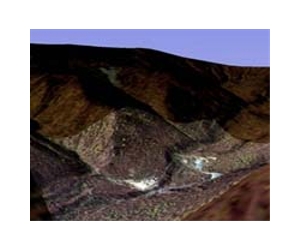
A spokesman was commenting on a report and satellite photos published by Jane's Defence Weekly, which show work under way at the site in the northeastern province of North Hamkyong.
"No tangible evidence has been confirmed on whether or not the North is preparing for a third nuclear test," the spokesman told AFP.
"We have been closely monitoring the North's nuclear facilities including Punggye-ri, and are closely sharing information with related countries."
The British magazine on November 3 published photos taken on October 16 which it said showed at least six vehicles or pieces of equipment at the site's operation base.
There also appeared to be a 12-metre-wide (40-foot) pile of excavated debris in the base's staging area, apparently indicating that tunnelling was under way.
An excavated area 150 metres south of the test facility appeared to have been expanded since an October 2009 comparison image.
And an image shot on October 27 indicated ground had been dug at two tunnel entrances leading to the previous underground testing site, the magazine said.
The images taken by US firm DigitalGlobe also show long scars in the ground suggesting that power line trenches or connected power lines were being laid.
Jane's concluded it was too early to say whether another test was imminent.
The North conducted its first nuclear test on October 9, 2006 and a second one on May 25 last year at Punggye-ri.
Scientists said last year's blast was about four times more powerful than the first, but still far less than that of a crude Hiroshima-type bomb.
The North quit six-nation nuclear disarmament talks in April 2009, a month before its second test. In recent months it has expressed conditional willingness to return to the forum, grouping the two Koreas, dialogue host China, the United States, Russia and Japan.
But President Barack Obama warned last week in Seoul that the North must show "seriousness of purpose" before six-party talks can resume.
earlier related report
S.Korea says engaging N.Korea did not work
Seoul (AFP) Nov 18, 2010 –
South Korea has said the policy of engagement with North Korea pursued by former liberal presidents failed to curb Pyongyang's nuclear ambitions or improve the lives of North Koreans.
Public frustration was growing in South Korea because relations remained bumpy despite massive aid to its impoverished neighbour, the unification ministry said in its annual White Paper published Wednesday.
"Relations made progress for some 10 years amid increased cross-border activities and economic cooperation projects, but the substance of them did not live up to public expectations," it said.
"The North's economic crisis has not been solved and the livelihood of ordinary North Koreans did not improve at all."
Seoul, under late former presidents Kim Dae-Jung and Roh Moo-Hyun who governed from 1998 to 2008, rolled out policies emphasising dialogue and engagement with Pyongyang.
During this period, two summits were held in 2000 and 2007, leading to a series of reconciliation and economic cooperation projects such as a cross-border tour programme.
The two sides held their first large-scale reunions of families separated by war six decades ago and built a jointly run industrial park where North Koreans work at South Korean factories.
But Pyongyang test-fired a long-range missile and conducted its first nuclear test in 2006. A bloody naval clash in 2002 left six South Korean sailors dead.
Despite massive aid from the South, the North's economy still remains in tatters with no "satisfiable" progress in its human rights record, the ministry's 300-page paper said.
"Dialogue and cooperation on security issues … have failed to live up to expectations," it said.
The paper called for "reciprocal" cooperation instead of unilateral aid "to forge mutual development of inter-Korean relations".
Relations have been bumpy since South Korean President Lee Myung-Bak, who took power in early 2008, dumped engagement policies and took a hardline stance on Pyongyang.
Ties further deteriorated after Seoul, citing a multinational investigation, accused Pyongyang of sinking one of its warships in March this year, with the deaths of 46 sailors. The North vehemently denied involvement.
Six-party nuclear disarmament talks involving the two Koreas, China, Japan, the United States and Russia, have been at a standstill since December 2008.
Share This Article With Planet Earth
