
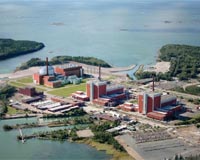
While France this week announced plans to build a second pressurised water nuclear reactor (EPR), the world's first next-generation EPR being built in Finland has been plagued by delays and cost overruns.
The Finnish reactor, in Olkiluoto on the southwestern coast, was initially due to begin producing electricity in mid-2009 but is now scheduled to go online in the first half of 2012.
Finnish electricity producer Teollisuuden Voima (TVO), which commissioned the reactor from a consortium led by French firm Areva and Germany's Siemens, is demanding 2.4 billion euros in compensation for the setbacks, according to a Siemens document published this week.
The initial cost of the project was estimated at 3.0 billion euros.
Siemens and Areva are meanwhile demanding 1.0 billion euros in compensation from TVO, arguing that the project has encountered "more rigorous security requirements" than initially foreseen.
The Finnish nuclear safety agency STUK has said hundreds of improvements have been required after it observed technical problems with the construction.
Areva has accused STUK of being slow to approve documents, while STUK inspectors have accused the consortium of being "unprepared" and said the two companies' decisions sometimes contradicted each other.
Environmental organisation Greenpeace has also protested against the lack of environmental safety measures at the construction site, which employs some 3,000 people from 20 countries.
The reactor, which will be Finland's fifth nuclear reactor, is due to enter into service just a few months before France's first EPR reactor goes online in Flamanville in France's northern Normandy region in the second half of 2012.
The Finnish reactor was the first nuclear reactor to be commissioned in Europe after the Chernobyl accident in 1986.
Around 25 percent of electricity consumed in Finland is produced in nuclear power plants.
France on Thursday announced plans to build a second EPR reactor in Penly in Normandy.
French electricity giant EDF has been commissioned for both French reactors.
Share This Article With Planet Earth
