
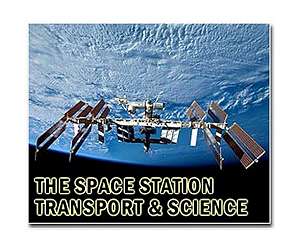
A Russian Soyuz space rocket carrying three astronauts on Friday docked with the International Space Station (ISS), Russia's mission control said.
"The automatic docking passed off successfully," said spokesman Valery Lyndin, quoted by the Russian news agency Interfax.
The Soyuz TMA-20 rocket, with a Russian, an Italian and an American aboard, blasted off Wednesday from the Russian-leased Baikonur cosmodrome in Kazakhstan.
The three-member crew is due to open the airlock at 2300 GMT to enter the ISS where they will join NASA's Scott Kelly and Russian cosmonauts Alexander Kaleri and Oleg Skripochka aboard the ISS.
They are due to carry out a mission lasting nearly six months and are scheduled to return from the ISS in May next year.
earlier related report
Fuel error cost Russia three navigation satellites: official
Moscow (AFP) Dec 17, 2010 –
The costly launch failure that caused Russia to delay the deployment of its own satellite system was the result of a fuel miscalculation, a commission charged with probing the accident said Friday.
A Proton-M rocket failed to reach its initial orbit during the December 5 launch, causing it to dump the three high-tech Glonass-M satellites near the Hawaii Islands.
It marked an embarrassing setback to Russia's much-publicised attempts to introduce a global rival to the US Global Positioning System (GPS), a programme that was first begun by the Soviet Union in 1976.
The last three satellites would have enabled Russia to fully deploy the system next year, meeting Prime Minister Vladimir Putin's commitment to equip all new cars sold in Russia with Glonass readers in 2012.
Space officials said the calculation mistake was easy to correct, and that they were relieved that there was nothing wrong with the actual rocket itself.
"We have no questions regarding the Proton," investigating commission chief Gennady Raikunov told the Interfax news agency. "Its launches could be resumed."
Raikunov said the fault lay with the Energia Rocket And Space Corporation, which designed the carrier.
He said that the company failed to account for the fact that the updated version of the rocket had bigger fuel tanks, which weighed more when filled to the top.
"This increased the payload weight and the rocket did not have the energy to deliver the satellites to orbit," the space official said.
Energia officials could not be reached for comment Friday.
Share This Article With Planet Earth
