
Russian and US officials negotiating on missile defence and the future of a key arms treaty still have "serious differences," a Russian negotiator said Monday after talks in Moscow.
"We focused on those themes that divide us. They are not few. On both problems, serious differences remain but nonetheless we have no doubt about the usefulness of the consultations," Deputy Foreign Minister Sergei Ryabkov said in televised comments.
A team of US policy and technical experts was in Moscow to discuss Washington's plans for missile defence facilities in Central Europe which Moscow vehemently opposes, as well as efforts to replace the START 1 missile treaty which expires at the end of next year.
US negotiator John Rood, under secretary of state for arms control and international security, stressed that Moscow and Washington were in agreement on reaching a new accord to replace START 1, Interfax news agency reported.
Rood acknowledged that it was an amibitous goal but he thought it could be achieved by December 2009, the news agency said.
Ryabkov said that on the issue of the US missile defence plans, which involve placing facilities in Poland and the Czech Republic, "we are ready to work as much as necessary to ensure an adequate understanding of our position."
Prime Minister Vladimir Putin urged US president-elect Barack Obama last month to drop the planned missile shield.
And just a day after Obama's election victory, Russian President Dmitry Medvedev threatened to deploy missiles in Kaliningrad, a Baltic Sea enclave sandwiched between ex-communist NATO and European Union members Poland and Lithuania.
Obama, who takes office on January 20, has yet to say whether he intends to continue the plan created by the outgoing administration of Republican President George W. Bush.
Rood on Monday reiterated that Washington had sent new proposals to Russia which built on previous ones that would allow Russian authorities access to the proposed US missile shield sites in Central Europe.
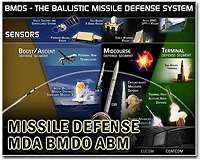
The US plans involve placing missile interceptors in Poland and a radar in the Czech Republic, facilities Washington insists are directed against "rogue states" such as Iran rather than Russia.
The two sides did not discuss their differences over Iran's controversial nuclear programme, Ryabkov said.
On the Strategic Arms Reduction Treaty (START), Russia hopes to agree a new overarching replacement for the treaty on which talks began in the 1980s and which led to massive reductions in the nuclear weapons stocks of the two Cold War powers.
Ryabkov reiterated that the existing START 1 treaty provided a good basis for new agreements.
"For the Russian side, we will do everything to ensure that in the important sphere of control of strategic weapons there is no legal vacuum after the expiry of the START 1," he said.
Share This Article With Planet Earth
