
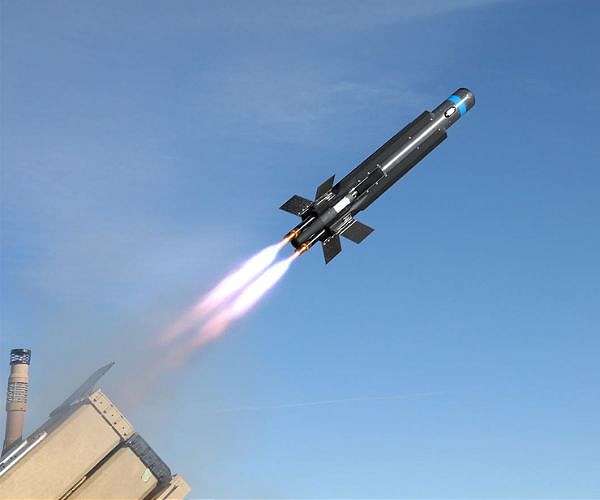
Raytheon, an RTX (NYSE: RTX) business, recently demonstrated the advanced capabilities of its Ku-band Radio Frequency Sensor (KuRFS) and Coyote kinetic and non-kinetic effectors during the U.S. Army's annual summer testing. The tests evaluated the systems' ability to detect and neutralize high-speed, maneuvering unmanned aircraft systems (UAS) as part of the Army's Low, slow, small-unmanned aircraft Integrated Defense System (LIDS).
In a key stress test, the KuRFS radar successfully tracked and identified a swarm of unmanned aircraft, providing 360-degree, persistent coverage. The Coyote effectors, both kinetic and non-kinetic, were able to defeat individual targets and swarms, demonstrating their ability to neutralize multiple threats in a reduced timeframe. Software upgrades to both systems were validated during the tests.
"These systems were developed to effectively defeat unmanned aircraft systems and designed to easily incorporate updates to outpace this ever-evolving threat," said Tom Laliberty, president of Land and Air Defense Systems at Raytheon. "By continuously building on the combat-proven capabilities and performance of both KuRFS and Coyote, ground forces around the globe can gain a significant advantage in the defense against the threat of enemy drones."
The KuRFS radar, along with the Ku720-2 XBAEU distributed mobile sensing radar, provides precise targeting capabilities and persistent detection, identification, and tracking of airborne threats. The Coyote Block 2 kinetic effector and the Block 3 non-kinetic effector successfully neutralized drones of varying sizes and agility during the trials.
The U.S. Army is strengthening its counter-drone systems, securing contracts totaling $374.8 million to supply customers with LIDS. One recent contract will provide a fourth Army division with LIDS systems and support services.
Demand for the combat-proven Coyote kinetic effector continues to rise, and Raytheon is increasing its investment in test equipment and tooling to meet this growing demand ahead of schedule.
