
The U.S. Department of Defense has awarded $46.8 million in grants to 19 university-based teams through its Minerva Research Initiative. Among the recipients is a team led by Anamaria Bukvic, assistant professor in the Department of Geography at Virginia Tech's College of Natural Resources and Environment, which received $2 million for a project focused on coastal population mobility.
Bukvic leads the research titled 'Anticipating Coastal Population Mobility: Path to Maladaptation or Sociopolitical Stability'. Collaborators include Peter A. Beling, director of the Intelligent Systems Division at the Virginia Tech National Security Institute, and Tom Ellison, deputy director of the Center for Climate and Security.
Studying climate change's role in population movement
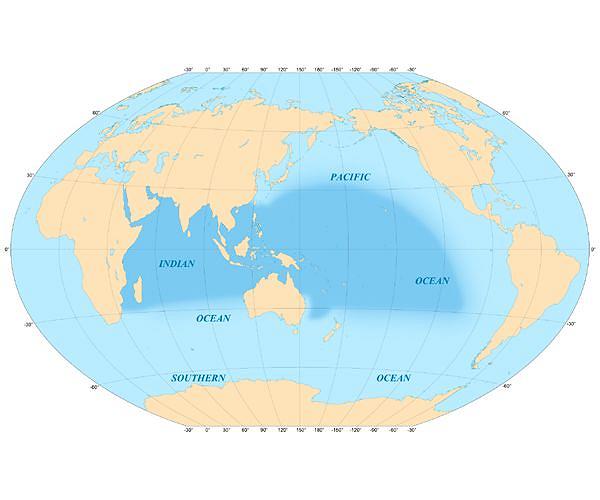
The research team aims to assess how coastal maladaptation, which refers to unsuccessful attempts to adapt to climate change, influences population movement within coastal regions of U.S. allies and territories in the Indo-Pacific. The focus is on understanding how these factors either attract or push people away from coastal areas.
The project includes three key components aimed at improving the understanding of population mobility in the Indo-Pacific's coastal regions and the resulting impact on socioeconomic and political stability:
– It integrates expertise in the human dimensions of coastal issues using a social science approach, machine learning techniques, and climate security policy.
– It tackles a topic that is increasingly important for both climate and security sectors, particularly in a geographic area of critical strategic interest.
– It emphasizes maladaptation, an issue that often goes overlooked but has the potential to increase social vulnerabilities and destabilize regions.
Significance of the research
The Department of Defense depends on these regions to support joint military exercises and operations that are essential to its integrated deterrence strategy in areas such as the South and East China seas and Taiwan.
"The novelty of our approach is that it centers on adaptation/maladaptation as pull-push forces that could drive population movement away from or toward the coast," Bukvic explained.
"Coasts, being the most critical for the U.S. strategic interest, might then become epicenters of vulnerability and social destabilization with broader security implications."
The research will advance new methodologies combining social science insights with machine learning techniques, creating knowledge that can be applied to other coastal regions, including those in the U.S., Bukvic added.
