
"We want to make fundamental and important progress in our understanding of Arctic amplification and improve the reliability of models for predicting the dramatic warming in the Arctic," says Professor Manfred Wendisch, Director of the Institute for Meteorology at Leipzig University and lead author of the study. In mid-March 2022, the large-scale international research campaign HALO (AC)3 began its investigation into the changes occurring in Arctic air masses. This campaign includes contributions from researchers at Leipzig University and several other scientific institutions.
During the study, researchers employed specialized aircraft to examine the movement of air masses between the Arctic and surrounding regions. This included studying northward movements of moist and warm air (WAIs) and southward movements of cold marine air (CAOs).
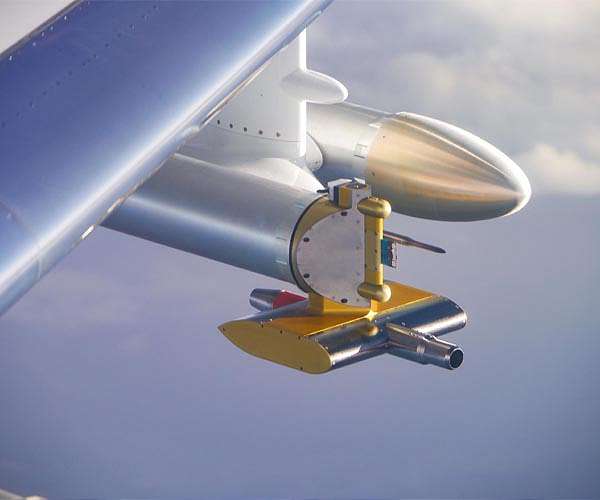
Three research aircraft were deployed: two low-flying planes and one high-altitude, long-range aircraft, which were coordinated to fly in close formation whenever possible. "We observed air mass transformations over areas of open ocean, the marginal sea ice zone, and the central Arctic sea ice," Wendisch explained.
The HALO (AC)3 aircraft campaign was conducted over the Norwegian and Greenland Seas, the Fram Strait, and the central Arctic Ocean in March and April 2022. A novel observation strategy was implemented, allowing the researchers to track air masses twice along their transport paths.
Wendisch stated, "This allowed us to quantify the warming and cooling of the transported air masses for the first time. For example, we have shown that cold air that breaks out of the Arctic and heads south warms up to three degrees Celsius per hour on its way from the sea ice to the open sea.
In addition, the humidity of the air increases as it moves south." The researchers also investigated how the properties of clouds change as air masses move. The unprecedented data collected is now being compared with results from the German weather forecast model.
